The theme for Week 13 of Amy Johnson Crow’s 52 Ancestors in 52 Week’s is Music. I know I myself absolutely love music – all kinds from pop music, classic rock, alternative, classical, Broadway tunes, and due to my son being in a volunteer band while learning to play the trumpet in school, I’m evening expanding into jazz.
But when I think of my relatives and music, both of my grandmother’s come to mind and below you will read about these special ladies and their love of music.
Alberta Lou Fleming
My maternal grandmother, Alberta Lou Fleming, loved music. She was one of those people who loved to dance and listen to the big band music of the 1940’s. When chatting with my Aunt she was able to tell me how when she was growing up, every Sunday they (Alberta, and her children) would go over to their grandma’s (Mildred Laura Dunbar) for dinner and they would put on the big band music and sing their heart’s out and dance. That must have been something to see in her living room.
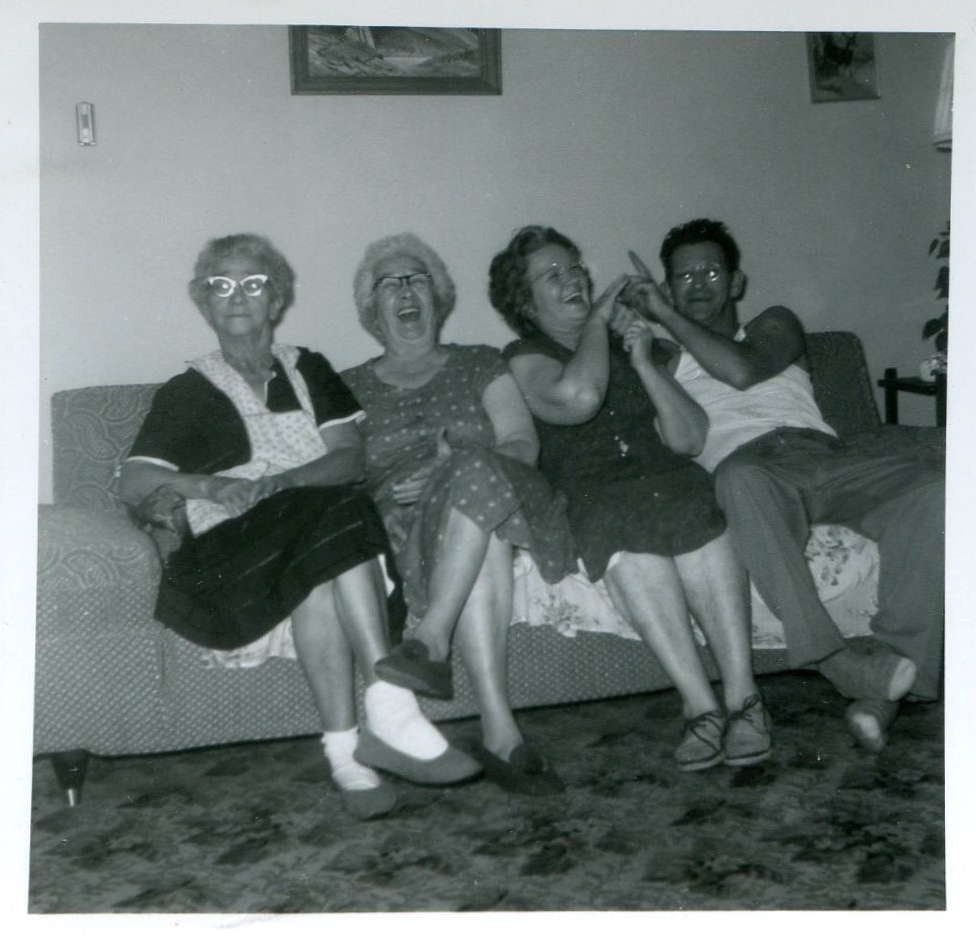
Alberta Lou Fleming, New Year’s Eve at her friend, Margie’s, house (I love how she is all dressed up to dance and party, just wish the photo hadn’t looked like it had partied too)
I know my Grandma’s (Alberta) favorite song was “In the Mood”. I can’t say that I blame her, when I hear songs from that era, it is one of the ones that really gets my toes tapping as well. I can imagine it would be hard to not get up and dance.
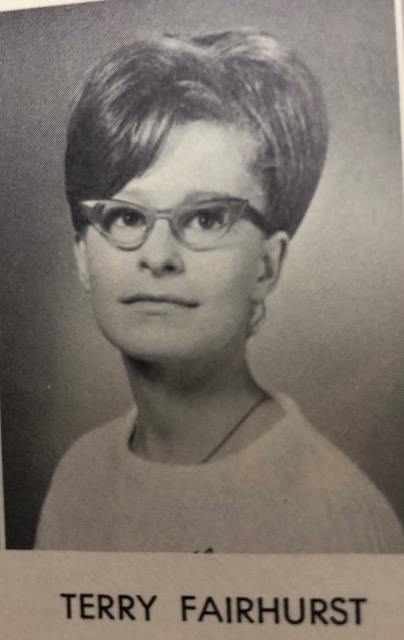
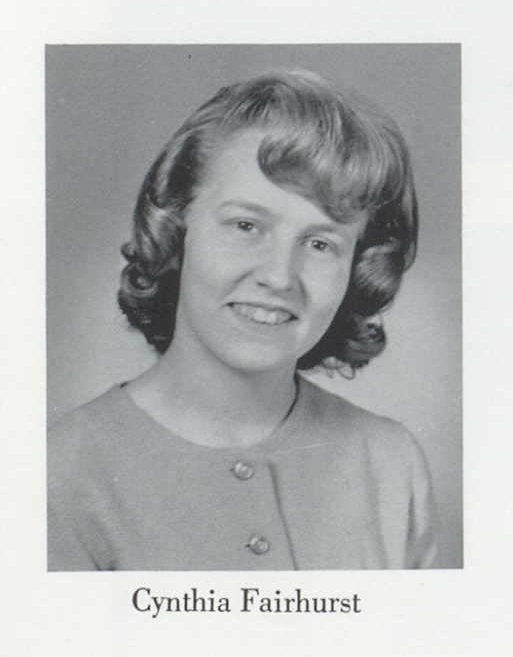
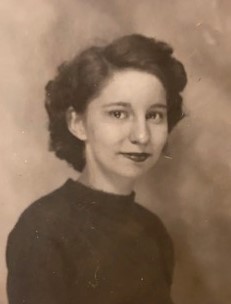
The apple didn’t fall far from the tree when it came to a love of music. My Aunt, who would have been 72 years old today (April 2), loved music as well. Her younger sister told me that her favorite was music by the Beetles. Here is a photo of my Aunt Teri (she changed the spelling over the years) from her High School Yearbook – she was always so fashionable and I love this photo.
Can’t you just see her dancing? Photo from the Cuyahoga Falls High School Yearbook
Though I was unable to confirm it, I thought I remembered my mother telling me how she had bought my aunt a life size doll to dance with. I asked my other aunt (my mom and aunt Teri’s younger sister) and my own sister, but neither remember. Initially I wasn’t going to add it, but it seems to me I wouldn’t have ever thought to make something like this up, but I like what my aunt also said, it totally sounded like something my mom would have done. So if she didn’t, I’m sure she must have thought about it.
Anna Maria Morgart
My Grandma Blair (as I know her) loved to hum. It didn’t matter what she was doing, she hummed. When she did dishes. When she crocheted. She could be sitting in a chair and daydreaming and she would hum. Even when I called her on the phone and there was that slight lull in the coversation.
She would also listen to her radio to church music and the like as well. But when I think of her I think of her humming. And there are times now that I am older when I am doing something and I don’t have music on, I hum too. (Just to add, today, April 2, would have been my Grandma’s 107th birthday).
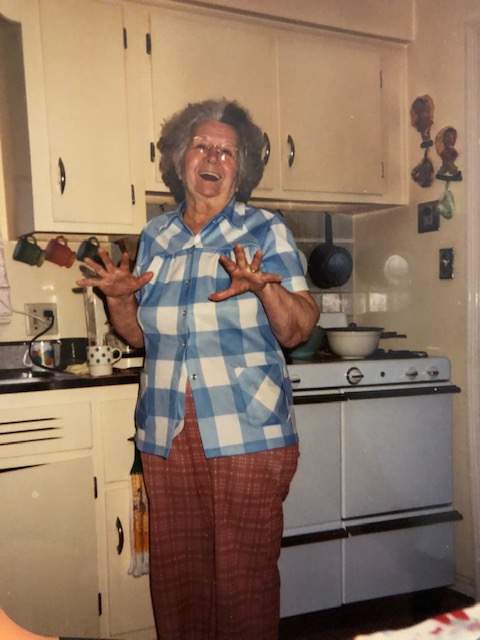
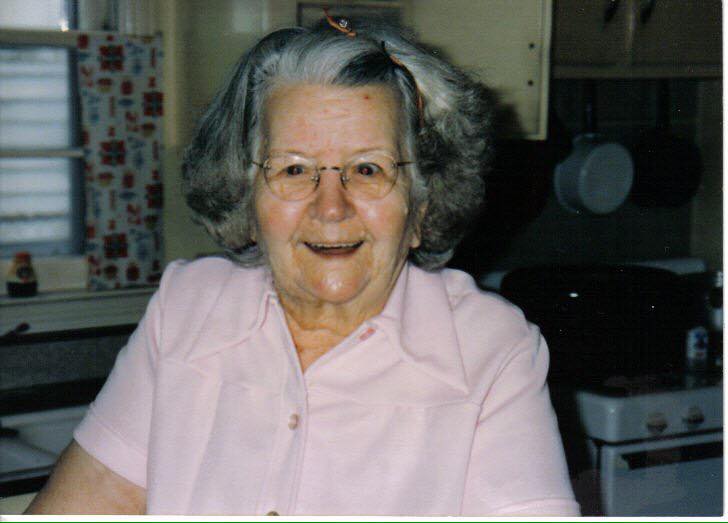
Grandma Blair (aka Anna Maria Morgart). Not necessarily a moment when she was humming, but it is a photo that makes me smile (I believe she had finished dishes and was flinging water at us with her fingers). Not sure when this was taken, but it was in the mid-late 1980’s in her kitchen)
To me nothing brings back memories better than music. Often a song will come on the radio and it’s as if I am going through all the emotions of the that moment as if it just happened. No other sense is as powerful for me. So when I hear “In the Mood” I think of my Grandma Metzger (aka Alberta Lou Fleming) and how she made me laugh with her fabulous sense of humor that I wish I had, or when I find myself humming in a room by myself, I smile as I know wonderful people before me did the same.
As a human being, we all lose members of our family. But when you lose a parent it’s comparable to losing a limb. This week’s theme is Loss for Amy Johnson Crow’s 52 Ancestor’s in 52 Weeks, and I’m going to discuss one of the biggest losses of my life, my mom, Cynthia Anne Fairhurst, and you will get some of her insights as I have used her scrapbooking pages from her own blog to aid in my telling about her life.
Cynthia Anne Fairhurst
My mom was born on 22 December 1947 at 2:31am in Akron, Ohio, the oldest child of Harold Fairhurst and Alberta Lou Fleming.
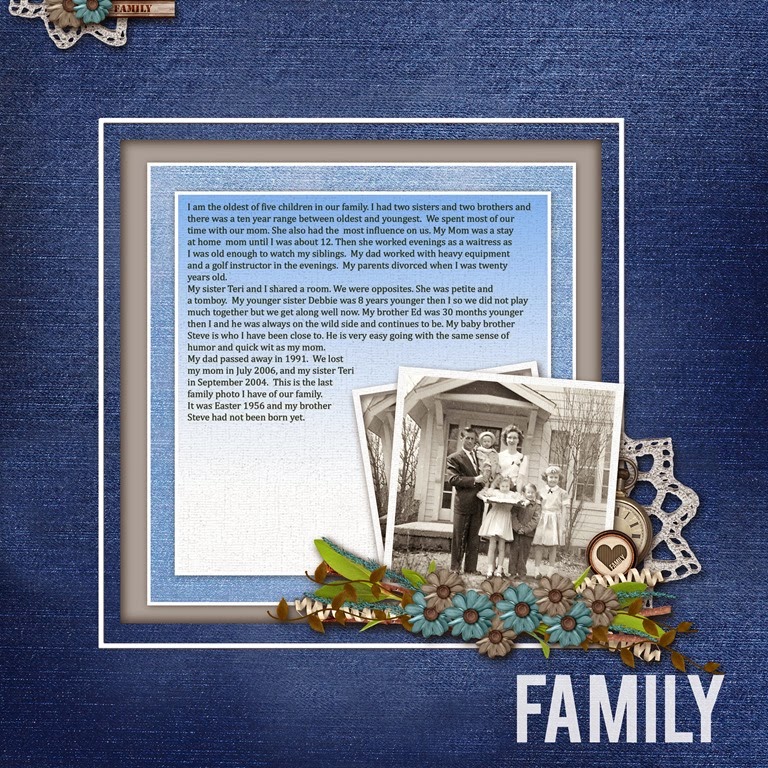
It wasn’t long before others came along. My Aunt Terry was born in April 1949. Here is a photo of the family of four that following summer.
In July 1950 my Uncle Eddie was added to the mix and then my Aunt Debbie 4 years later.
Her Childhood
My mom’s early years had her living in the North Hill area of Akron. By the time she was in second grade her family had moved to Cuyahoga Falls.
Third grade had her going to Grant Elementary School (which is now a community center in Cuyahoga Falls as they consolidated schools when I was in 5th grade and closed 3 elementary schools down).
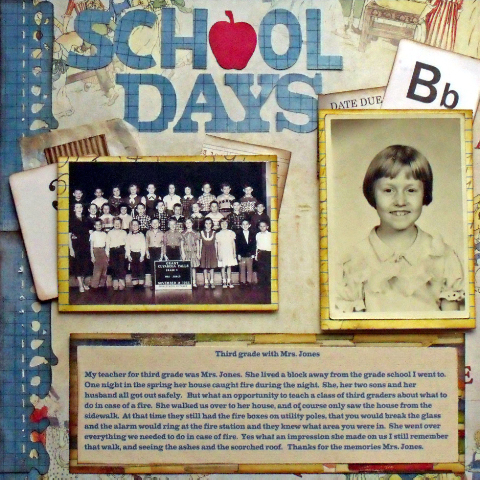
Below is a photo of her from 4th grade when she attended St. Joseph’s Catholic School.
Cindy was always very close to her grandmother, Mildred Laura Fleming, spending a lot of time at her house. Below is a memory she had of Christmastime.
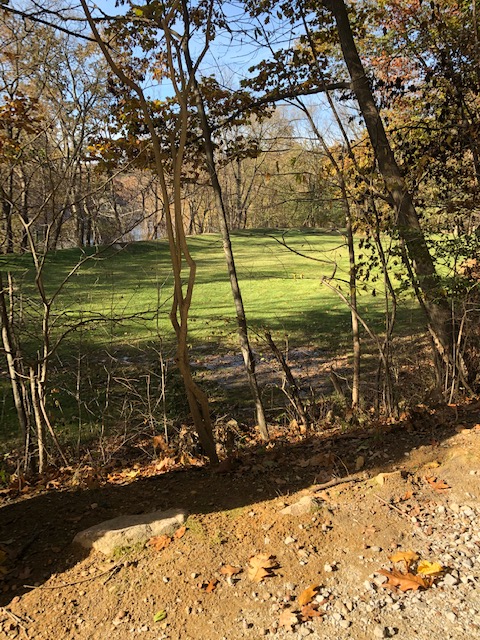
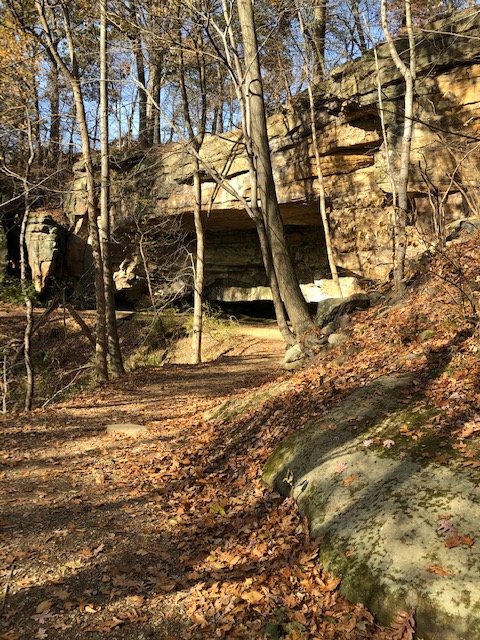
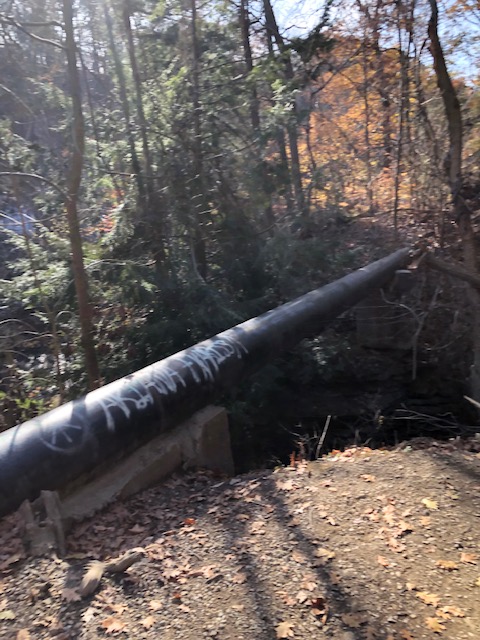
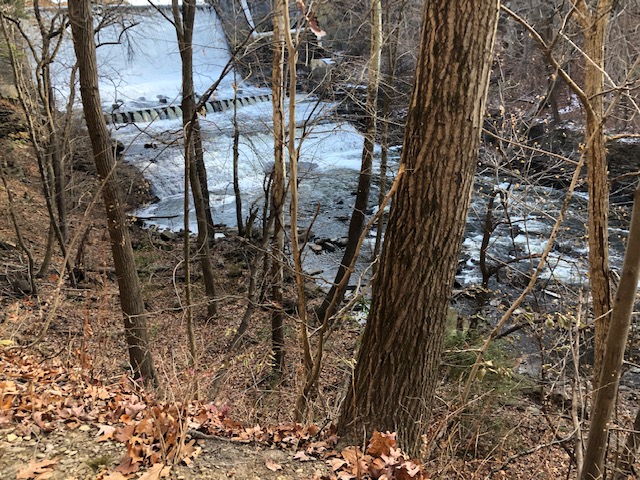
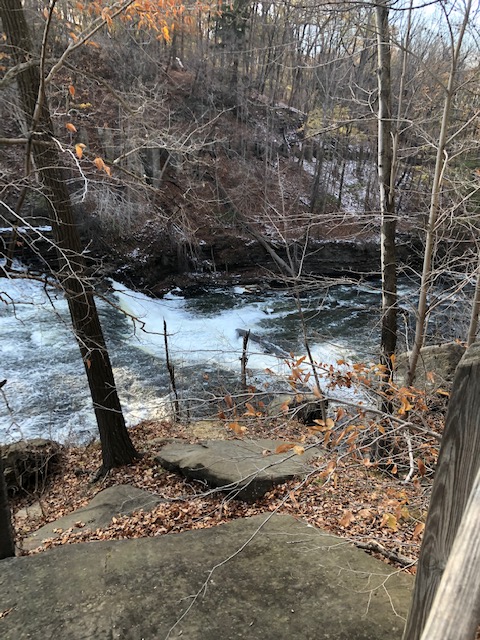
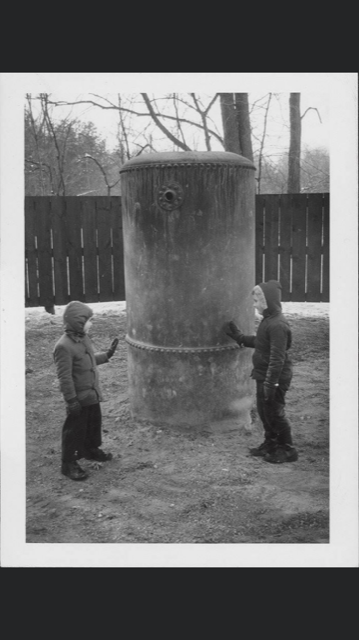
My mom and her siblings love to go and hang out at the Gorge, one of the Summit County Metro Parks where you can hike, fish, and ice skate (there are 3 different hiking paths that are a part of the annual hiking spree at this location alone). My mom, who wasn’t an overly nostalgic person (I have gotten all my pack rat sentimentality from my grandmother), still had a pair of her ice skates hanging in the room underneath the steps in our home. Most of her fondest memories of growing up were of her and her siblings playing at the Gorge. Below are some pictures I’ve taken over the years when I participate in the Fall Hiking Spree, but two (the black and white ones) I found on a Facebook Post (I think). The other I did re-find and is a photo by John McMillan.
From left to right on the top: A photo of where the ice skating pond is in the winter time, next is a photo of the Gorge hiking trail leading to Mary Campbell’s Cave (the others not shown are Highbridge and the Glenns), the pipe is a spot my mother claims to have crossed over countless times and I find this hard to believe as she was extremely afraid of heights, next is a photo of the Cuyahoga River looking towards the Falls (which is to be torn down soon – they claim there is another falls behind this but this is actually part of the dam used by Ohio Edison or FirstEnergy for electricity), next up is just a photo of the river again (I must have thought it looked artsy and wanted to share), then there is the photo I’m not sure where I found it but it was on my phone of kids using one of the heaters in the winter months, and lastly a photo by John McMillan of ice skating. I remember sending this photo to my mom and joked that maybe she was somewhere in it! She actually went on to scrapbook a page using the photo.
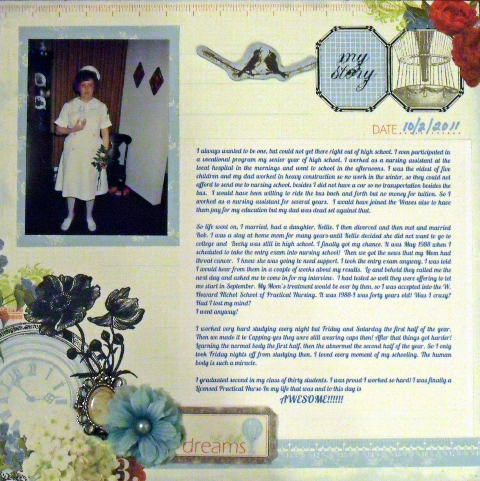
This scrapbooking page can be found at my mom’s blog at Gramma’s Happy Place, my mom loved to scrapbook, it became one of her passions the last years of her life.
After graduating high school in 1966 my mom worked as a nurses aid at Green Cross Hospital (which changed to Cuyahoga Falls General Hospital and is now Western Reserve Hospital). My mom loved working in the hospital and it was her dream to become a nurse.
Getting Married & Having a Family
At the age of 19 she got married to her first husband, Joe Sullivan and had my sister. Things didn’t work out with that relationship, Joe wasn’t the right guy for my mom, being a more fly by the seat of your pants type to her responsible nature. Eventually they divorced and my parents met while she was working as a bartender at Falls Recreation, a bowling alley, and I believe she worked in a bank during the day.
On October 2, 1971 my parents got married, oddly enough on my Grandma’s birthday (my mom’s mom). A year-plus later I came along and her family was complete (you do stop at perfection, right? Okay, I’ll stop before my sister gets mad).
By this point in time Cindy became a “stay at home” mom. But she didn’t believe in pampering us, we walked to and from school, even in the rain (that’s what umbrella’s are for – I tell you, I wish I still had an umbrella now like I had when I walked home from school – it was clear with red trim and a red curved handle and the top completely wrapped around you, so your entire top stayed dry, not just your head!). This caused issues with the other parents because they wanted her to help with carpools.
But in the grand scheme of things I can’t complain about my childhood. I had chores to do (dishes, floors, bathrooms – nothing horrible – but ask 18 year old me and I’m sure I would say something completely different). But she let me be a kid, and for that I am eternally grateful. She didn’t make me feel bad for sneaking downstairs to my play room and play with my dolls when many would have thought me “uncool” (though when I was 5 she did hide my Fisher Price People from me, and that hurt).
Mishaps
I have so many times when odd things happened that always looked bad for my mom. For example one night, I was probably in third grade (I think?) and my mom and I were sitting at opposite ends of the couch. She stretched out and ended up kicking me in the mouth. The next day at church people asked me happened, and me being my usual, blunt self stated “my mom kicked me”.
But even before that when I was probably 4, my mom would take my sister and I to the band show at the high school. My favorite was always watching the majorettes, I always thought their costumes were so pretty. Anyhow on this particular hot August day I was to clean my room. When my mom came in to inspect she found a faux rhinestone bracelet on the floor. She got mad and flung it at me and where one of the clasps that was missing a stone cut the skin just below my eye. All of the sudden there was blood everywhere – and that night as I had a small gash when the people around us asked what was wrong with me, I just said “my mom threw a bracelet at me”.
I’m pretty sure there was at least one more instance like this that I am forgetting, I really am surprised that social services was never called to our house.
When I Was Sick
I was a sickly kid. Not in a really super bad way, but I was a kid who every year during the change of seasons, I came down with a cold. Actually, it was more than a cold, it was croup (most people get this once a lifetime, I got it at least 3 times a year – when I was a teen it was more like laryngitis that lingered forever, oddly it went away when my mom quit smoking when I was 19 years old and my dad began smoking outside only).
Anyhow, my mom always took good care of me. When I had to have my tonsils out. When I came down with the chicken pox (she figured it out because we were watching Donny & Marie and I didn’t want any popcorn. I kept itching my side and that’s when she made me pull up the top of my shirt and see I had a spot. My sister had already had chicken pox so it wasn’t a big deal. It was the second half of second grade that I came down with it. Daddy got in trouble because he went out to work in the garage while my mom and sister went to church and I did the one thing I wasn’t suppose to do – I itched a spot on my face and made the scab come off – RIGHT UNDER MY EYE. I was fortunate, only on a bad day can you see the scar (like when I’m super tired). But she didn’t know that (my sister has a spot in the middle of her forehead).
Another memory of when I wasn’t feeling too good my mom always called me pumpkin, not sure why, but thinking of it now brings a smile to my face.
When My Grandfather Fairhurst Moved In
When I was in fifth grade my Grandfather Fairhurst moved in with us. His third wife (the one he married after my grandmother) decided she wasn’t going to put up the abuse anymore and divorced him. He returned to Ohio and somehow ended up at our house, living in the basement.
As I’ve said before in a previous post, my grandfather was not a nice man. I didn’t mind it when he first moved in because I wasn’t aware of how my life and my mom’s was about to change. After about 6 weeks I acted like my grandfather wasn’t even in my presence (which I think freaked my mom out a little). He sat across the table from me and I’d act like he wasn’t there. He took over the television (which for an 11 year old is a big deal after school in the winter time), we think he is part of the reason my first dog disappeared, and didn’t have too many nice things to say about anything.
While all this happened, my mom slowly began to change. She became a shell of herself, and just began sitting at the table while she smoked cigarettes (several packs a day) and played solitaire. Her dad sat on the opposite side of the table doing the same thing.
Finally Harold met someone and got married again, Connie was her name. They didn’t stay married for long, my dad always figured that she must have thought he was loaded or something. Was she in for a surprise. But his stint at our house had taken it’s toll on my mom. She slept all the time and began complaining of headaches and she was just a mess. All the suppressed memories and horror of her childhood caught up with her when her dad moved in. And like my dad will say to this day, it never hit him how long my grandfather had lived with us.
After a while my mom was encouraged to get some professional help. In the span of 5-8 years, my mom saw 2 therapists. The first encouraged her to do the one thing she had always wanted, she went back to school and became a nurse.
Cindy Becomes a Nurse
In the Fall of 1988 my mom enrolled in a year-long program to become a licensed practical nurse at the W. Howard Nichol School of Practical Nursing. Never had I seen my mother work so hard (well, except for cleaning). Every night she made flash cards to learn her anatomy, studied with some of the other students in the mornings at Arby’s and came up with clever ways to remember who did what (no disrespect to people with mental issues – but the one that I always remembered was “Dingy Dorothea” as a way to remember Dorothea Dix who advocated on behalf of the mentally ill, it may have not been the most positive way to remember her, but here it is 31 years later and I still know this fact).
Cindy didn’t miss a day of school and she came in 2nd in her class (and that made her so mad). I remember attending her graduation in September 1989. On October 25 she made her way to Columbus with her other classmates and took the State Boards. She passed!
What Cindy journaled: “I always wanted to be one, but could not get there right out of high school. I even participated in a vocational program my senior year of high school. I worked as a nursing assistant at the local hospital in the mornings and went to school in the afternoons. I was the oldest of five children and my dad worked in heavy construction so no work in the winter, so they could not afford to send me to nursing school, besides I didnot have a car so no transportation besides the bus. I would have been willing to ride the bus back and forth but no money for tuition. So I worked as a nursing assistant for several years. I would have joined the Waves also to have them pay for my education but my dad was dead set against that. So life went on, I married, had a daughter, Kellie. I then divorced and then met and married Bob. I was a stay at home mom for many years-until Kellie decided she did not want to go to college and Becky was still in high school. I finally got my chance. It was May 1988 when I scheduled to take the entry exam into nursing school! Then we got the news that my Mom had throat cancer. I knew she was going to need support. I took the entry exam anyway. I was told I would hear from them in a couple of weeks about my results. Lo and behold they called me the next day and asked me to come in for my interview. I had tested so well they were offering to let me start in September. My Mom’s treatment would be over by then, so I was accepted into the W. Howard Nichol School of Practical Nursing. It was 1988-I was forty years old! Was I crazy? Had I lost my mind? I went anyway! I worked very hard studying every night but Friday and Saturday the first half of the year. Then we made it to Capping-yes they were still wearing caps then! After that things got harder! Learning the normal body the first half, then the abnormal the second half of the year. So I only took Friday nights off from studying then. I loved every moment of my schooling. The human body is such a miracle. I graduated second in my class of thirty students. I was proud I worked so hard! I was finally a Licensed Practical Nurse-In my life that was and to this day is
AWESOME!!!!!!“
She initially got a job on 3rd shift working at a nursing home but it didn’t take her long to realize that was not her calling. A few months later she got a job working for allergists near Akron Children’s Hospital and this was the job she loved. She ended up learning how to make the allergy vaccines and giving a majority of the shots.
Her Real Calling
While my mom worked as a nurse, I finished high school, went to college (twice) and then finally found someone to marry. But this is when I gave my mom I believe to this day was the one thing she truly loved being more than anything else, “Gramma”.
You can tell by the way she is looking at them how much she loves them!
I have always said to my kids that I wish I had their Gramma as my mom. She did things with them that she never thought of doing with me – swimming in the backyard pool (you know the ones, the blow up wading pools), took them to fairs (they were unsafe when I was little) and pretty much got them everything their hearts desired along with a hefty dose of her love.
Scrapbooking
As you can tell from this post, I’ve filled it with my mom’s own thoughts from her scrapbooking pages. She loved to scrapbook. I took her to a crop at my aunt’s in I think 2011 and she was hooked. I recommended she do what I did when I began a few months before, pick an event where you have a handful of photos and go. She did and never looked back. Here is one of my favorite photos she did – a picture of her as a child and as she looked when she did the page.
This photo is actually my background on my phoneNo one was surprised more than me when my mom decided to take up fishing!Biking was another hobby she tried but it would wear her out too quicklyLeft to right: My sister, my mom, me, my kids, and my dad
Influenza B
Sunday April 1 was Easter Sunday and it was a wonderful day. We had dinner at my parents house, we played a board game and I showed both parents the many photos I took from my family’s trip to Washington D.C. over Spring Break (we missed the cherry blossoms by a few days). I honestly can’t remember a better holiday.
Then the day after Easter 2018 our world was blown apart. While my kids were at her home after school my mom suddenly got very sick and an ambulance was called to take her to the hospital. She ended up being there for about a week and had to be hooked up to a respiratory tube to breath. It took them a while to figure out that she had Influenza B that attacked her lungs. She was already struggling with atrial fibrillation and having difficulty breathing but this was a lot. I still have the message she left me on my phone, telling me she was going home that Saturday. They wanted her to go into an assisted living place so she could undergo physical therapy of walking up and down the steps again but she refused and did it at home.
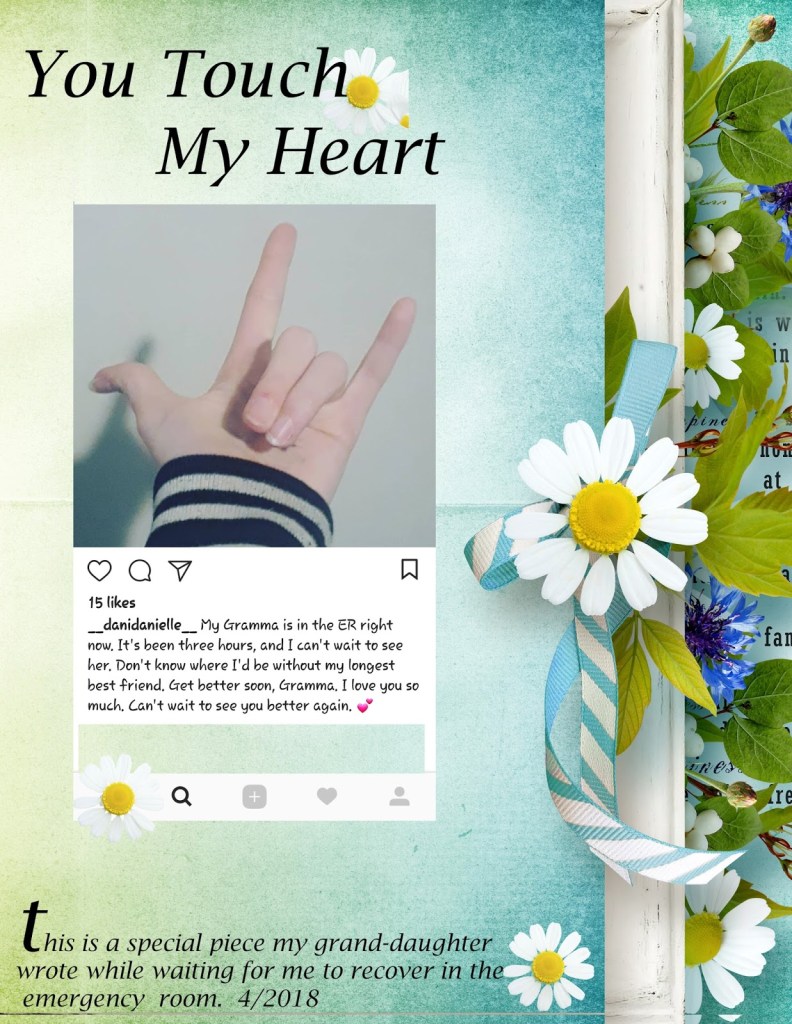
I taught my kids the sign language sign for I Love You when the were itty bitty so that I can wave it to them and they know in school, up on a stage, etc. It came in handy for this post and truly touched my mom’s heart, it was her last posted page on her blog, everything else was cards she had made.
As time went on my mom continued to have issues with her breathing. She began going to see one of the doctors she worked for wondering if some of her issues could have been handled in a different way as one of her doctors for years had chalked it up to her being overweight and needing to lose a few pounds. But she was barely eating and I think that played havoc with her body as that can make you not lose weight sometimes too.
Monday, May 28, 2018
I know her body was still weakened after having the Influenza B and on Monday, May 28 in the morning, my mom died. It happened quick. One minute she was talking on the phone to her above friend/doctor, she had chatted with one of her co-workers about how she was feeling on Facebook Messenger that morning, sent my dad to Wal-Mart to pick up some things. Then reminded him he needed to water the flowers, he came in and saw her struggling and called 9-1-1.
My mom knew she wasn’t feeling well all weekend. She had told me a couple of times on the phone that she may go to the hospital for a breathing treatment. So when my dad called me and told me they were headed to the hospital I poorly assumed that this was the case. I took my time getting ready, it was going to be a while before they were going to let me see her.
Little did I know when I got a second phone call a half hour later from my sister what was really happening. I live the closest to the hospital they took her too, the one I told you about before where she worked as a nurses aid after high school, Western Reserve Hospital, aka Green Cross Hospital.
My husband and I weren’t in the ER waiting room long when the doctor came out and said they had done everything they could. I never cried so much at once. Never had my chest felt so heavy. And for days.
The paramedics began working on my mom as soon as they got to the house. A neighbor claims they were punching her chest pretty good as they left the house and got into the ambulance with her trying to re-start her heart. My dad said that they did get it going briefly in the ambulance and once again in the hospital. But as I am the family historian and when I made a genealogy appointment at the health department and I got a copy of her death certificate it was called before I ever got to the hospital. My dad kept having them work on her, but after 45 minutes he finally said stop. They already had.
A Mix of Feelings
I don’t think you can ever be prepared to lose a parent. I was not expecting to lose my mom that day. If you notice I stress the date. That is what I do. She died on Memorial Day. I can’t have every Memorial Day ruined now because it happened to land on the observed day of Memorial Day (it’s bad enough it was the day before my husband’s birthday – yeah, she really screwed him, and she really liked my husband).
Telling my kids was one of the hardest things I ever had to do. Especially my daughter, as my mom had made her the center of her world. She could do no wrong, and she pretty much knew it. My son on the other hand you have to be careful even now. He went the other way with things, getting mad at her for never going to the hospital and having that breathing treatment.
My dad, he was really mad for a very long time. I think he was a bit like my son, wondering why didn’t she do the breathing treatment, why didn’t she tell us she was as sick as she was.
But in the end, her quality of life was going downhill and maybe it’s good it happened fast, that she didn’t have to suffer anymore than she did.
But on Monday, May 28 you couldn’t tell me all this. I was the one who was told the least (well, outside of my children that is). I was the baby of the family, and in many ways my mom still saw me as such. When she had doctor’s appointments she told me what was going on but in layman’s terms so I understood it all (I can’t stand the sight of bags of blood so I knew a medical career was never for me). She also knew I got anxious when my parents had to get procedures. I was the internal worrier even if I didn’t let the world see it.
My mom and I had a very complex relationship. But until the end she was my mom. For me we were never friends or buddies like many mom’s and daughter’s do. She was the mom and I was the child. She was critical of me even the day before she died. My last phone conversation was her hanging up on me because I was in the middle of fixing a taco salad for dinner and wouldn’t rush off to turn on the Cleveland Indians baseball game. Later that night she messaged me how it ended and that was our last interaction.
Cynthia Anne Fairhurst was a woman who only saw black and white, right or wrong. It was a world with no grays. So I often disappointed her because she couldn’t understand why I did things (for myself or with my kids even). My dad could, and most of their arguments stemmed around why my sister and I did things that my mom thought was just not the way to do it (yeah, examples of this are escaping me at the moment).
More Memories
I remember after I graduated from college in 1996 (the first time, the 2nd time was when I went for 1 entire year and got my history degree, that was 1999). Our family had planned a vacation to Williamsburg (family being me, my mom and my dad). My dad ended up having jury duty so he didn’t go. He thought being a fireman would get him out of it, he was wrong, but stating he had vacation plans would have (insert person slapping their forehead emoji here). So my mom and I went on the trip together.
This still makes me laugh because I love history and my mother doesn’t. Williamsburg was fun, for some reason she only ever remembers George Wythe’s House (he was a lawyer and a signer of the Declaration of Independence, last odd fact, if you do relative finder using your FamilySearch.org account, I’m supposedly related to George Wythe on my mom’s side of the family, she would have been so excited!). She also thought it weird when I got emotional at Yorktown – I could have been walking where George (Washington) walked! How does she not see that as thrilling (and must not have noticed me doing the same thing 7 years before when my parents and I visited Washington, D.C. and we went to Mount Vernon). I can’t even remember what she was lecturing me about but we didn’t even make it to Jamestown because I was done. I remember her telling me the exit is there but I didn’t care – I was going home. And that is what I did.
I still have yet to see Jamestown.
But I do have a lot of funny memories of that trip. Somehow every time we tried to get to our hotel (the now defunct George Washington Inn) we ended up at Camp Peary (here I thought it was an Army base but it’s apparently a training place for the CIA – that’s even funnier). It was always our turn around point. Here my husband figured it out on our honeymoon seven years later, there are 2 highways side by side and we always got on the wrong one to get to the hotel. Oddly enough he couldn’t find Camp Peary so the one day I drove and found it in minutes. I’m talented that way.
But my mom and I did have some really good times. In 2000-2001 we signed up for the National City Bank Broadway Series in Cleveland where once a month we went and saw touring Broadway shows. That year they had some really good ones – Tony & Tina’s Wedding, Fame, Cabaret, The Scarlet Pimpernel (so funny!), Swing!, and my mom’s favorite, Fiddler on the Roof. She enjoyed hearing “If I Were a Rich Man” the way Theodore Bikel sang it. When I emailed who I thought was Theodore Bikel’s agent to see if such a recording existed (it does not) I ended up chatting via email with Theodore Bikel himself!
Another love of my mother’s was watching the Radio City Music Hall Rockettes, so back in 2002 when they came to Cleveland the first time I took her. And we had front row seats (I thought we were going to be row 2). She was so happy, she always commented to everyone that if the girls hadn’t shaved she would have known it as she was so close she could count the hair on their legs (sadly no photos, we didn’t have phones with camera’s quite yet, or if the world did they weren’t common yet).
We also watched a lot of baseball and football together. She was the die-hard Cleveland fan where my heart took me to other places. I love the New York Football Giants (because Bud Carson cut Matt Bahr before the 1990 season and then Raul Allegre got injured and Matt joined the team, I’m sure it helps the Giants won the Super Bowl that year but 30 years later I’m still a fan) and the New York Yankees (I thought I was a fan of both teams but in 1997 during the Divisional Playoffs my mom and I went to game 5 with my cousin and her husband, I claimed I didn’t care who won with my Omar Vizquel jersey and my Yankees baseball cap, but when Sandy Alomar hit that home run off of Mariano Rivera in the bottom of the 9th and the Yankees lost, I wasn’t happy Cleveland won, I was devastated the Yankees lost, and that’s how I discovered I was a Yankees fan). Anyhow – we went years watching games together. And though Cleveland went to a couple of World Series but never won, I am happy she watched my Yankees with me to see them. She was happy. And though she preferred the Indians I know she was like me and enjoyed watching those Joe Torre led Yankees teams of the late 90’s and early 2000’s. When Derek retired I remember her posting a story on my Facebook page stating “can you believe we watched his entire career?” It was wonderful.
Granted, I’ve cried a river writing this blog over the past 3 or 4 days. Normally tears I shed for my mom are often unexpected. In the middle of the grocery store when I see something I know she would love and I pick up my phone to tell her only to remember she is no longer here. When I see something happen with my sports teams that I know she would be excited about (for example Mariano Rivera making it into the Hall of Fame unanimously – she liked Mo and Derek Jeter a few years later though he missed unanimously by 1). When the kids do something awesome and go to share it.
When my mom surprised me with a 40th birthday party. She laughed as I walked in with many friends and family and I said “I guess this means no chicken pot pie” she made the best homemade chicken pot pie, it’s what she made me every year for my birthday.
I miss my mom. At times I feel like I was still nothing but a disappointment but more and more it’s just the fun memories I remember. Everyone tells you this but it’s the truth, tell your parents you love them. Hug them (I know it’s difficult presently because of Covid, so glad my mom wasn’t around for this). You never know when that last time might be.
This was taken when we spent a day at the farm in southern Ohio I believe in 2014. My mom was not fond of this picture, but I love it as she looks happy as she was wearing my son’s hat while was riding the ATV with his dad and had a helmet on. Overall, it was a fun day!
Thank you for going through this journey, I surprised I found so many items on my mom’s blog to use. I rather enjoyed having her words intermingle with my own to tell her story.
The theme for this week’s 52 Ancestor’s in 52 Weeks is “Fortune”. To my knowledge none of my ancestors were rich. They all were hard workers, many working in the mines (south central Pennsylvania relatives and those who immigrated from England to Jefferson County, Ohio), or were laborers, waggoneers, chairmakers, soldiers, farmers, stenographers, store owners, truckers, firemen, construction workers, sheet metal workers, rubber workers, nurses, and apartment managers.
The real fortune for me are the records and documents that my family left behind. Each and every piece, from a photograph to a census to a newspaper article all help give me a better perspective of all the people who help me become me.
This is why I do my family history. And though this is probably one of the shortest posts of these themes, I am grateful for each and every ancestor, because without them, I wouldn’t be here.
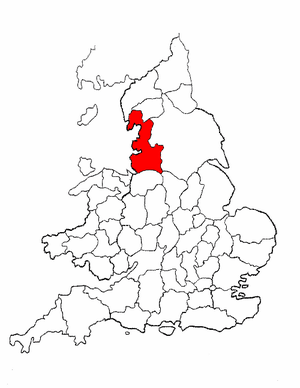
For this week’s theme of 52 Ancestors in 52 Weeks I’m going out of my comfort zone and headed to a part of my family I haven’t done a great deal of research on. Part of it is because all (or at least most) of these people are based in Lancashire, England. And I’m actually pretty sure I may have more than the William Fairhurst’s that are listed here. But because I haven’t properly focused on my family across the pond as I should have (I may have mentioned it before, but my goal has always been to focus on England research when I get other branches there as well – but I should probably start because I may never get out of Pennsylvania, and I suppose that is a fact I should begin to face).
So this week for my “name’s the same” post I will focus on at least 4 William Fairhurst’s and how they are all about 20 years or less apart and how it’s so incredibly easy to get them confused,
William Fairhurst (1870-1943)
My first William Fairhurst was born on 22 July 1870 and is the older brother of my great-grandfather, James Fairhurst. William was the second oldest of my great-great-grandparents, Thomas and his wife, Rachel Topping (James was their 2nd youngest of a total of 10 children, William was 20 years older than James).
On 16 Dec 1893, William married Elizabeth Ann Seddon. They had a son, Frederick, who was born in 1897.
William decided to head to Jefferson County, Ohio to make a better life for his family. William sailed to the United States via Boston, Massachusetts on the Saxonia from Liverpool, England on 29 June 1909. His destination was Amsterdam, Ohio to join his brother and friends to be a coal miner. (As a note, 7 out of 10 living siblings of William’s emigrated to the United States, including my great-grandfather, who headed there in 1913). His wife, Elizabeth, joined him later in 1916. His son Fred opted to stay living in England.
William became a naturalized citizen of the United States on 21 May 1915.
By 1930 William was no longer working in the mines but was working for the Saalfield Publishing Company in Akron, Ohio, which was one of the largest publisher’s of children’s books in the world between 1900 and 1977. William continued to work here until he died of cancer on 3 February 1943.
William Fairhurst (1841-?)
Our next William is our last William’s uncle. Born in 1841, he was the older brother of Thomas Fairhurst, my great-great-grandfather (making this William my 2nd-great-grand-uncle).
He had a son named William C. Fairhurst, so this brings my total to 5. I was unable to find a definitive death date for William. One that came up repeatedly was 1915 – but I hate to commit when I’m not really certain that it was the same William.
William Fairhurst (1829-1876)
William Fairhurst was the fourth child of my 4th-great-grandparents, William Fairhurst and Alice Winnard. He was born on 27 May 1829.
In 1850 he married Ellen Bentham and they had 12 children (and yes, one was named William, so there is a 6th!). He was a coal miner by trade. He passed away at the age of 46 in 1876.
William Fairhurst (1797-1875)
This William is the only one that is my direct descendant – my 4th-great-grandfather who was born on 27 Jan 1797 in Pemberton, Lancashire, England. He married Alice Winnard on 26 May 1819 in Wigan, Lancashire, England and they had at least 7 children before Alice passed away in 1856.
William was an agricultural laborer. His oldest son, John, is my 3rd-great-grandfather who did not follow in his dad’s footsteps and became a coal miner.
William died in February 1875 outliving all but 2, possibly 3, of his children (I haven’t found a date of death of his son, Thomas).
What I Learned About Looking into my William’s
I haven’t worked on the Fairhurst and Boone branch of my family tree much over the 4.5 years I’ve been working on my genealogy. Trouble is, I should start looking into these people. Yes, the records are confusing because I’m not as familiar with the places and set-up of documents as I am in Pennsylvania where I recognize towns. But this is all about learning, and maybe it’s time to leave my comfort zone.
I do know that it was really easy to start down the rabbit holes and I have so much to learn about this branch. The thrill of finding new people in just a few days of researching brought back part of the reason I got into this hobby – the huge puzzle of it all. Sometimes I get caught up working on citations and adding documents, and (shocker) that’s not always fun.
So here is to finding more Fairhurst’s in the future.
The word “power” brings so many different ideas into ones head. Merriam-Webster defines power as:
ability to act or produce an effect
possession of control, authority, or influence over others
physical might
powers – an order of angels
the number of times as indicated by an exponent that a number occurs as a factor in a product (oh my gosh, I’d completely forgotten about this)
a source or means of supplying energy
magnification (again – totally didn’t think of this)
scope
the probabilty of rejecting the null hypotheseis in a statistical test when a particular alternative hypothesis happens to be true.
And that is it’s meaning as a noun (it can be a verb and an adjective too).
Though it was the source of supplying energy that popped into my head initially but I don’t really know how quickly my ancestors got electricity into their homes to make their lives easier. And despite being the history buff I don’t think I ever took the time to learn when this became the “norm”.
And since I have not yet found a mathematician in my family – exerting one’s authority over others will be how I approach the theme for week 8 in Amy Johnson Crow’s 52 Ancestors in 52 Weeks.
Harold Fairhurst
The person who comes to mind when I think of someone exerting power over others is my maternal grandfather, Harold Fairhurst.
Harold was born on 11 April 1922 in Amsterdam, Ohio in Jefferson County to James Fairhurst and his wife, the former Phoebe Boone.
Unlike my most my relatives who have me stuck in Pennsylvania, James and Phoebe came to the United States from Leigh, Lancashire, England in late 1913 (James) and early 1915 (Phoebe). In 1920 James had become a naturalized citizen taking the Oath of Allegiance on 14 May 1920.
While James worked as a Coal Miner, Phoebe ran a boarding house. However, by 1930 the Fairhurst’s and their 6 children (Elsie, Wilfred, Edwin, Doris, Harold and Evelyn) moved from Jefferson County to Akron, Ohio where James began working for the rubber companies and then for some of the WPA projects.
From stories I’ve heard life was not easy for the boys. Phoebe pitted brother against brother and most resolutions came with their fists. Phoebe also expected all her children to hand over their paychecks to her to help support the family. From my own experiences with my grandfather, I can easily see his not liking this, and it explains why he was married at the age of 21 in 1943.
Unlike his brothers, my grandfather did not work for the rubber companies, he was a construction worker and became a Mason. He was also a golf pro, but both vocations had him unemployed a few months each year because that is how life is in Northeast Ohio.
As I stated before, Harold got married to his first of 5 wives in 1943. His marriage to Helen Juanita Ferguson did not last, ending in divorce 6 January 1947. Shortly after their divorce was final Harold meets and marries my grandmother, Alberta Lou Fleming on 29 June 1947. They had 5 children, my mother being the oldest.
My grandfather was not a nice man. He was verbally and physically abusive and repeatedly cheated on my grandmother (I was told by my mother that his one girlfriend was Catholic and that is when the older 3 children attended Catholic school).
I don’t really have any happy memories of my grandfather. When I was little he lived about an hour or so away from us (translated – for a little girl it seemed like forever to get there but after Googling the distance between Cuyahoga Falls and Lodi it is apparently only 36 to 45 minutes away – yes, I’m blown away). My grandmother finally divorced my grandfather in 1968 because he was having an affair with the girl next door, who became wife #3. Mary Lynn, was the same age as my mother. I think this was why when she asked me to call her “Grandma Mary” it made me feel uncomfortable. I guess lucky for me we did not visit frequently and soon his wife and three kids moved to Tennessee. The one perk was that these kids were basically my age, so I had playmates. But I was never fond of my grandfather. Ever.
But as I’ve said before, my grandfather was not a nice man. When he was married to my grandmother he would beat her and their children horribly for what I consider dumb reasons (they left a mess in the living room with their toys, basic kids being kids reasons). My grandmother was a terrific bowler, if he didn’t think she bowled good enough he would make her practice over and over and over again when she got home, it didn’t matter that children were sleeping and had school the next day. And if she still didn’t bowl to his expectations, he threw her into the wall.
As time went on my grandfather would break his daughter’s arm. I remember he gave me what is called an Indian Rug Burn on my arm when I was joking with him. He didn’t think it was funny and grabbed my arm, twisting and squeezing it simultaneously. I was in 7th, possibly 8th grade.
I don’t know if my grandfather got his bullying like power from being the youngest boy in his family – constantly being tormented by his older brothers? If he just didn’t live up to the same standards his brothers did to his mother? Rumor has it when Wilfred, the oldest of the 3 Fairhurst boys, but the second to die, leaving just Harold, Phoebe, their mother, told my grandfather that now she had no sons.
Ouch. Who says that to their child?
It just shows how words can hold the same sort of destructive power as fists.
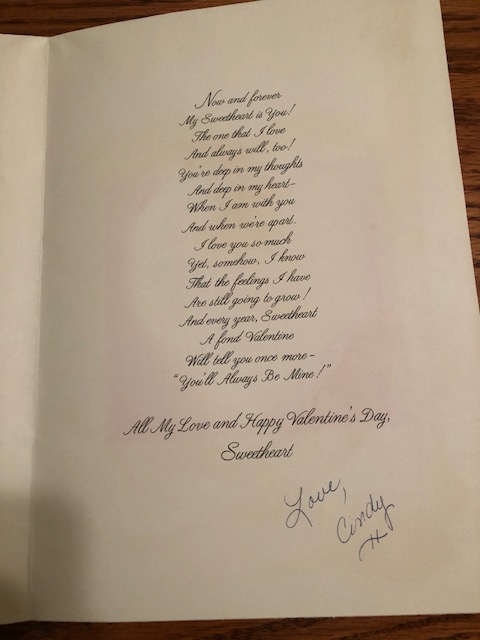
This week’s theme for 52 Ancestors in 52 Weeks by Amy Johnson Crow is Valentine. I was fortunate enough to have stumbled upon this Valentine about a month or so ago when going through boxes in the basement at my parents house, well, I guess it’s really my dad’s house now.
My dad has plans for the basement and my mom had all her clutter located there. It included decorations galore that I don’t think she ever used, filling box after box in our family room. Many of these she had there for my sister and I to go through – I don’t think she ever thought we’d be going through them as we did. Or at least how I did. My sister was smart and stayed home this day. I do have a box of more items to bring to my house (as I told my husband – I may use them to decorate here and there and this way I don’t have to spend money on items as these would work).
But going from box to box I found a box that was from my Grandma’s house (yes, the infamous Anna Maria Morgart here on my blog – I should just make this about her life). I remember opening it up and laughing – I think every pack of wrapping paper I ever sold in elementary school was in this box placed on top of all the other contents.
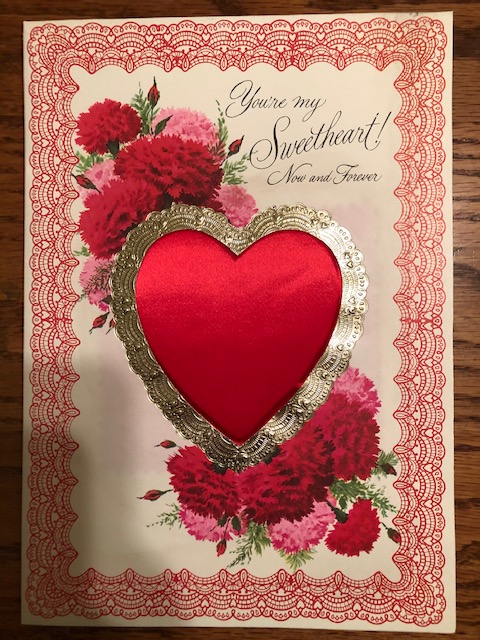
But as I kept going I found this beautiful Valentine. It turns out it was from when my parents were dating. It was for my dad from my mom.
I have no idea when she sent it, I’m guessing maybe their first year of dating? When I showed my dad I got nothing, but he isn’t an overly sentimental person. But I loved finding this. My mom wasn’t one to show a lot of emotion so that she did this in their relationship was so sweet.
And the big red heart is like a satin material, like a big ribbon and it just makes this card. They don’t make cards like this anymore.
So a thank you to my dad, for letting me use his Valentine, and a thank you to my Grandma, for saving it all these years (I found a birthday card I got for her in the mix as well, probably when I was in 2nd or 3rd grade too, made me tear up).
This week’s theme for Amy Johnson Crow’s 52 Ancestors in 52 Weeks is “In the Kitchen”. The first thing that popped into my head was how the past few Christmases I feel as if I have the ghosts of my mother, her mother, and her mother, all in the room with me helping me bake.
The Recipe
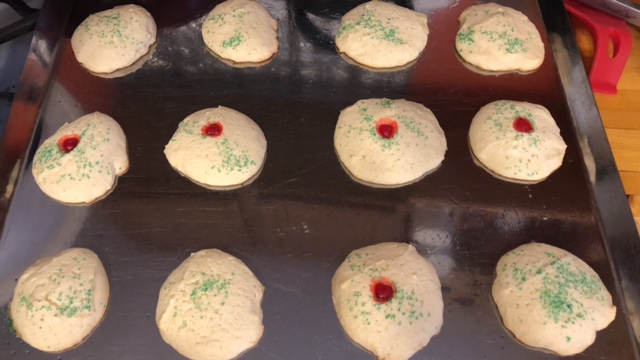
There is a specific cookie that I make that has me think of these lovely ladies in my life. The recipe is for Drop Sugar Cookies, you know the ones that are made with sour cream and are extra moist. And what I have found has made my great-grandmother’s recipe unique is that she added nutmeg. I have also found that the colored sugar that you sprinkle on the cookies helps to make it taste good as well – but the real treat is the red hot. Those red hots make them extra yummy!
Picture if you would, the recipe, do you think I can find it? Of course not, it wasn’t written by my Great Grandma but it was by my mom (I photo copied her recipe card when I started making cookies for my own kids.
The Cookie Sheets
About a year or so before my mom passed away she got me some heavy duty insulated aluminum cookie sheets. These are 2 of the 5 (sometimes 6) cookies sheets that I use when I bake my cookies (primarily because they are my largest pans).
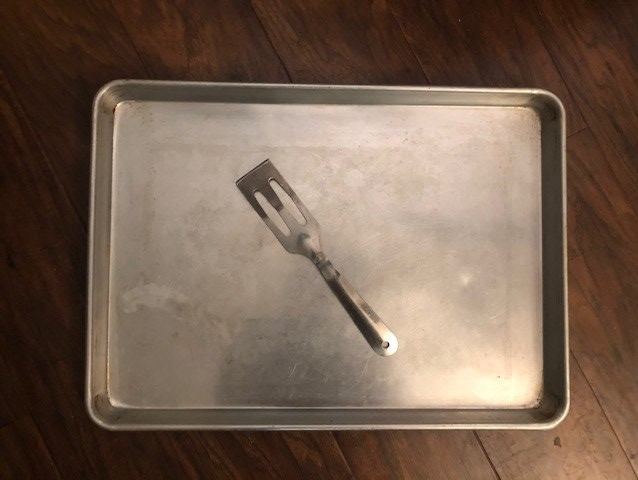
The cookie sheet, maybe more of a jelly roll pan that my mom got me a couple of years ago, lying within it is the spatula I decided to adopt from my grandmother’s house.
The Spatula
The final step in the cookie baking process is taking the cookies off the cookie sheets and putting them on my cooling racks. The above spatula was my grandmother’s. I remember I took it from her house after she passed away. My mom and I went over to clean up a little bit and I saw it and I took it. I’ve never seen a spatula like this in the store and I know how great they are as my mom use to have 2. I wasn’t taking any chances on anyone else wanting it. And because of this key tool, I am able to get cookies off a cookie sheet spectacularly because of it’s finely beveled edge.
All Together Now
You put all these items together and I feel like there are 4-generations of ladies in my kitchen baking with me every holiday – Mildred Laura Dunbar, Alberta Lou Fleming, Cynthia Anne Fairhurst, and me!
This occurred to me my first Christmas after my mom passed away in 2018. It was a hard holiday and it’s the little things like baking cookies that take a lot of me (my mom and I shared baking responsibilities each year – she’d bake cookies with my daughter and they would do 2 types of cookies [Russian Tea Cakes & Peanut Blossoms] and I made 2 types[cut-out cookies and the drop sugar cookies]).
I find it interesting – this is a cookie sheet I made in Junior Achievement when in 10th Grade.
I miss these three ladies so very much. My great-grandmother, Mildred Laura Dunbar, was the first person I knew well that passed away. When her daughter, Alberta Lou Fleming, my grandmother, passed away in 2006, I was sad. I wish I would have known her better, but she moved to Florida when I was little so I never quite had the connection with her as I did with my other grandma, and even her mom (my great-grandma use to babysit me when I was little and she entertained me with her costume jewelry and clothes and made me scrambled eggs). My mom’s death came unexpectedly in 2018 and even now, almost 3 years later I have days where I’m just sad).
But without these ladies, I could not bake a great batch of cookies.
Was there a cookie you use to bake with a relative, or that you make because it was passed down with your family? Share with me in the comments!
The week 3 theme for Amy Johnson Crow’s 52 Ancestors in 52 Weeks is “Namesake”. I know I have a lot of people in my tree (direct and not-so-direct) that are named after others. I started becoming overwhelmed as I wasn’t sure who to even begin writing about – but then it occurred to me… I can mention them all (well, most)!
The Anna Maria’s
The first namesake that popped in my head was my grandmother, Anna Maria Morgart (and as an FYI – that Maria is pronounced Mariah), who was named after her maternal grandmother, Anna Maria Leighty.
Just as I can spout off so many wonderful memories of my own grandmother, this was what my grandmother would do about her Granny Wise (Anna Maria Leighty was married to Jonas Wise), I just wish I had paid more attention and remembered them.
Below is Anna Maria Leighty (left) and Anna Maria Morgart (right).
The Andrew (Jackson) Blair’s
Andrew Jackson Blair is the name of my great-grandfather. His father was also Andrew Jackson Blair and his father was Andrew Blair (I’ve not confirmed his middle name was Jackson but no one hopes more than me it was as maybe it would eliminate that they were named after the president – I was not overly fond of him).
Last year I wrote about the Andrew Jackson’s in my Same Name post.
George Henry Fesler’s
George Henry Fesler is my great-great-grandfather who was born in 1824. He had a variety of occupations over his lifetime – laborer, farmer, stone mason and soldier as he fought for the Union in the Civil War.
Before fighting in the war, he had 6 children. Upon his return home he had 4 more, the fourth youngest of his children with Mary Elizabeth Oakman was George Henry Fesler, Jr. The elder George lived until 1911 with his cause of death being “old age”.
The Childers’
I don’t want to forget Abraham Childers. He was born in 1797 and passed away in 1874. Though Abraham had no children named for him, my great-great-grandparents named one of their children Abraham Childers.
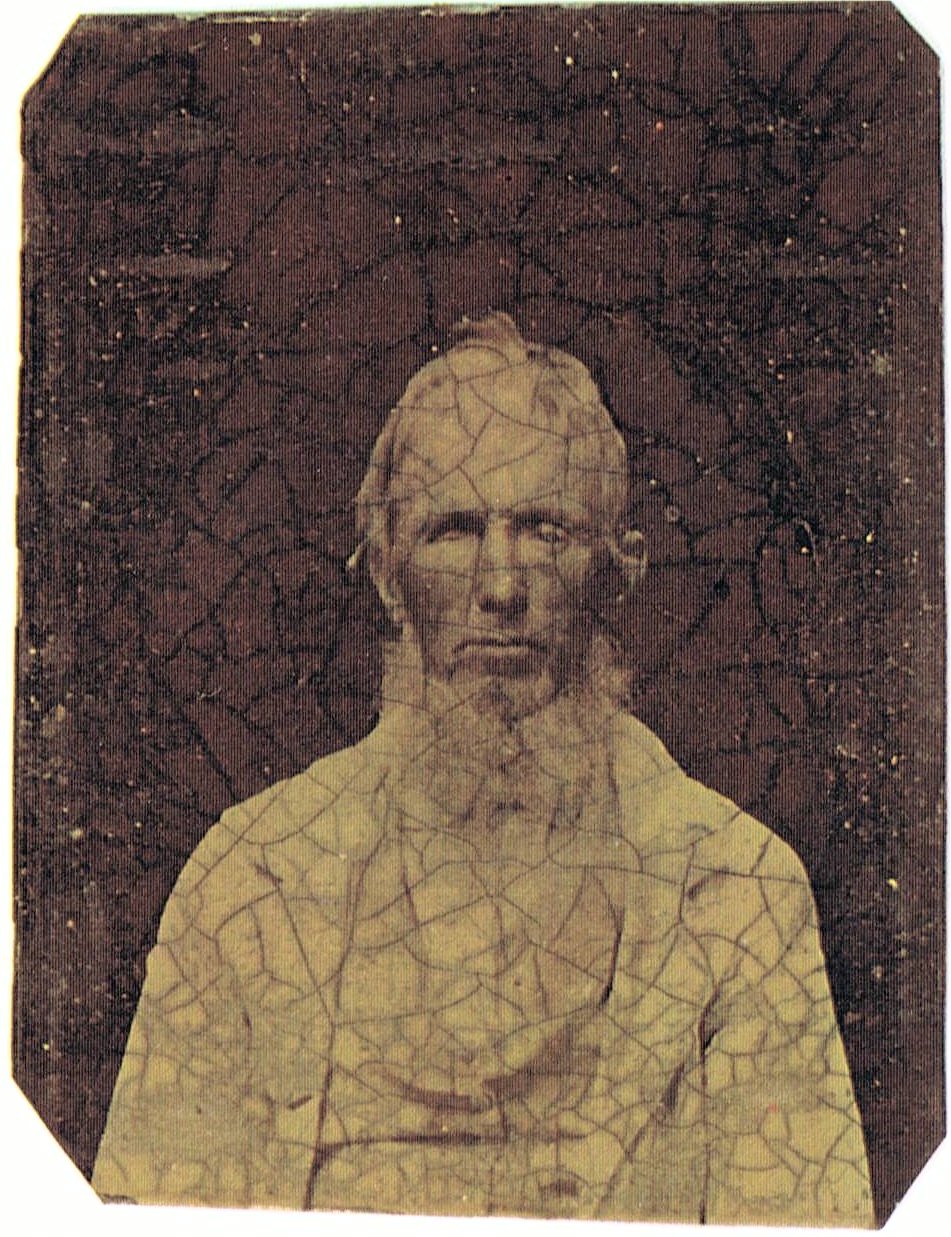
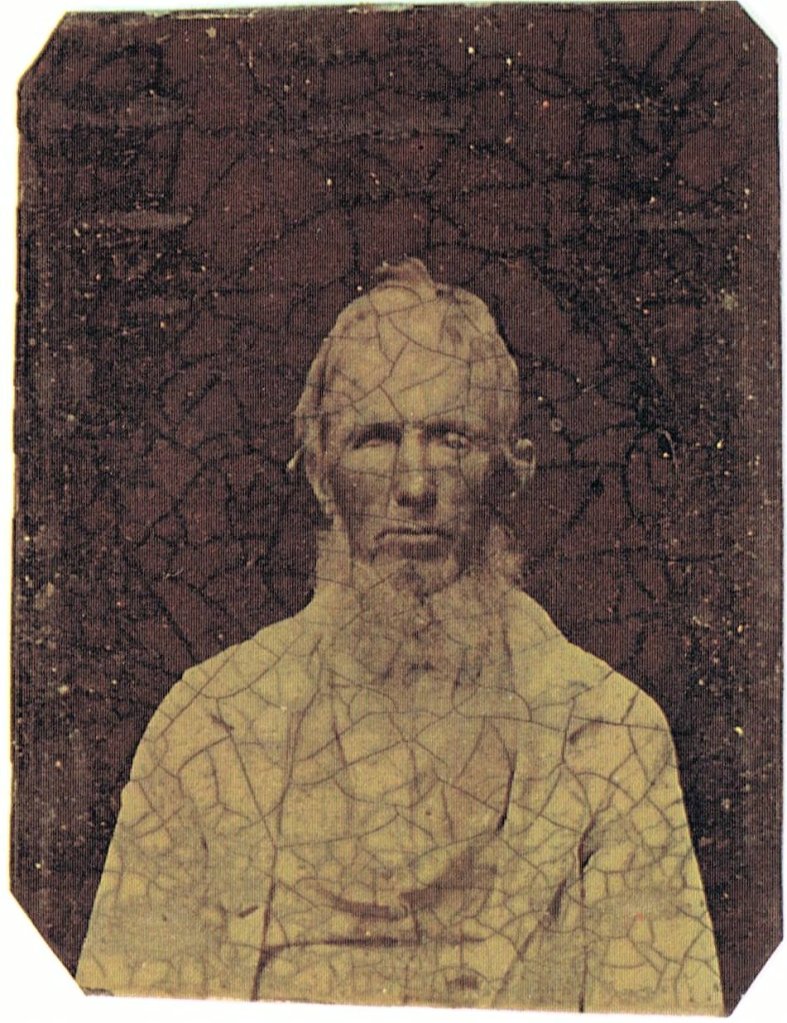
Abraham was a chair maker and surprisingly enough – I’ve found a photo of him on Ancestry but not his grandson (though I suppose there is a chance whoever placed it there was incorrect but it’s so crackled I figured it was probably correctly identified).
The elder Abraham, my 3rd-great-grandfather also fought in the War of 1812 as a teenager.
The Delos Dunbar’s
We will now travel over to my maternal side and learn about Delos Henry Dunbar, my great-great-great-grandfather who was born in 1828 in Eaton, New York. He was a farmer who originally owned land in Independence, New York but eventually moved a few miles south to Potter County, Pennsylvania where he died in Coudersport in 1913 (a few months after his son, my 2nd-great-grandfather, Arthur Dunbar).
Delos, and his wife, Harriett Williams, oldest son was Delos Henry Dunbar, Jr. He was born in 1859 and died in 1936 in the state of New York. He was a Reverend in the United Brethren Church.
Both father and son are buried in Rathbone Cemetery in Oswayo, Pennsylvania (a city in Potter County).
The Fleming’s
My great-grandmother, Mildred Laura Dunbar (daughter of the above mentioned Arthur Dunbar) married Howard Fleming in 1933. Their eldest son was also named Howard after his dad. Though the elder Howard (born in 1908 in Corisca, Pennsylvania, passing away in Cuyahoga Falls, Ohio in 1972) was a carpenter for B.F. Goodrich, one of the rubber companies in Akron, Ohio, his son, became an architect.
Howard and Mildred’s youngest son, James Rodney Fleming, who was born in 1943 and passed away in 2009, has his own namesake as well.
The Warner’s
The Warner’s – my favorite family I never met a person from (is it weird to think I would have really liked my great-grandmother, Mazie (she was married to Arthur Dunbar – see how I am uniting everyone?).
I had to go pretty far up the family tree to find the namesake in the Warner family. Back in 1684 Ichabod Warner was born in Hadley, Massachusetts. In 1711 he married Mary Metcalf and they had Ichabod, Jr who then went on to marry Mary Mapes in 1737 and in 1738 Ichabod Mapes Warner was born.
Ichabod Mapes Warner fought in the French & Indian War.
Keeping Up With the Joneses
In the same area of my family (Oliver Charles Warner, Mazie’s grandfather, married Mary Jones) I have 3 generations of Anthony Joneses.
The eldest Anthony Jones was born in 1723 in Framingham, Massachusetts. In 1747 he married Margaret Elizabeth Alden and in 1753 they welcomed their fourth child, a son, who was Anthony Jones, Jr. Anthony Jr married Lydia Burnap in 1784 and in 1786 they welcomed their second son, Anthony Jones III.
Anthony Jr fought in the Revolutionary War.
Last But Not Least
I myself named my son after my dad, they are both Robert’s. Before my daughter was ever born, I had the name all figured out (well the middle name I negotiated with my husband so I could have a pink room). My dad didn’t mind as he apparently hasn’t been all that fond of his middle name.
We actually waited to be surprised when she was born, so until she popped out we didn’t know if she was going to be a Robert or not. When she decided to be a girl, that left Robert open for the next child. Lucky for me he was a boy.
For all intents and purposes my daughter has been named after my great-grandmother, Margaret Dora Wise. It was a fluke as my husband and I had disagreed on name after name for her and finally decided on Maggie… only to realize after the fact that Maggie was what my great-grandmother went by (Margaret Dora Wise was Anna Maria Leighty’s daughter, and my grandmother, Anna Maria Morgart’s mom – I’ve come full circle!). Her middle name goes along with the theme as well as it is a variation of my husband’s brother’s name (that part was on purpose).
I’m sure I have a bunch more on my family tree, for example my Uncle Eddie was named after my Great Uncle Edwin who died in World War 2 (you can read about that in last week’s post). But I tried to stick with just my direct line, even if my relative wasn’t always a result of the namesake (though my Andrew Blair’s and Ichabod Warner’s will always be special because I am a direct descendant).
If you are interested in writing about your ancestors you should take part in Amy Johnson Crow’s 52 Ancestors in 52 Weeks. Click here to check out the years worth of theme’s and I’m sure there is a spot to sign up as well!
The theme for week 2 in Amy Johnson Crow’s 52 Ancestors in 52 Weeks is “Family Legend” and the story I am going to tell is what popped into my head. I don’t hear many tales from either side of my family, but this is one of the few that I do remember hearing frequently over the course of my life.
The Fairhurst Brothers
My maternal grandfather, Harold Fairhurst, had two older brothers, Wilfred Fairhurst who was born in Leigh, England on 15 July 1914 and Edwin Fairhurst who was born in Jefferson County, Ohio on 23 May 1917. Both were raised in Ohio, moving to Akron by 1930. When World War II claimed the United States, both were working for the rubber companies, Wilfred for Goodrich and Edwin for the Seiberling Rubber Company (this was the Seiberling’s venture after they resigned from Goodyear in 1921). Wilfred joined the Marines while Edwin signed up for the Army.
The Battle of Saipan
On a transport on 5 June 1944 that left Pearl Harbor, Hawaii and made its way to the Pacific Island of Saipan, both Marine Sergeant Wilfred Fairhurst and his brother, Army Staff Sergeant Edwin Fairhurst were on board.
The battle of Saipan was the Pacific Theatre’s D-Day. The battle officially began on 15 June 1944 and ended with a United States victory on 9 July 1944. Initial bombardments began on 13 June 1944 by battleships, destroyers and mine sweepers. Naval bombardments began on 14 June 1944 and then 8,000 Marine Corps landed the West Coast of Saipan on 15 June 1944 that officially began the battle with the Army arriving in Aslito on 16 June 1944.
The fighting was intense despite General Hideki Tojo, Japan’s Prime Minister, swearing that Saipan could not be taken. He was ousted out of office a week after the United States declared victory on 9 July 1944. The battle resulted in 3,000 deaths and 13,000 wounded for the United States and over 27,000 Japanese soldiers were loss, as well as thousands of Saipan’s civilians, fearful of the United States due to the Japanese propaganda, as they jumped to their death from cliff’s at the northern end of the island.
The battle that took place on Saipan was important for the Pacific Theatre as it provided the United States with a strategic location to have a base where our new long-range B-29 bombers could be launched.
Guerilla Attacks
Despite the Battle of Saipan “officially” ending, Japanese resistance soldiers and civilians led by Captain Sakae Oba evaded American troops throughout the jungle and conducted attacks. Though it isn’t clear from any of the news articles I’ve read, I’m guessing that one of these such attacks is what killed my great-uncle, Staff Sergeant Edwin Fairhurst.
On 18 July 1944 while cleaning up after the battle, a Japanese fighter threw a grenade that exploded leaving shrapnel in Edwin’s stomach and legs. He died July 22. Wilfred claims that Edwin “got the fellow before he fell“. The legend in our family lore goes that it was Wilfred who went and picked his brother up off the battlefield and carried him to safety.
Article from 10 Aug 1944 Akron Beacon Journal
He Finally Came Home
It wasn’t until 5 years later that Edwin’s body returned home to be buried. His official funeral took place on 15 January 1949 with his final resting place being Chestnut Hill Cemetery in Cuyahoga Falls (Wilfred is buried there as well, though he passed away in 1956).
If you are a budding genealogist and would like to write more about your family but aren’t sure where to start, take a peek at Amy Johnson Crow’s 52 Ancestors in 52 Weeks series.
The Week 1 theme of Amy Johnson Crow’s series “52 Ancestors in 52 Weeks” is “Beginnings” and all my beginnings lead to one place, Akron, Ohio.
Actually, if I wanted to be precise my beginnings would be linked to Falls Rec, the bowling alley where my parents first met. My dad was bowling one night on a league I believe for Ohio Edison and my mother tended bar. According to her, some guys wanted to introduce her to their friend, Bob, and she was excited as Bob was really good looking, but they brought my dad over instead (your laugh here to her funny tale).
I like to think it was a good thing, but then I’m a little biased.
But this meeting would never have happened had my grandparents, Leroy Blair and Anna Maria Morgart, not moved to Akron in the 1950s. The same can be said of my immigrant great-grandparents James Fairhurst and Phoebe Boone, who came to the United States from Leigh, England in 1913 (James) and 1915 (Phoebe). They originally resided in Amsterdam, Ohio but then moved to Akron by 1930. Lastly, if my great-great-grandmother, Mazie Lorenia Warner, hadn’t moved here in 1916 with her second husband, Samuel Randol with her 2 daughters, all of the pieces to my DNA make-up would not have come together.
Why Akron?
Akron, Ohio was the happening place to be in the early 1900’s. “Between 1910 and 1920 the city’s population tripled to more than 200,000” (britannica.com). This was the time when Akron became known as the Rubber Capital of the World because all three big rubber companies had their headquarters here: Firestone, General Tire, and Goodyear (Goodyear still does).
Many of my Fairhurst relatives (my great-grandfather James, and 2 of his sons, Wilfred and Edwin) all worked for the rubber companies at various times. My grandfather, Harold, worked partly in construction and partly as a golf pro.
When Samuel Randol located to Akron with his family, he worked at the Swinehart Tire & Rubber Company. Here he met the last part of my family, my great-great-grandfather, Clyde Geer (and the Geers have been settled in Akron since Summit County was formed on March 3, 1840, with Clyde’s dad, William Harrison Geer being born on April 2, 1840, just 1 month later).
Leroy Blair originally moved from Pennsylvania to Indiana as he had an apprenticeship to learn the sheet metal trade. He moved from Gary, Indiana to Akron, Ohio in the early 1950s.
When I look at how all the pieces of the puzzle at one point lived all over the world, it’s amazing that my parents even met. The son of 2 English immigrants somehow met up with the daughter of an administrative professional/stenographer and a dad who we thought was one person, only to be another (the wonders of DNA) to have 5 kids, with the oldest meeting the only son of a sheet metal worker and his housekeeper wife.
Wow. Just wow. And in a bowling alley of all places.
Falls Rec
Falls Rec was torn down in the mid-1990s and where it stood is now the parking lot of a Sheraton Hotel in downtown Cuyahoga Falls (the suburb of Akron where I was raised). I remember bowling there once when I was little. I believe my sister did join a kids league (I wasn’t much of a bowler).
My grandparents bowled there, my mom worked there, I believe most of her siblings bowled or worked there as well. It held quite the memories for my family.
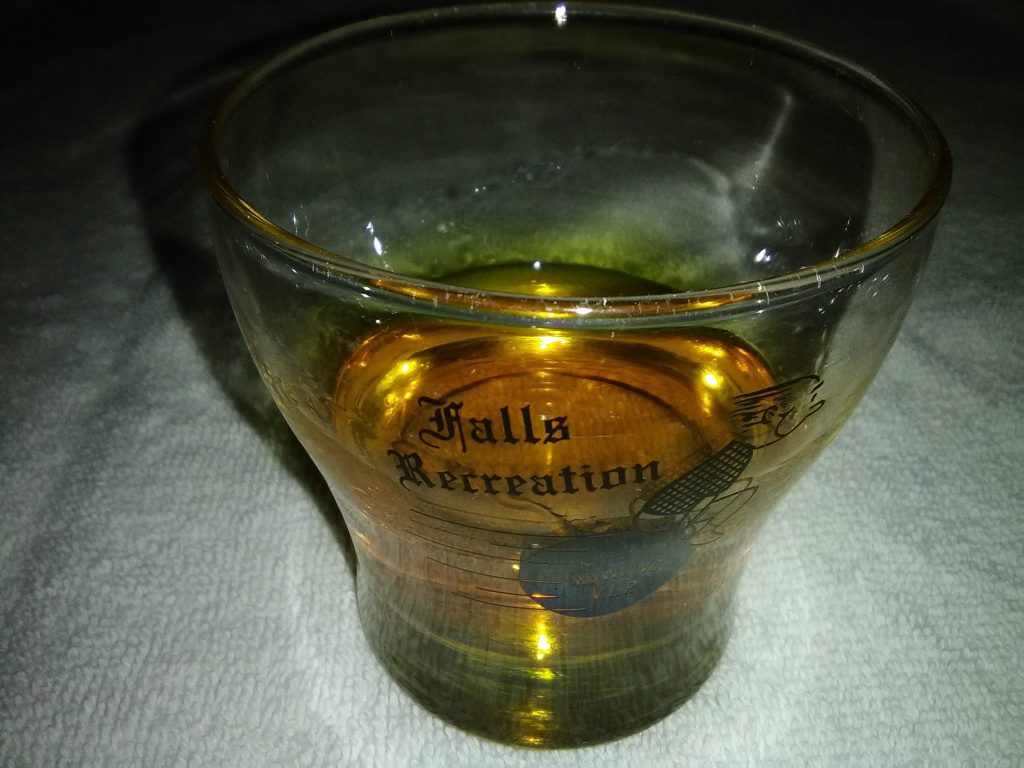
Photo by Stephen Fairhurst, this was one of about 4 dozen of these glasses that he had. You earned it for bowling above a 620 Series at Falls Rec in Cuyahoga Falls, Ohio.
More About Akron
I’m lucky that Akron had it’s hey day when it did because without it, I most likely wouldn’t be here. Akron isn’t just known for the rubber companies, it has been voted an All-American City four times (1980, 1981, 1995, and 2008) and has a nationally recognized library (the Akron-Summit County Library – which has lots of great genealogy information in their Special Collections department), it’s home to the Akron Art Museum, the Akron Rubberducks (the AA minor league baseball team to the still presently called Cleveland Indians), and the home of Purell (which has been super important during this Covid-19 filled year).
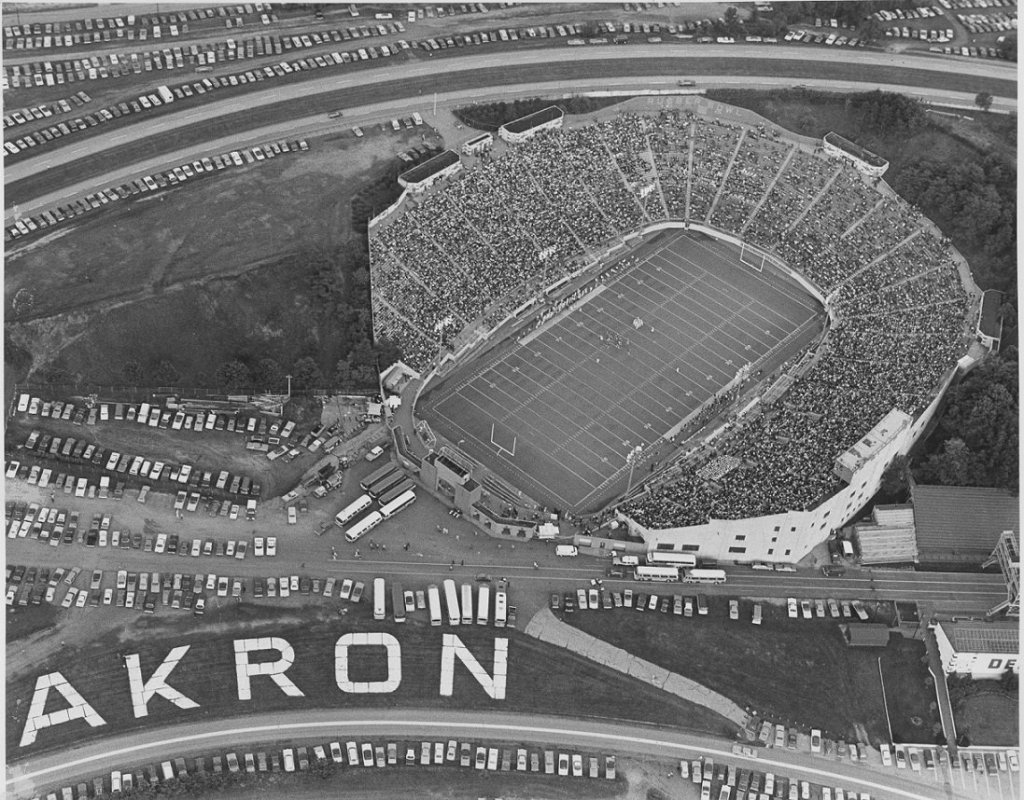
The University of Akron, which is widely known for its polymer research (which goes hand in hand with the rubber companies), and an outstanding Law School. On a related note, for years their football team played in the “Rubber Bowl” which was built as a Works Progress Administration project to put people to work in the late 1930s. The football team moved to their new stadium in Downtown Akron, in the heart of the University at Infocision Stadium in 2008. It was home to more than just football games, as countless concerts took place there as well. Demolition began in 2018, but only part of it has been razed as the other parts could cause structural issues with the roadways surrounding it and Derby Downs.
This photo was in a Twitter feed from the University of Akron from 2018
Which brings me to one of the most famous events in Akron is the annual Soap Box Derby , with motorless go-carts that of specific requirements and has been held yearly since 1933. Youths compete in their hometowns and move along until they come to Akron for the national championship. Competitors and their families come from all over to participate. I remember one year when I took summer courses for my degree while attending the University of Akron, as the dorms were used for their overnight accommodations, and it blew me away when I saw just how many children and teens participated in this event in my hometown.
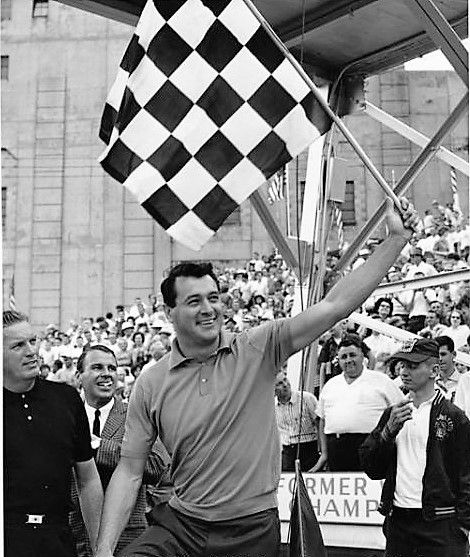
I remember my mom telling me when she was a teenager going to a Soap Box Derby parade and in 1963 Rock Hudson was a celebrity attending, and she was able to touch his hand as he drove by in a car and that was one of the highlights of her life, as he was one of the few actors my mother thought to be dreamy.
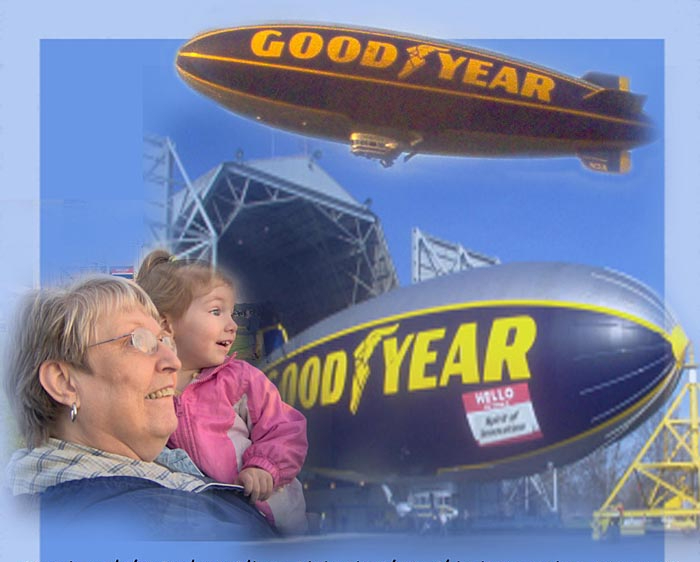
Going hand in hand with Akron and Goodyear, I would be remissed if I didn’t discuss the Goodyear Blimp. The blimps were originally created at the blimp hangar in the middle of Akron. I remember my mom telling me that the hanger was so big it actually would rain inside.
Well, it’s been a while since they’ve built blimps at the original hangar, as they now are built at the Wingfoot Lake hangar in Suffield. In 2006, my parents, sister and brother-in-law attended the launch of the Spirit of Innovation in 2006.
A digital scrapbooking layout that was done by my sister, Kellie Blair, of my mother and daughter. I just love the look of wonder in my daughter’s eyes.
Goodyear has always been a huge supporter of a variety of hobbies in our area, the Lighter Than Air Society being one of them. And it’s funny, I’ve grown up with blimps roaming the skies all my life and to this day when I hear that engine I run to see it. Though the new blimps, Wingfoot 1, 2, and 3 are all very quiet so you don’t hear them from within my house anymore.
A photo of one of the Blimps a block from my house as I sat in my car at a red light. No matter how old I get they always make me smile.
Other Popular Places
I’m sure there is a lot of Akron I have missed, but before I forget here are 2 of my favorite places: the Akron Zoo and where I use to work, Stan Hywet Hall & Gardens, which is the 65-room Tudor Revival home that F.A. Seiberling (co-founder of Goodyear with his brother, C.W.) and his wife Gertrude began building in 1912 and moved into in 1915. I think my favorite part of the house is how they had an architect (Charles Schneider) that designed the house and a landscape architect (Warren Manning) that made the gardens be extensions of the rooms. For example the Breakfast Room is designed in the colors of blue and yellow (Goodyear’s colors) and the garden that was around it was made up of blue and yellow flowers. It is now a historic estate that people can tour the house and grounds, along with various special events they have throughout the year.
Stan Hywet Hall & Gardens on 22 Dec 2018 during their Deck the Hall! program.
As for the Akron Zoo, my daughter can not get enough of it, even as a teenager and more often than not we have a membership.
My son and daughter from 2019, he tried to look as miserable as possible in most every picture we took of him that day while my daughter is as happy as can be.
Summit MetroParks
I can’t believe I almost forgot one of my favorite features of where I live – the Summit Metroparks. I’ve been told by many fellow classmates that this is the one feature of our area that is so often overlooked and the most missed once people move onto other areas of the country.
The Summit MetroParks is a non-profit organization that cares for a 16 parks compiled of 14,000 acres with a variety of things to do in them like hiking, ice skating, soccer, baseball, archery, biking, paddling, kayaking, fishing, swimming and more.
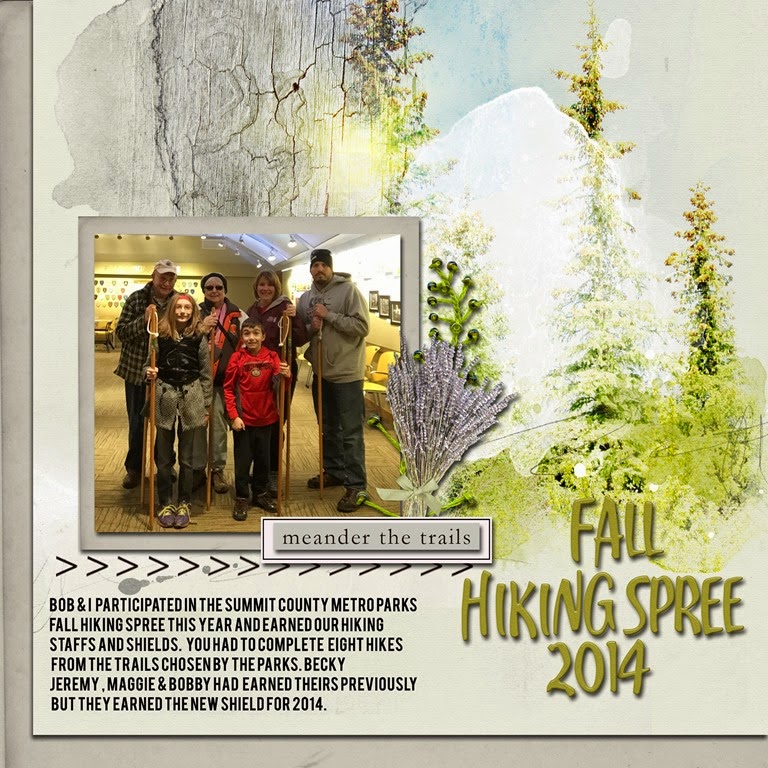
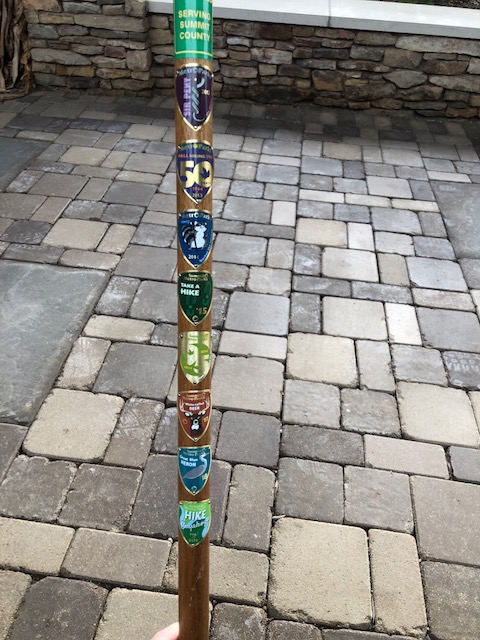
For 57 years the MetroParks has hosted the Fall Hiking Spree. It’s funny as I originally tried to complete this when I was in 10th grade. I was in Enriched Biology and the main thing that separated us from the regular class were projects that were due each grading period. The first was easy, participate in the Fall Hiking Spree. 6 Hikes was an A, 5 a B, and so on. I did 6 with my dad. We found group hikes that were led by Naturalists and advertised each week in the Akron Beacon Journal and that’s where we went, so we not only learned about the natural surroundings but any history tidbits that were involved as well. To earn your hiking stick and shield, you complete 8 hikes, and my dad and I had every intention to do them, but it’s Ohio, and the weather turned cold and wet and we never did. Fast forward 24 years and I’m 39 years old and I put earning said shield and stick on my bucket list of things to do before turning 40. I was so happy the day I earned it with my friend, Pam. I’ve continued to do the hiking spree each year since having earned 9 total shields (but there are people who have hiked every year).
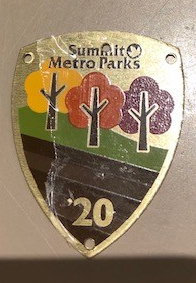
The below photo is the 2020 Shield on the left and a photo of my stick from 2019. Normally they have volunteers who will put the shield on for you but with Covid this year, they did not have this service. Bets on how long it takes my husband to get the shield on? It’s already January and it’s not done.
Writing this has been very therapeutic since being a girl who has wanted to move to New York City for over half her life, I realize just how lucky I am to be born and more or less raised in this wonderful area. It is the place where I have to begin my genealogical journey as it’s where I was born, my husband and children were born here, my mom, and her mom (my dad was born in Indiana). From there I spread to Pennsylvania on every front but the Fairhurst’s, which is England.
If you are interested in taking part in Amy Johnson Crow’s 52 Ancestors in 52 Weeks challenge please click here for more information. Come back next week as I tackle week #2!

























 Helping History Come Alive
