52 Ancestors in 52 Weeks, Genealogy, My Family Tree

Genealogy Goals for 2026

2026 will be here before we know it and I am getting my thoughts together on what I hope to accomplish as far as my family tree is concerned in this upcoming year. I find that doing this really seems to help. I don’t recall making this list last year, so here goes.

1. 52 Ancestors in 52 Weeks

I’ve already signed up for Amy Johnson Crow’s weekly series of prompts to help me write about my ancestors. I’m heeding her words of wisdom, which are you don’t have to write about every prompt, just the ones that speak to you. So that is just what I am going to attempt to do this year. I figure this is something I can work on during my lunch hours each day at work instead of always just reading. I’ll be productive (when I’m not sleepy and going out to take a snooze in my car – or going to a local park and getting my exercise in).

If you are interested in signing up for 52 Ancestors in 52 weeks, click here: https://www.amyjohnsoncrow.com/52-ancestors-in-52-weeks-new/

2. Utilizing My Local Library

Presently when I go to my local library for the meetings of our county chapter of OGS, I always see a group of people there diligently going between books and the computers working on their tree. I want to be one of these people. My local library is an amazing resource that I don’t use enough so I am going to begin going every Saturday to utilize the various programs that can be used while in the library. The websites include Ancestry Library Edition, FindMyPast, they are a FamilySearch affiliate, American Ancestors, Fold3, and MyHeritage.

I look forward to being able to utilize these different programs along with the many books they have in their stacks of shelves to assist me in finding out more about my ancestors. Especially since this year I forgot to renew my membership around Thanksgiving when Ancestry has good deals on gift memberships (or in my case, a gift from me, to me). I think my only subscription presently is Newspapers.com and even it expires in mid-February.

Check out your library, they may have Library Edition subscriptions for your favorite database as well!

3. Growing My Local Genealogy Chapter

When I first began going to my local chapter of the OGS, there were about 20-30 members coming to our monthly meetings. When Covid hit in 2020 our numbers decreased exponentially. Like it’s basically our few board members coming to the monthly meetings along with my mother-in-law (she is the only non-board member in attendance). I’ve already begun searching for speakers and have a theme for the meeting set-up for this years programming.

My hope is that with advance notice of a speaker or the topic that maybe we will be lucky enough to get a larger attendance. As the programming chair I’d been fearful of spending money on speakers when it was just about 7 people attending the meetings. But this year I’m throwing caution to the wind. I’m hopeful between filling in the schedule for the entire year along with more social media content I will be able to grow our chapter once again. If you belong to a genealogical society, feel free to share any tips you used to help grow your group.

A Successful 2026

I’m hoping all of the above will allow me to have a good year of expanding my tree and hopefully breaking down some brick walls. If you have any goals for this year, feel free to share in the comments below.

In the meantime, I wish everyone a Happy New Year!
Genealogy

Using Libraries in Genealogy

Libraries are very helpful resources for researching your family tree. Not every library is fortunate to have what my library calls a Special Collections department where local history and genealogy books are located. But if you are fortunate to have this resource available to you, you would be wise to use it.

Classes

During a “normal” year (a.k.a. one before Covid-19 hit), my local library would have a variety of classes spread out throughout the year, normally once a month, highlighting basic classes like: Getting Started on your Family Tree, Vital Records, Using the Census, immigration (breaking it down into 3 classes – before 1820, 1820-1890, and more or less modern day); photography (the different types or history of photographs, clues to identify time period); and how to use – Ancestry, FamilySearch, Heritage Quest, Fold3, Find My Past (the Ancestry one in particular is often repeated because it’s a great introductory class).

They also offer programs from area experts, like archivists where they tell you how they can assist in your search as well as preservation techniques, curators from the historical society where they explained that even if they don’t have information on your specific ancestor they can help you with how your family lived.

Speakers

I am also lucky that my library (the Akron-Summit County Library) also gets nationally recognized experts to come in and speak. For example, this past Saturday (January 16) Maureen Taylor, the Photo Detective, spoke via Zoom on Identifying Family Photographs. Past speakers have been Dani Shapiro (author), Judy Russell, CeCe Moore, John Phillip Colletta, and James Beidler, to name a few.

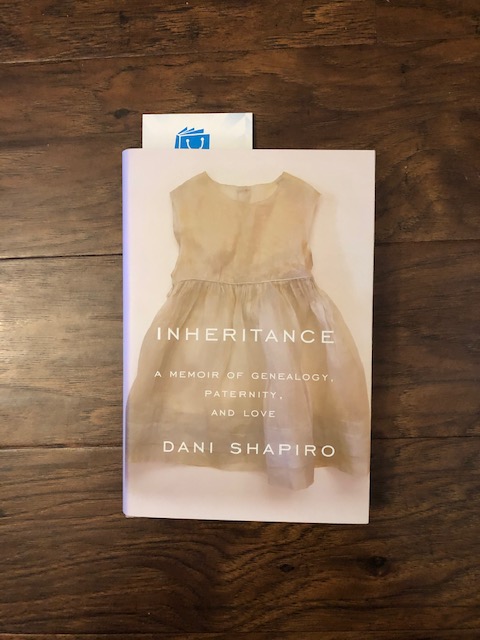
Here is my autographed book by Dani Shapiro in reference to her own DNA journey when she spoke at my local library.

Even though they may not pertain directly to your research, speakers give you something to think about on a grander scale.

The Librarians

The best part of Special Collection departments are that they have the very best librarians, in other words, they are so incredibly helpful! They have this very calm way of asking you questions and helping you figure out what your next step should be when you are stuck (I really should be at the library every day for at least 8 hours).

Free Access to Online Databases

Most libraries will have access to genealogical programs such as Ancestry, FamilySearch (yes, you can get it free at home but sometimes if your library is an affiliate you will have access to even more collections you may not be available to use at your house), Find My Past, MyHeritage, Fold3, American Ancestors, and I’m sure there are some I’m forgetting. Some you are able to access at any library, others you can only access at the main library.

Presently some of the databases such as Ancestry, Fold3 and MyHeritage are available to you at home as long as you have a library card since we are suppose to be practicing social distancing. I believe most of these are presently ongoing through the end of May and at that point will be re-evaluated.

Books

Last, but certainly not least, there are a variety of books available in the library to help you with your research. As my library is located in Akron, Ohio they have a quite a collection on Summit County and Akron as well as Ohio in general. But they also have a variety of books from Pennsylvania (a large branch of it) as well as from the northeast region of the United States and the south.

Periodicals are aplenty as they have magazines that can assist you with how you go about your research. They also have city directories (up until 1969 have been digitized and are located on the website), maps, and participate in interlibrary loans if they don’t have the book you seek.

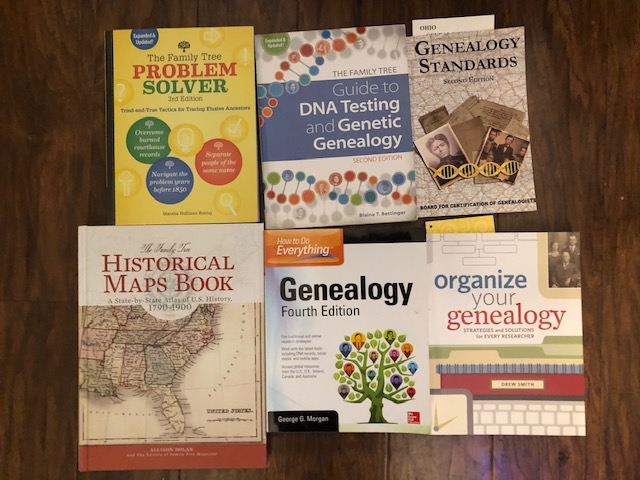
These are my books but they are ones you would most likely find in the Special Collections area of a library.

When You Hit Your Next Roadblock…

Make sure that you head to your library to see what information that they can provide, especially if your family lived in the area where you presently live. If your library is a bit smaller and does not have some of the above features, see if another library close by does (I realized when looking around at the other larger area libraries they all seemed to have a genealogical presence but it does not appear to have the resources my library system has).

Lastly, my library does have a way to get a library card online, so you could use what they have available even if they aren’t in your neck of the woods. You never know what you might find checking out other libraries, you may find one where your ancestors are from that would work with your local library on an interlibrary loan that could be a key to your research. Or you may find out your library has more than you thought!

Happy searching!