52 Ancestors in 52 Weeks, Genealogy

Week 41: Change

Having one-word prompts for 52 Ancestors in 52 Weeks is proving to be quite challenging for me. I know in some ways it gives the writer a little more “scope for the imagination” but sometimes it’s too broad. So much so it takes me to the next week to figure out what to say. And I even went on a 2-mile hike and constantly mulled over what I could write about… and then it hit me, I have changed as a family historian.

When I began this journey 5 years ago, I was a “plop the name in the search box and see what information came up” type. I felt a little advanced from the get-go as I broadened my searches with initials, seldom using cities to find what I was looking for and using states instead, and using both maiden and married names when looking for my female ancestors. But now I know that’s just common sense.

It did not take me long to begin saving copies of the documents I found and setting up an online folder system that works for me and I know where everything is.
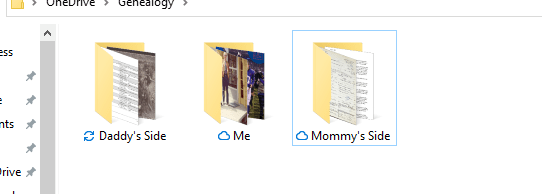
My very simple Genealogy folder on my OneDrive
Here is what the inside of my “daddy’s side” folder looks like, I have individual folders for each surname and then within each folder is my direct descendant and in each folder are their children.

Then I began taking classes, first at my local library over topics such as immigration, how to use Ancestry or Fold3, how to use historical newspapers, and how to identify photographs (just to name a few).

But then I went to my first Family History Day at my local Family History Center that my dad saw advertised in our local newspaper. An entire day of classes on various topics dealing with genealogy? I had no idea such bliss existed. And it was free!!!

My world changed that day. I discovered lecturers that I could listen to all day. They are the hands on type of speakers showing how to do case studies in a step by step manner. Or they give you an abundance of ways to search for records and where to search for records that you end up going home and discovering that you yourself are implementing what you have learned on a daily basis.

I then found myself joining my local, state and national genealogical societies to continue to learn. The Spring of 2019 I went to my first conference (and attended my second this past Spring as 2020 was cancelled due to Covid). With every class I learn a little more, and as Peggy Clemens Lauritzen said in her key note speech to open the 2021 Ohio Genealogical Society Conference, you are never the same family historian because each day you learn something that you carry over to the next day.


Now I’ve gone on a research trip to where a bulk of my paternal ancestors lived, 2 conferences, 3 Family History Days, on my 4th year of being a member of Family Tree Webinars all so I can hope to successfully continue finding my people. I also have become pretty good and looking up other online information that has been digitized using the Card Catalog on Ancestry, using image searches on FamilySearch and no one loves those gossip sections that give all sorts of details about your relatives than me in Newspapers.com.
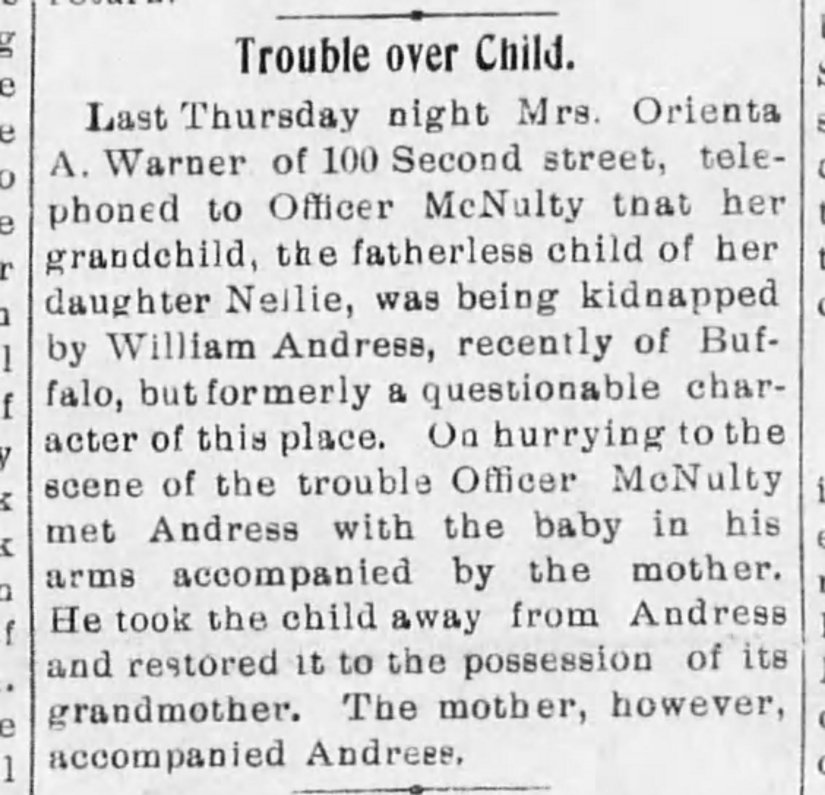
The Potter Enterprise, 11 February 1904, found on Newspapers.com

So if you are just beginning your family research, or you have been doing it for decades, every day you change, so continue to bloom!

Book

The Johnstown Flood by David McCullough

They claim when doing your genealogy you should do your best to learn about the history of the area, and that was one of my primary reasons to read “The Johnstown Flood” by David McCullough, his very first book.

Mr. McCullough was able to provide a good amount of history of Cambria County as he began his book by giving background of the area, which fittingly for me was 1850. Andrew and Susanna Blair are living in Cambria County in the 1850 Census with their 2 oldest children (at least known anyhow) Sarah and William. Though they have moved to Bedford County and have most likely passed by the Johnstown Flood of 1889, I learned that the city where my Grandmother (Anna Maria Morgart) grew up, Saint Michael, is located where the South Fork Hunting and Fishing Club once stood.

What I Learned

Cambria County in Pennsylvania was created from “Mother Bedford” in 1804 that was a simple trading center until the 1830’s when the canal came to be. By 1835, Johnstown had a “drugstore, newspaper, Presbyterian church, and a distillery”. By 1840 the population was 3,000. By 1850 the Pennsylvania Railroad and the Cambria Iron Works had been established and “everything changed”.

According to the book –
“By the start of the 1880’s Johnstown and its neighboring boroughs had a total population of about 15,000. Within the next nine years the population doubled. On the afternoon of May 31, 1889, there were nearly 30,000 people living in the valley”.

The South Fork Hunting & Fishing Club

The South Fork Hunting & Fishing Club was a “resort” built near Lake Conemaugh (or the South Fork Dam) that had 50 extremely wealthy members (the likes of Andrew Carnegie, Henry Clay Frick, Philander C. Knox, and Andrew Mellon, to name a few). The Club was an escape for these men of industry, a place for them to get away and fish, hunt, sail (one of the chapters was called “Sailboats on the Mountain” because Lake Conemaugh, aka the South Fork Dam, was so big they could sail in it).

The Club was chartered on 15 November 1879 in the Court of Common Pleas in Allegheny County, with everyone ignoring the provision that the law stated that they needed to register in the county where business was to take place (which in this case is Cambria County).

The Flood

2,209 people lost their lives over something that could have been avoided. For years people wondered when South Fork Dam was going to break. It wasn’t an if, it was a when. And even just hours before the dam did overflow and “break” someone could have made it so that much less damage could have occurred.

But what if it didn’t overflow? Or break? That is why John Parke, Jr. did not cut a hole in another area of the spillway so the water could have flowed out more safely. It was too bold of a decision, because if the worst case scenario didn’t happen, it would have been the end of Lake Conemaugh, and it was just too risky to go ahead and do.

On 30 May 1889 unprecedented heavy rains began in the area around 11pm, coming from Kansas and Nebraska where they began two days before, washing out roads and flattening farms across the way as tornado-like winds killed several people. But it was an odd storm, where 5 inches rained down at the South Fork Hunting & Fishing Club, only 1.5 inches was recorded for the same period of time at Pittsburgh, just 65 miles away.

But the rain continued to come and despite warnings of what was happening, they were ignored or unable to go through and the worst case scenario happened: 20 million tons of water began hurling down upon the city of Johnstown when the dam failed.

Histed, E. W., photographer. (ca. 1889) View of the broken dam looking from bed of lake, Johnstown Flood, May 31st . Pennsylvania Johnstown, ca. 1889. [Photograph] Retrieved from the Library of Congress, https://www.loc.gov/item/2008675504/.
Histed, E. W., photographer. (ca. 1889) Bed of lake looking from top of broken dam, Johnstown flood, May 31st. Pennsylvania Johnstown, ca. 1889. [Photograph] Retrieved from the Library of Congress, https://www.loc.gov/item/92509962/.

hello

(ca. 1889) The Johnstown flood, looking west on Main Street. , ca. 1889. [Photograph] Retrieved from the Library of Congress, https://www.loc.gov/item/2002707062/.

The Johnstown Flood was the first disaster for Clara Barton and the very new American Red Cross.

(1889) Clara Barton’s headquarters, Johnstown, Pa. flood. , 1889. [Photograph] Retrieved from the Library of Congress, https://www.loc.gov/item/2002707084/.

The book went into great detail about what happened. Mr. McCullough did his due diligence and did an incredible amount of research on the topic, interviewing many who had witnessed the horror of that day.

In the back of the book all 2,209 names of the people who are known to have perished in the flood are listed and where they are buried. Such a sad event that could have been so much less had people listened.

52 Ancestors in 52 Weeks, Genealogy

Week 40: Preservation

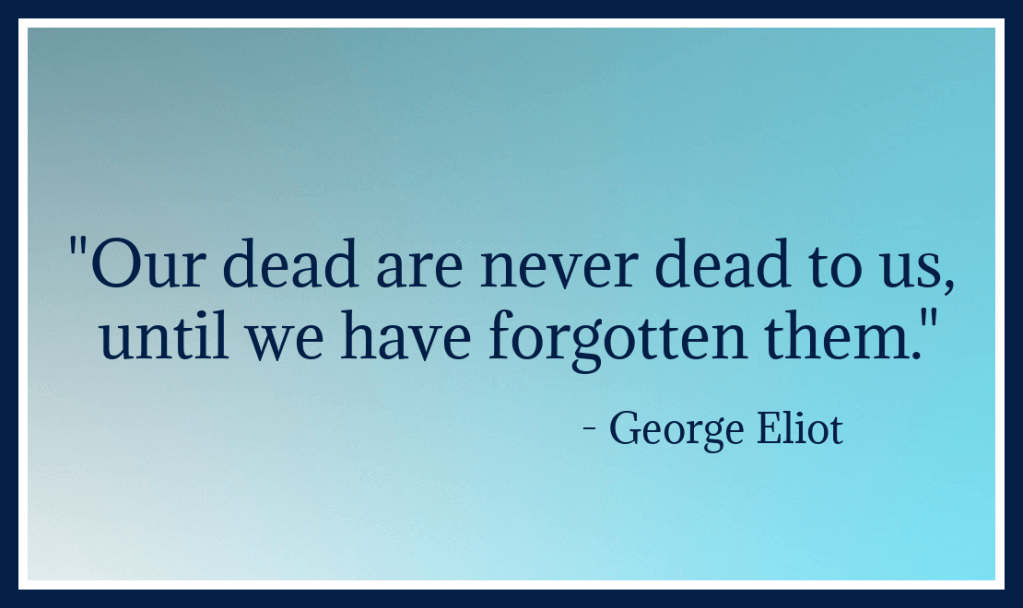
This quote exemplifies why I work on my family tree. I do my best to preserve each and every member of a family in order to have a correct family tree, but most importantly so that each person is remembered. Because for me, it is when a person is forgotten is when they no longer live.

This is my quest as the family historian. I try to find everyone, especially the babies who never had a chance to make much of an impact in the world. All of these people who make up my tree, without them I wouldn’t be here. In some way they all have impacted my life, whether it was someone I knew or someone I learned of doing research. All of them deserve to be remembered.

Preservation was the theme for this week’s 52 Ancestors in 52 Weeks, a weekly writing challenge offered by Amy Johnson Crow.

52 Ancestors in 52 Weeks, My Family Tree

Week 39: Steps

Steps is this weeks theme for 52 Ancestors in 52 Weeks. Over the course of ones lifetime we take millions of steps that lead to significant places.

The most important step always seems to be the first one. I was lucky enough to have my dad at home when I took mine and he captured them in black and white film. (Pardon my photos, my mom placed them in a sticky back album and I took them with my phone as I have my dad’s scanner at my house).

I was able to witness my daughters as my dad had a doctors appointment and I watched her at work and she walked from a chair to me at my desk. So the Carriage House at Stan Hywet Hall & Gardens will always hold a special place in my heart.

This is my personal photo of the Carriage House at Stan Hywet Hall & Gardens. This was taken during the 2018 Deck the Hall! program. Just on the other side of the balcony was where my office/lobby was where my daughter took her first steps.
But think of all the places our feet take us too, our first day of school, our first day of college (I broke my foot that day), our first job, down the aisle to marry our sweetheart. And it’s not just our own journey that have contained so many steps… our ancestors probably took even more steps that we do as cars may not have been a part of their lives.

But in many ways the saying “the more things change, the more they stay the same” as we still have so many parallels with our ancestors. School. Marriage. Kids. It’s a circle of life that is beautiful and makes it all possible for us to be here.

But steps are vital to everything, between getting from Point A to Point B, to advancing from one stage to another (like school as we successfully pass each grade to go to the next). Sometimes it even gets you to see things in a different perspective.

My personal photo taken from atop the Marblehead Lighthouse on Lake Erie
Genealogy

It’s October!!!!

October is one of the greatest months of the year because it means we all have an excuse to work on our genealogy!

Not that we ever have to have a reason to continue to work on our family trees, but it is a month filled with educational webinar’s, podcasts, and articles that will further our knowledge to find our ancestors.

So I hope you are all able to enjoy the month and get the most out of all the opportunities that are out there. May you break down your brick wall and move on to new ones!

52 Ancestors in 52 Weeks, Maternal Side, My Family Tree, Paternal Side

Week 38: Fun & Games

Fun and games is the topic for this week’s writing challenge for Amy Johnson Crow’s 52 Ancestors in 52 Weeks. I’ve been so busy and lately the prompts have gone more in depth than what I know about my relatives, so I’ll share what I know.

Anna Maria Morgart

My gosh I wish I didn’t have them so packed away as I would have dug out my Grandma’s porcelain dolls that are located in a box up in my attic. Her request when she was getting ready to pass was that I would get them as she knows I am the pack rat she is and I would take care of them. Knowing the dolls are over 100 years old has them wrapped up and tucked away in the space but my goal is to display them when I have the space up there to do them justice (and then I’ll add a photo to this post). My Grandma loved her dolls and took excellent care of them.

My Daddy

My dad’s big hobby growing up was reading. He read every chance he could, so much so that he often claims it was the reason that he spent many summers attending classes to make up for the assignments he didn’t do throughout the normal school year.

He also claims that he must have liked summer school as he may have changed his habits if he truly hated it.

When I called and asked him what his favorite book was he said he didn’t really have one from back then. His favorite books were history books that were 156 pages long published by Random House. The books featured stories about Guadalcanal, the Revolutionary War and Daniel Boone (to name a few). He said they were a good size, he normally read them in about a day, while he was in school.

My dad is pretty sure this was the first book he read. I found this at Thriftbooks.com

I know I have inherited my dad’s love of reading (however I read at home or during Study Hall). He still loves to read and is finishing up a trilogy on World War 2 that I purchased for him for Christmas, his Birthday and Father’s Day.

My Mommy

I can honestly say I don’t know what all my mom did for hobbies. She wasn’t a reader, that is for sure. I always remember her telling me stories of how the Gorge was her playground/ The Gorge is part of the Summit County MetroParks that people hike, ice skate, picnic, and fish at each year.

For example the photo of the pipe she claims she walked across. I find this hard to believe as she was afraid of heights. Like majorly afraid of heights. But maybe she was more daring as a kid/teenager.

The above photos were all taken by me – the top is looking down on the Falls that is about to be taken out and the originals restored. The rock formation is Mary Campbell Cave where Indians had apparently abducted a girl and that is where they held her, and lastly is the field where in the winter the skating rink is located. Weather hasn’t really allowed for any ice skating the last few years, but I know my mom and her siblings had wonderful memories there.

52 Ancestors in 52 Weeks, Maternal Side, My Family Tree

Week 37: On the Farm

To find a farmer to talk about is about as easy as finding a coal miner in my family, I have many in my tree on both my paternal and maternal sides. With this week’s theme being about life “on the farm” I’ve opted to swing over to my mother’s side of the family and discuss my great-great-grandfather, Arthur James Dunbar.

The Beginning

Arthur James Dunbar was born on 4 August 1869 in Independence, Allegany, New York to Delos Dunbar and Harriett Williams. Delos was also a farmer, both in Independence and in Genesee, Potter County, Pennsylvania which is where the family moved between 1875 and 1880.

According to the official website of Potter County, it’s primary industry in the 1800’s was lumber. Known for it’s white pines, hemlock and other hardwoods, lumber mills were developed near streams where the water could power the saws. In time towns were formed when churches and schools were built in these areas.

While doing searches on Delos Dunbar, Arthur’s father and my 3rd-great-grandfather, there were various small articles on him where he is either cutting wood for someone, or building a home for someone. So I’m guessing though noted as a farmer as well, he may have been more of a lumberman, or had tree farms.

Marriage & Family

On 2 January 1894 Arthur Dunbar married Mazie Lorenia Warner in Wellsville, Allegany, New York. They settled in Hebron Township in Potter County, and began their family on 17 March 1896 when their oldest daughter, Myrtle Iona Dunbar was born. Their next child was Merle Winfield Dunbar, born 10 July 1899 but died on 18 January 1900 of bronchitis. Ina May Dunbar came next being born on 18 April 1901. Their youngest was Mildred Laura Dunbar, born 15 March 1908, my great-grandmother.

Farming

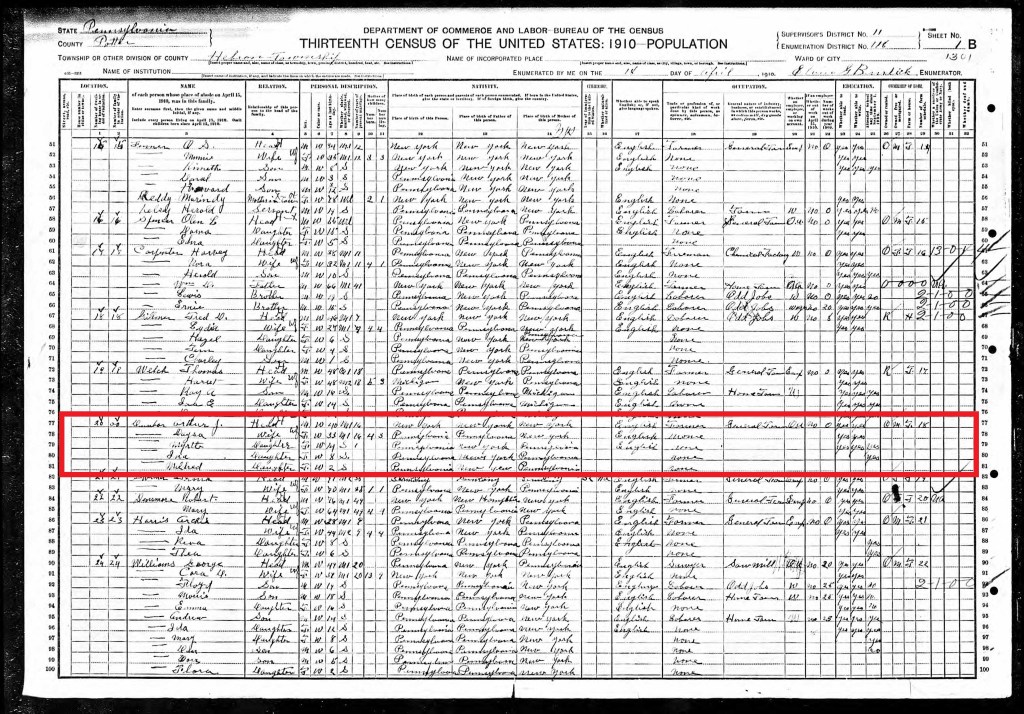
On the 1900 and 1910 Federal Census’ Arthur (A.J.) Dunbar had an occupation of “Farmer”. He owned his property, paying on a mortgage and it lists the agricultural schedule that he was listed on for both population census, Farm Schedule 63 in 1900 and Farm Schedule 18 in 1910. Below is the 1910 Census where it shows that his occupation was “general farm”.

1910 Federal Census – as found on FamilySearch

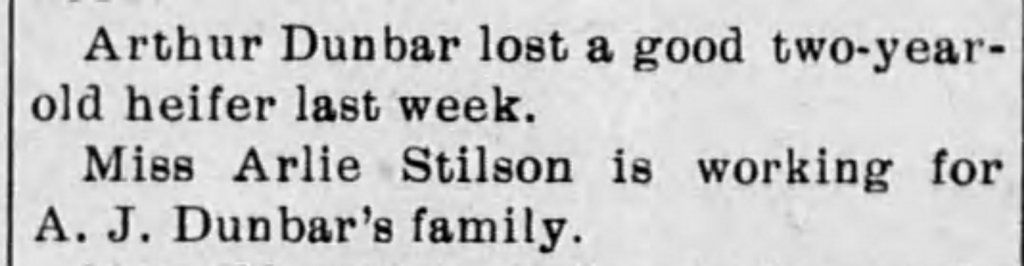
Another clue that he was a farmer was the below newspaper clipping about a young cow he lost. The item below is more than likely is my great-great-grandfather as well as he was known as A.J. Dunbar in many documents.

The Potter Enterprise – 18 April 1901 – found at Newspapers.com

Death

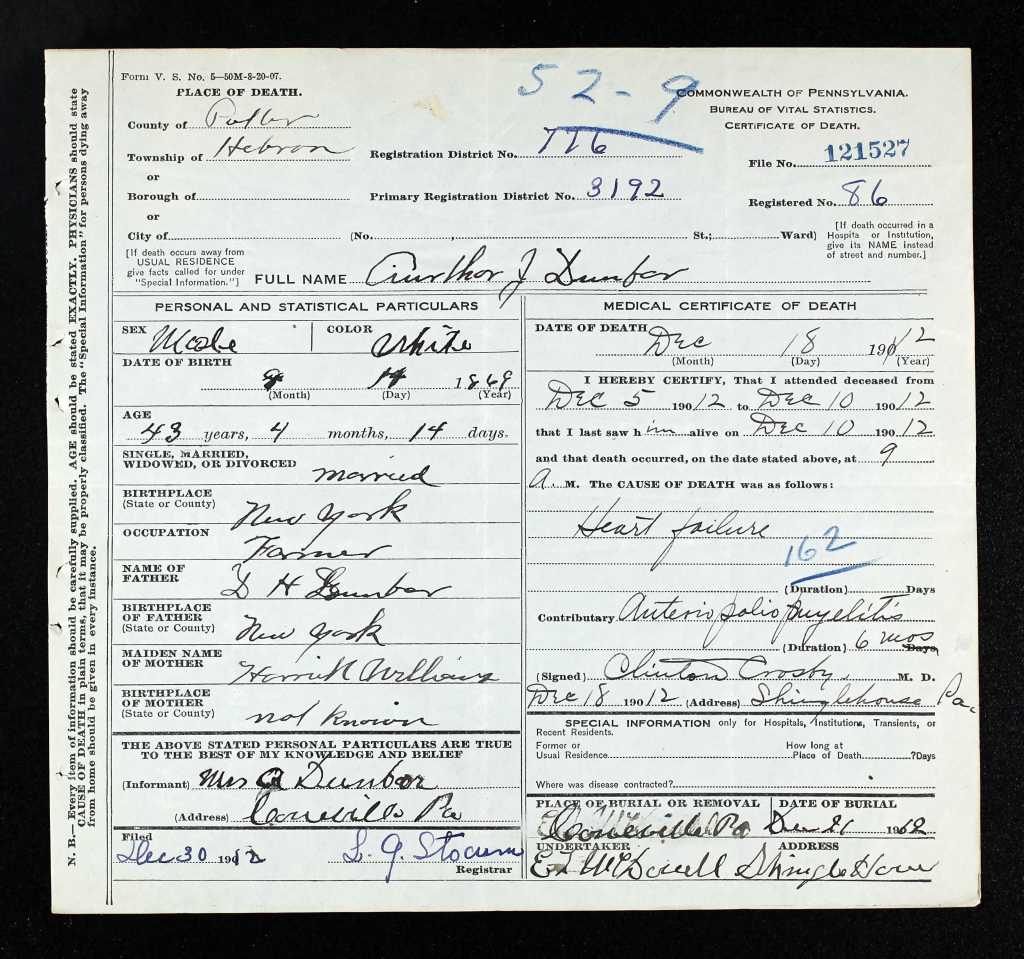
Arthur James Dunbar passed away on 18 December 1912 of a combination of Heart Failure and Anterior Poliomyelitis.

Arthur Dunbar death certificate found on Ancestry

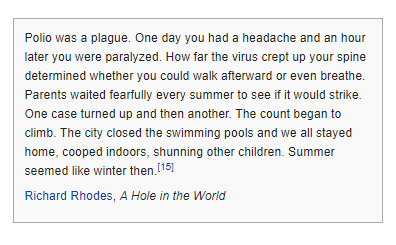
According to the FreeDictionary.com poliomyelitis, commonly known as just polio, is a “disease marked by the inflammation of nerve cells and brain stem and spinal cord”. It was highly contagious and most who caught it were between 6 months and 4 years old but adults did contract the disease. Paralysis in children were 1 in every 1000 cases, paralysis in adults was 1 in every 75 cases.

Taken from Wikipedia

When adults contracted the disease, it was often white, affluent men. Thankfully this has more or less been done away with by vaccine. I don’t have the tell-tale scar that my mom and sister have (I imagine my dad has it too) because by the time I needed my vaccines for school, it was no longer necessary.

My goal as I continue to do searches about my great-great-grandfather is to find out what kinds of things Arthur farmed, and if there is anything out there that could tell me what kind of person he was, as I am so fond of his wife, Mazie, I always just assume he must be pretty special, too.

52 Ancestors in 52 Weeks, Maternal Side, My Family Tree, Paternal Side

Week 36: Working

Since I spoke of my many coal mining ancestors in Week 30 with the Health topic, I have decided to expand on it with this week’s theme of working. Three of my 4 great-grandfathers worked in the coal mines. Two in Pennsylvania, the third in Ohio.

Andrew Jackson Blair

Born 17 April 1881 in Bedford County, Pennsylvania, Andrew Jackson Blair was born to another Andrew Jackson Blair and Susan Jane Foster. According to the 1900 Census, when Andrew was just 19 years old he was already working in the coal mines (and so was his 13 year old brother, William). His father was also a miner, having it noted as his profession in the 1880 census, as well as his profession in the death register when he passed away in 1899.

I won’t go into details about Andrew too much as I have written about it before (see here). He died when the mine he was in had falling rock and it crushed his chest, killing him instantly. He was 45.

Andrew Jackson Blair

Charles Jackson Morgart

Born 2 August 1873 in East Providence, Bedford County, Pennsylvania, Charles Jackson Morgart was born the oldest child of George Washington Morgart and Mary Ann Ritchey. Charles was originally a farmer but then became a coal miner. It’s odd, I can find him and my great-grandmother, Margaret Dora Wise, twice in the 1910 Census. When they were living in Bedford County he was a farmer, when he was found in Huntingdon County he was a coal miner. His death certificate also listed him as a coal miner. He did not die in the mines, but he committed suicide. It was not the first in his family as his mother had too.

Charles Jackson Morgart

James Fairhurst

Born 8 July 1890 in Leigh, Lancashire, England, James Fairhurst was already working in the coal mines in England in the 1911 census when he was still living at home with his parents, Thomas Fairhurst and Rachel Topping. He came to the United States in 1913 leaving behind his wife, Phoebe Boone (pregnant with their son, Wilfred) and his daughter, Elsie, to work with his brothers at Wolf Run, Jefferson County, Ohio. Phoebe came over with Elsie and Wilfred in January 1915. By June 1917 he had filed his declaration of intention to become a citizen of the United States, and by 14 May 1920 he was a naturalized citizen.

James occupation took a turn for the better. He opted to move to the rubber capital of the world in Akron, Ohio and began working for the various rubber companies, a much safer occupation compared to the work one did working in the coal mines.

Life in the Coal Mines

Working in the coal mines was a dangerous occupation. Most began working at a young age of 10 to 12 years old where you started out sorting out the coal from other rocks (sometimes elderly coal miners would do this too).

Underwood & Underwood. (ca. 1913) Boys picking slate in a great coal breaker, anthracite mines, Pa. Pennsylvania, ca. 1913. New York: Underwood & Underwood, publishers. [Photograph] Retrieved from the Library of Congress, https://www.loc.gov/item/2007681337/.

As you got older, responsibility increased. The next position for a teen would be keeping the the tunnels lit at key spots in the mine. Miners did wear hats with lanterns attached to help them see what they were doing and where they were going, but there were still people sometimes positioned in key places so that danger could be avoided.

Other jobs within the mine would be pushing and pulling the carts throughout the very narrow tunnels and the actual mining of the coal. They spent 12 hours a day underground in the dark hunched over.

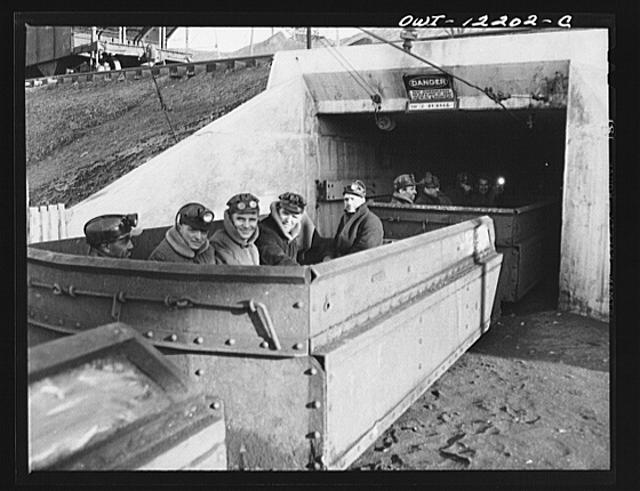
Collier, J., photographer. (1942) Pittsburgh, Pennsylvania vicinity. Westland coal mine.
“Mantrip” going into a “drift mine”. Pittsburgh Pennsylvania Allegheny County United States, 1942. Nov. [Photograph] Retrieved from the Library of Congress, https://www.loc.gov/item/2017841040/.

Company Towns

Those working in the coal mines were often paid in company money, renting company housing, and the stores you were able to shop in were also owned by the coal mining company as it was the only store that took the company money. It was very difficult to be able to move onto another company to make more because the coal companies more or less owned you.

Wolcott, M. P., photographer. (1938) Company houses, coal mining town, Caples, West Virginia
. United States Caples West Virginia, 1938. Sept. [Photograph] Retrieved from the Library of Congress, https://www.loc.gov/item/2017752393/.

Working in the coal mines was a difficult job but was just one of many sacrifices the coal miner made to provide for their families. It was a hard job that had many health risks, but it was taken with the hope that the next generation would do better.

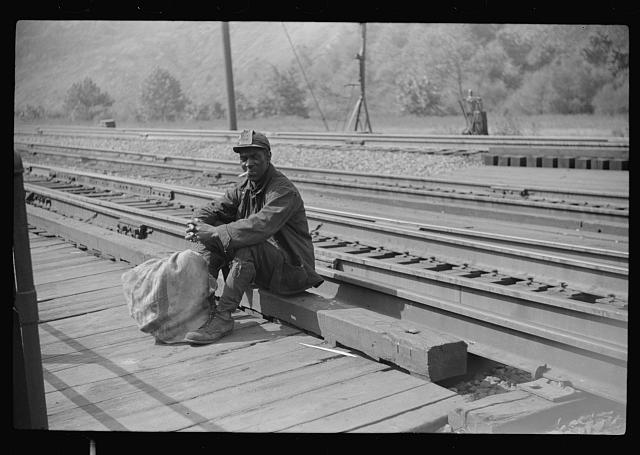
Wolcott, M. P., photographer. (1938) Coal miner waiting to go home, Caples, West Virginia. United States Caples West Virginia, 1938. Sept. [Photograph] Retrieved from the Library of Congress, https://www.loc.gov/item/2017752675/.
History

The History of Labor Day

Today is Labor Day for those of us living in the United States. Seeing as I am a self-proclaimed history geek, it occurred to me that I didn’t know how Labor Day came about, so I decided to do a little research on this, a holiday I am most grateful for as don’t we all need that extra day off?

Grover Cleveland signed off on Labor Day being an official holiday on 28 June 1894 and it is celebrated on the first Monday of September each year. Oregon was the first to recognize it as an official holiday in 1887 though New York was the first to introduce a bill (New York also celebrated first in 1882). By that first Monday in September 1887, Colorado, Massachusetts, New Jersey and New York also celebrated with the state of Oregon. By the time President Cleveland signed off in 1894, 23 states were recognizing the holiday.

However, it was originally a holiday for federal workers only. It wasn’t until the 1930’s that everyone was granted the day off. And even now stores and restaurants are still open on this day off for the labor force.

Bain News Service, Publisher. Suffragettes – Labor Day ’13. 1913. date created or published later by Bain. Photograph. https://www.loc.gov/item/2014694076/.

Another Point of View

While doing a bit more research, I stumbled upon a New York Times article where it went into detail stating that the parade that took place 5 September 1882 was really a 1-day strike where workers could have lost their jobs in participating. At the time the American worker spent 12 hours on the job each day, working 7 days a week. Did not matter your age, even children worked long hours. But on the first occurrence of Labor Day, workers marched from City Hall to a giant picnic at an uptown park. The workers were asking for an 8-hour workday and higher wages.

When President Grover Cleveland signed the Labor Day bill in 1894 he was hoping to end a Pullman Strike with the mid-west railway system. Pullman had lowered the pay to the workers but did not lower the rent of their homes, and so the workers went on strike.

(I found it interesting that this part was lacking from the Department of Labor website, and even Wikipedia).

Whose Idea?

No one knows who the initial credit goes to for founding Labor Day. Two men have been said to have started the day:

Peter J. McGuire

Peter J. McGuire was the General Secretary of the Brotherhood of Carpenters and Joiners and co-founder of the American Federation of Labor. Some say he was the person who initially suggested of setting aside a day as a “general holiday for the laboring classes”.

Matthew Maguire

Matthew Maguire was a machinist and the Secretary of the Local 344 of the International Association of Machinists in Paterson, New Jersey and he proposed the holiday while serving as Secretary of the Central Labor Union in New York.

A New Jersey paper, the Paterson Morning Call, reported the pen that President Grover Cleveland used to sign the bill into law should go to Alderman Matthew Maguire.

Both McGuire and Maguire attended the first Labor Day parade in New York City that year.

Above information was found using the following websites:

Wikipedia – https://en.wikipedia.org/wiki/Labor_Day

US Department of Labor – https://www.dol.gov/general/laborday/history

New York Times – https://www.nytimes.com/article/what-is-labor-day.html

52 Ancestors in 52 Weeks, Maternal Side, My Family Tree

Week 35: School

This week’s topic is “school” for 52 Ancestors in 52 Weeks and I am going to discuss my high school. Counting my own children, there have been 4 generations to attend Cuyahoga Falls High School beginning with my maternal grandmother, Alberta Lou Metzger. Her children attended, including my mother, my sister, myself and cousins, and now my kids.

Cuyahoga Falls High School

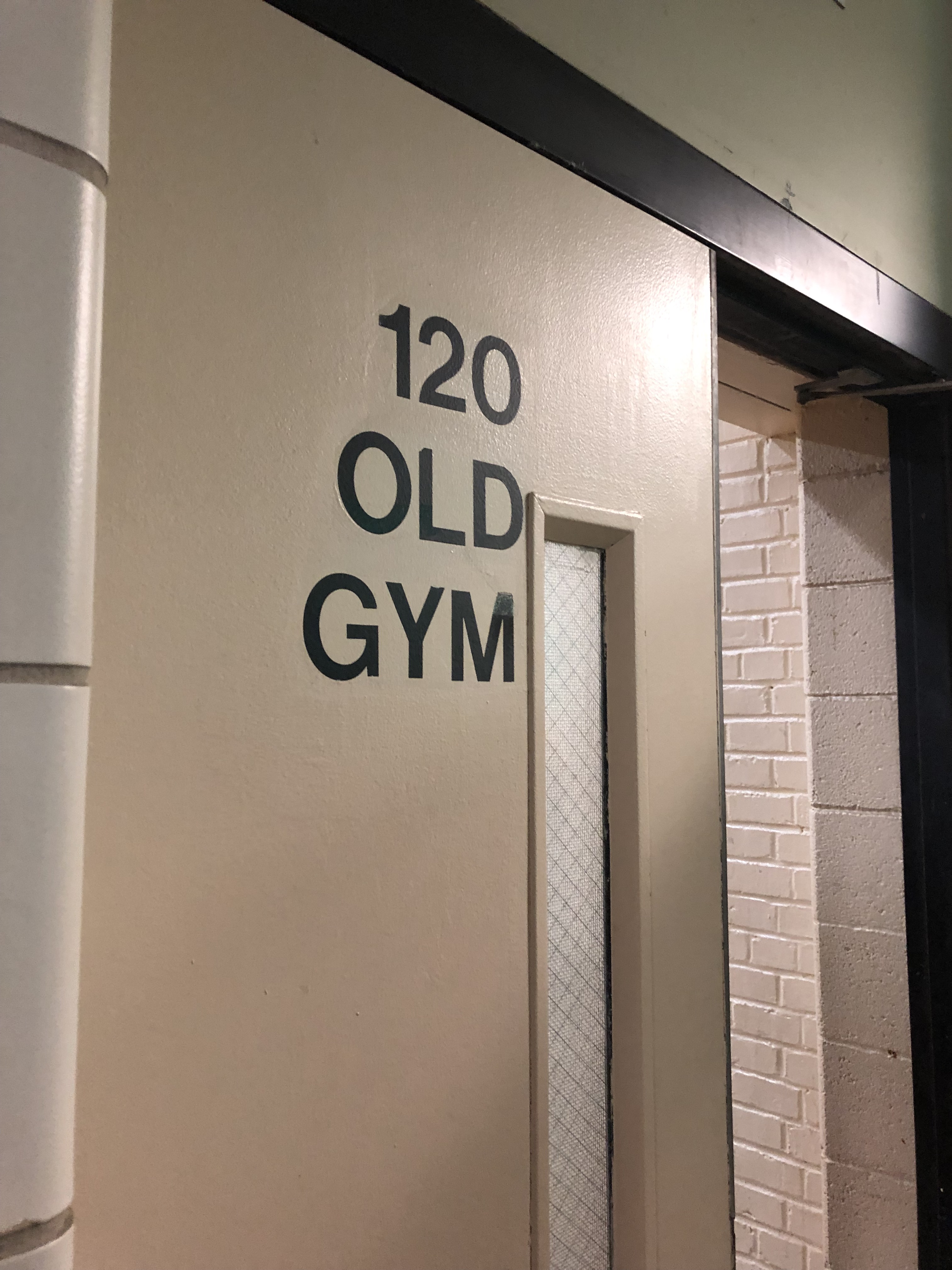
Cuyahoga Falls High School was built in 1922. The original building is still a part of the functioning school, often referred to as the old building (at least that’s what it was called when I was there). This part of the building is where your 100’s, 200’s, and 300’s are for classrooms. Back when I went it was foreign language, English Department and Math. Mix in the Old Gym and the Little Theater and this was the original building used for probably 30-plus years.

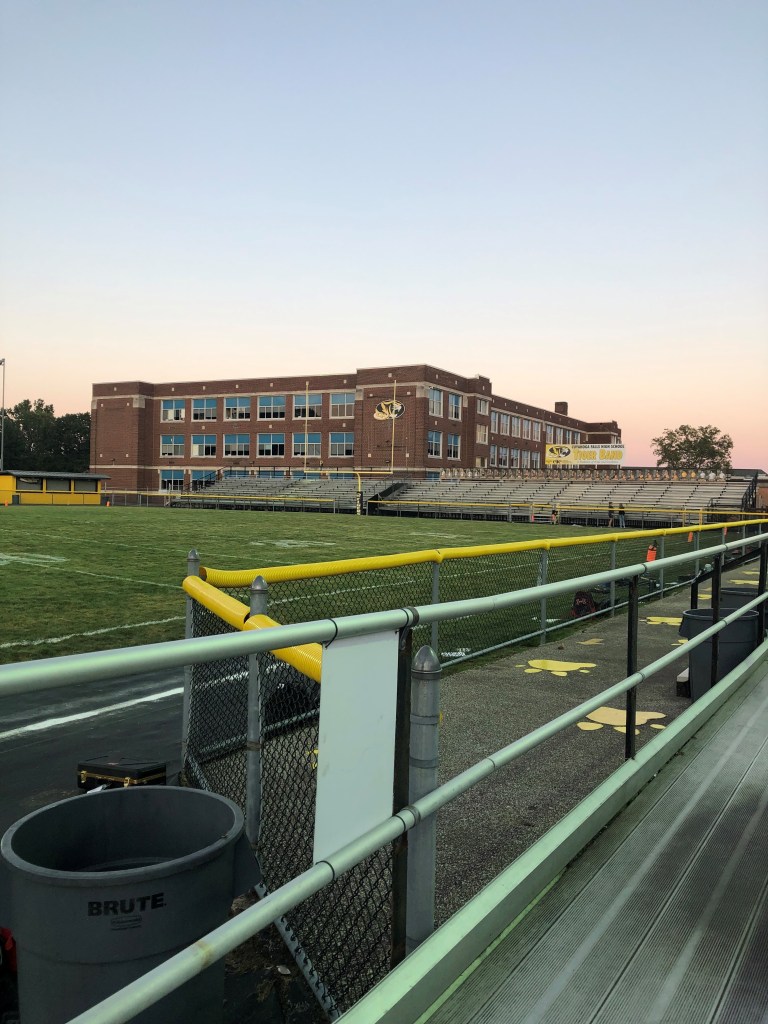
It’s a view of the Old Building from the football stands taken 2 September 2021 while my son had band practice, I thought the sky extra pretty.

Little Theater

The Little Theater was often where multiple classes went to view movies and such when I attended in the late-80’s, early-90’s. It was also where the Fall Play took place each year.

The primary highlight I remember from my mother was that is where she was when John F. Kennedy was assassinated. It was a moment she would never forget.

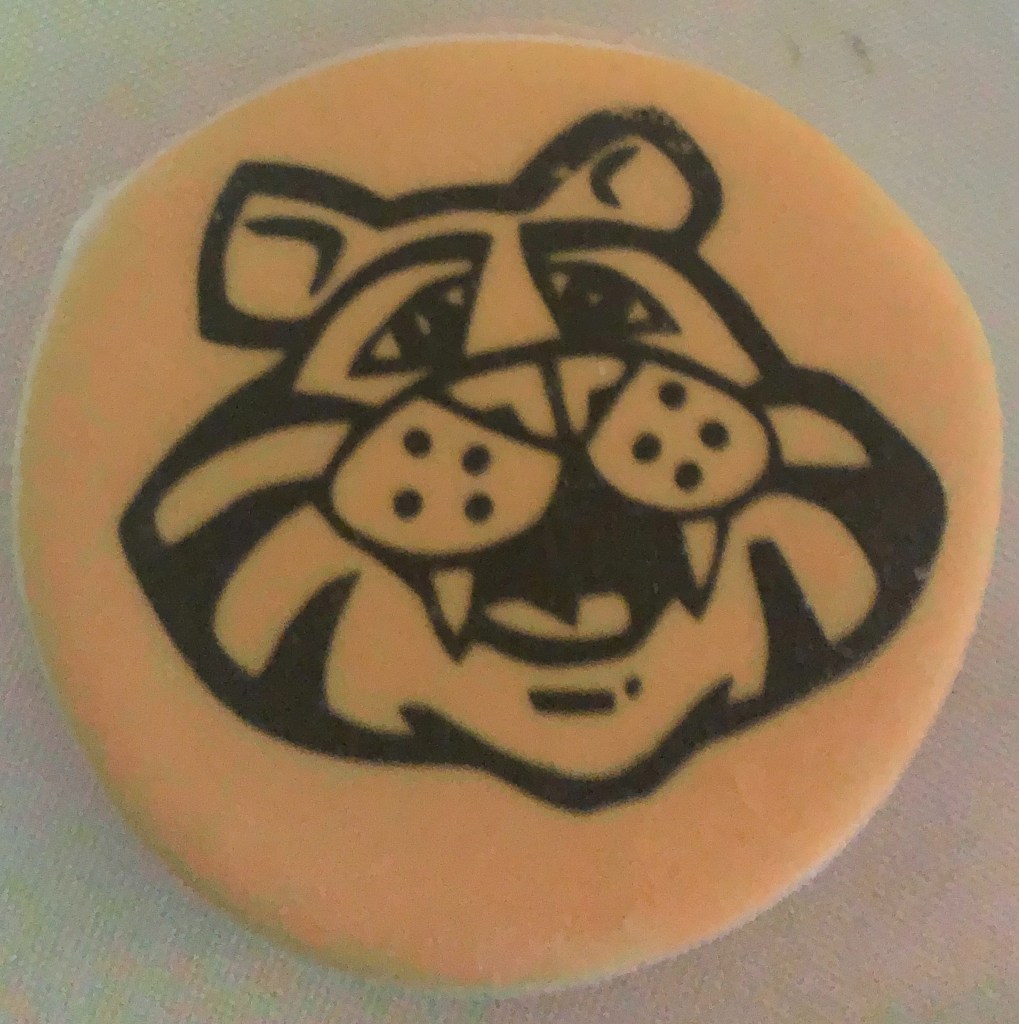
A cookie a classmate of mine made for our reunion. This was the logo that was on our gym clothes for years. Since the football team was going over footage I wasn’t able to take a photo of the Little Theater so this seemed a good spot for the cookie.

Old Gym

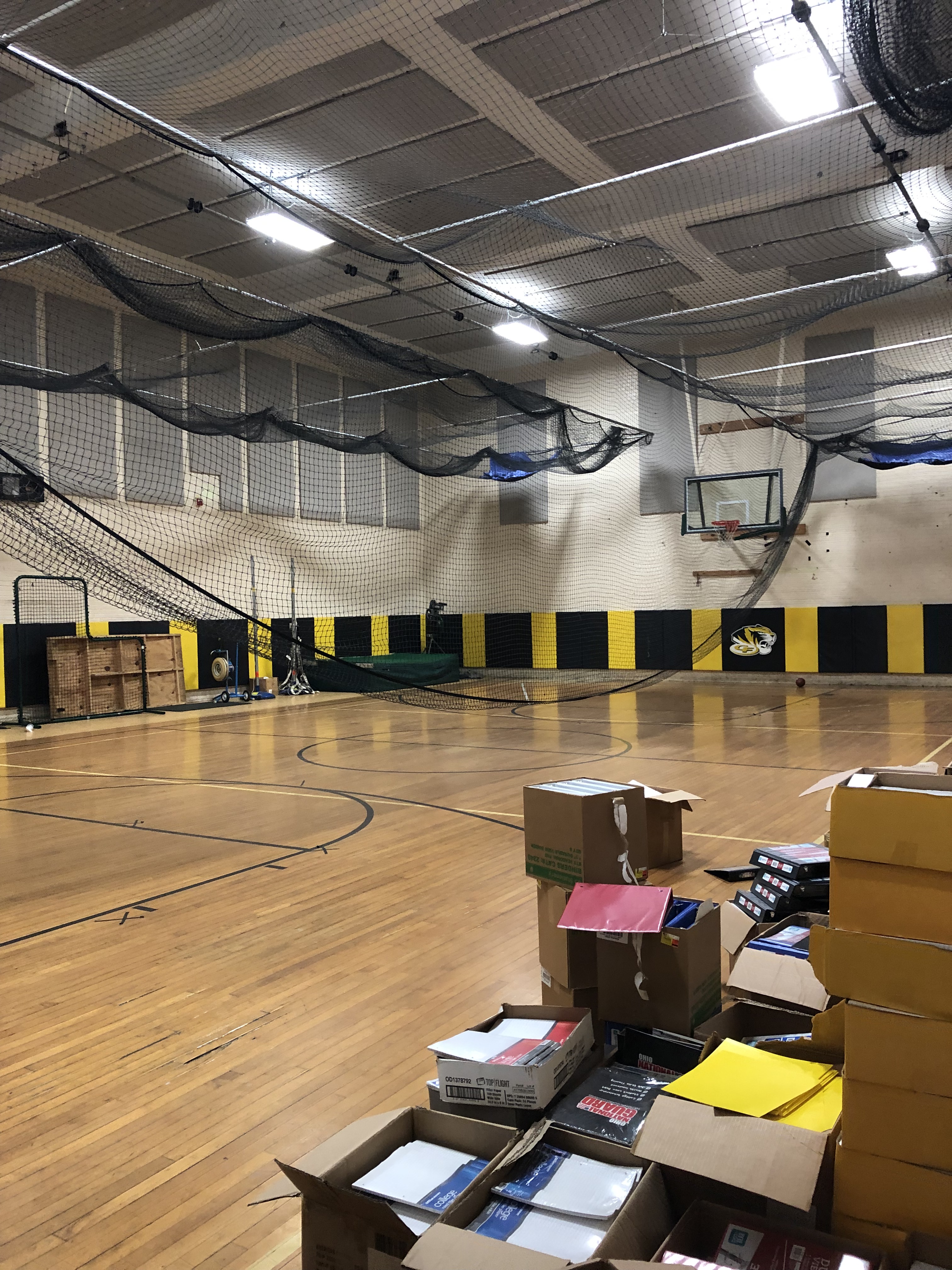
The Old Gym is where we would go when you were doing sports where 4-classes in the regular gym got to be too much (though it was common when I was in 10th grade to the mat room used for wrestling where my all girl gym class because of choir would play crab soccer – it’s amazing how that huge ball used for it would not mess up the big bangs that were essential for hairstyles during this time).

Recently I went on a tour of the high school for my 30th class reunion. The Little Gym was set up for batting practice for the baseball players. I found it a good use for this the space.

The New Building(s)

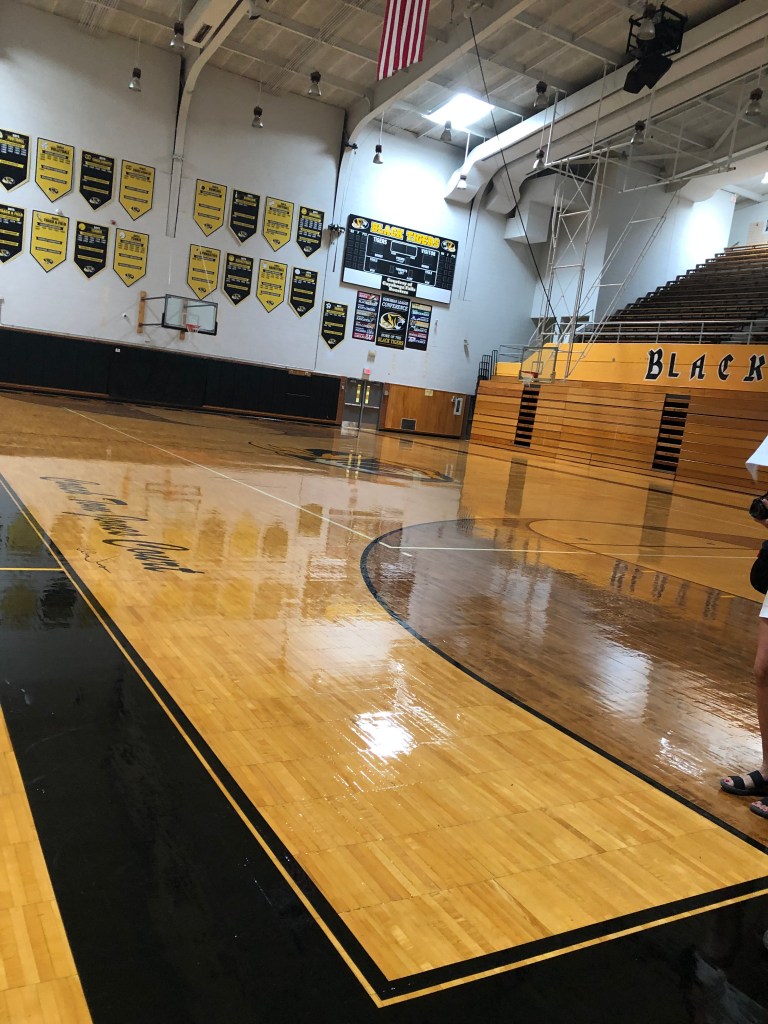
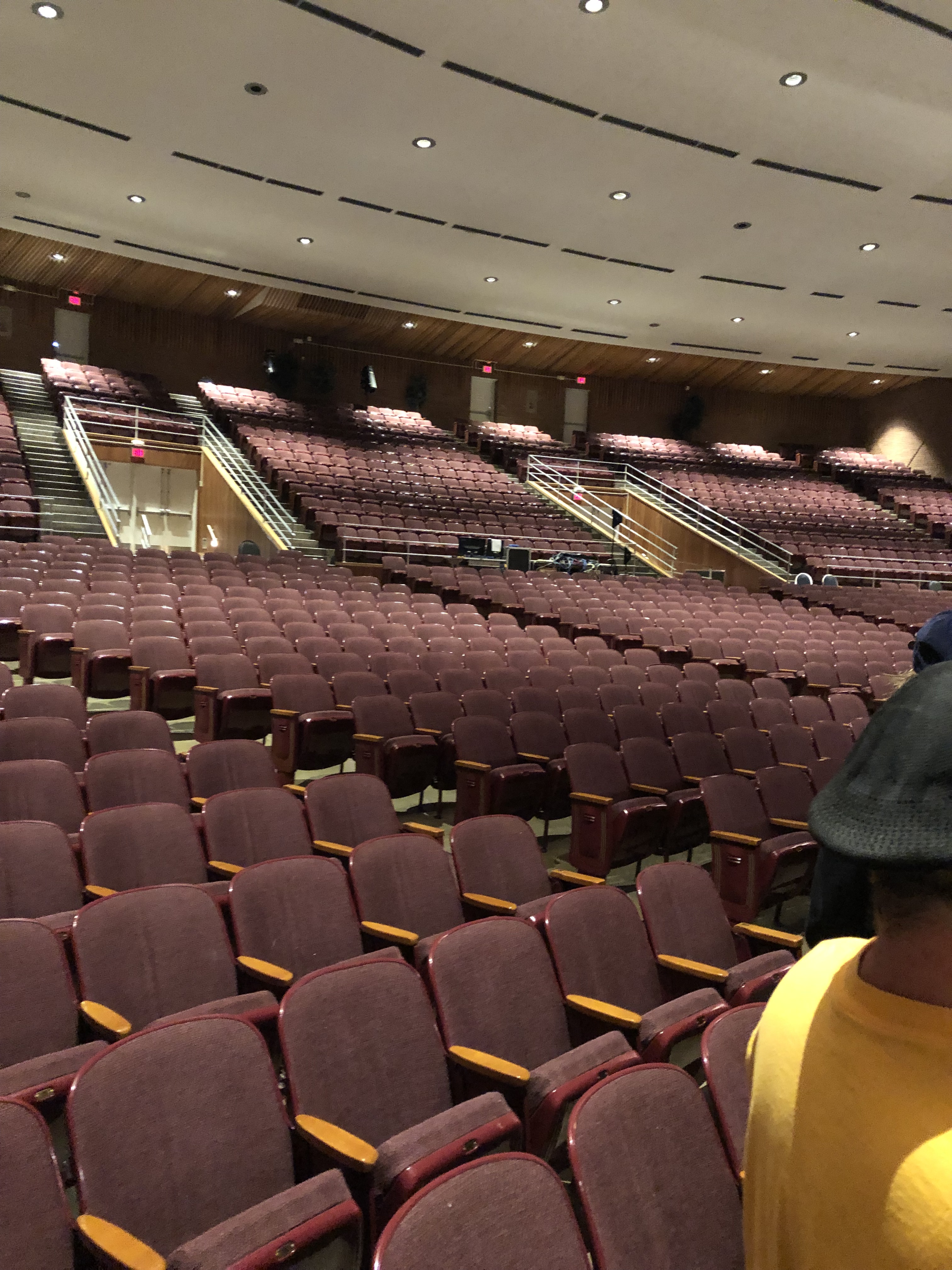
The new building was already a functioning part but still very new when my mom attended the high school in the 1960’s. It consists of the 400’s, 500’s, and 600’s. It included a bigger gymnasium (hence the “Old Gym”) and a state of the art auditorium, along with a music wing. It also houses a cafeteria, library, and the offices. Science classes are basically based in the 400’s, more history and classes like typing were held in the 500’s (I doubt they even have typing classes today). The 600’s is where the instrumental and vocal music programs are.

The present gym
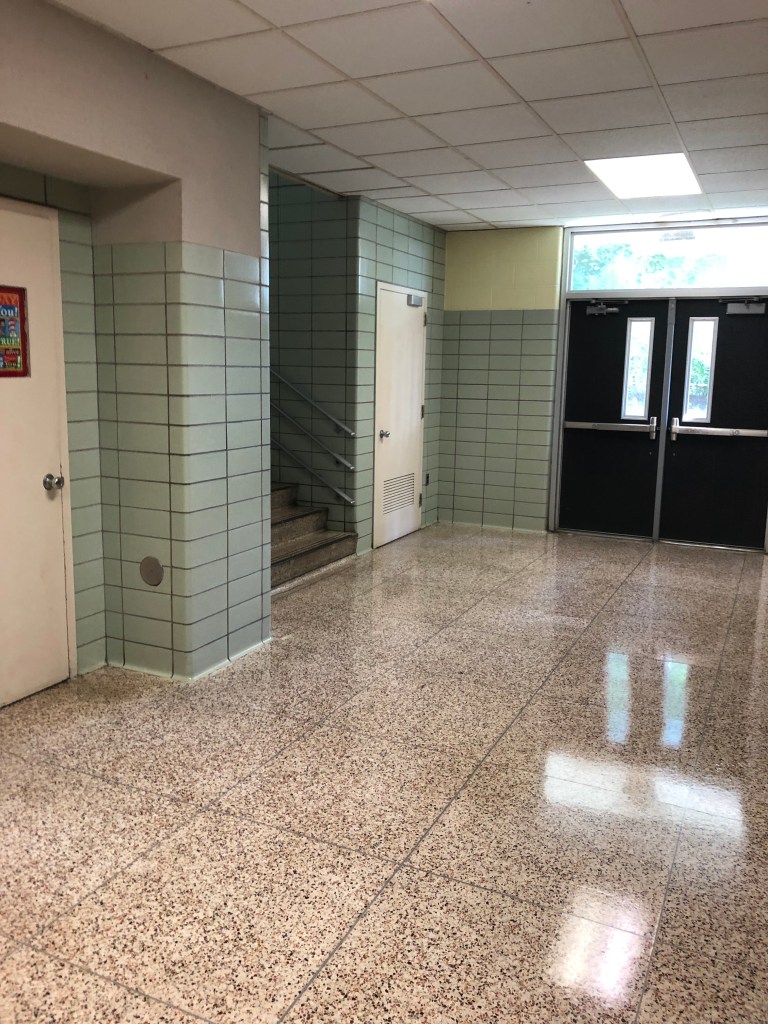
One of my favorite spots in 10th grade. The end of the hallway in the 400’s, I always got to school early and a fellow classmate and I sat here and discussed “Days of Our Lives” and all sorts of things. I remember discussing Ted Bundy the day he was executed by the state of Florida with her too. She is one of the people I miss from school and she isn’t on social media.

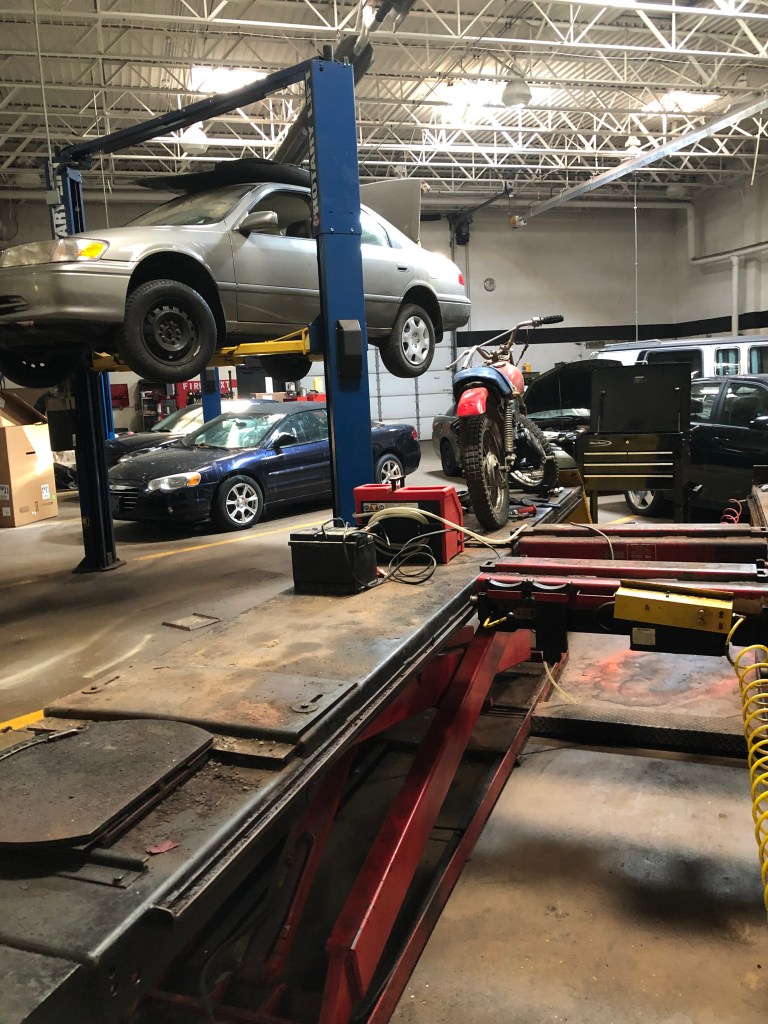
I believe at sometime between the above buildings and 1980 is when the vocational wing was built. This homes the cosmetology, auto tech, and marketing career programs for junior and seniors. Kids from other schools participate as well as part of a six district program.

I enjoyed checking out this part of the vocational wing as my daughter is enrolled in the Auto Tech program

Class Legacies

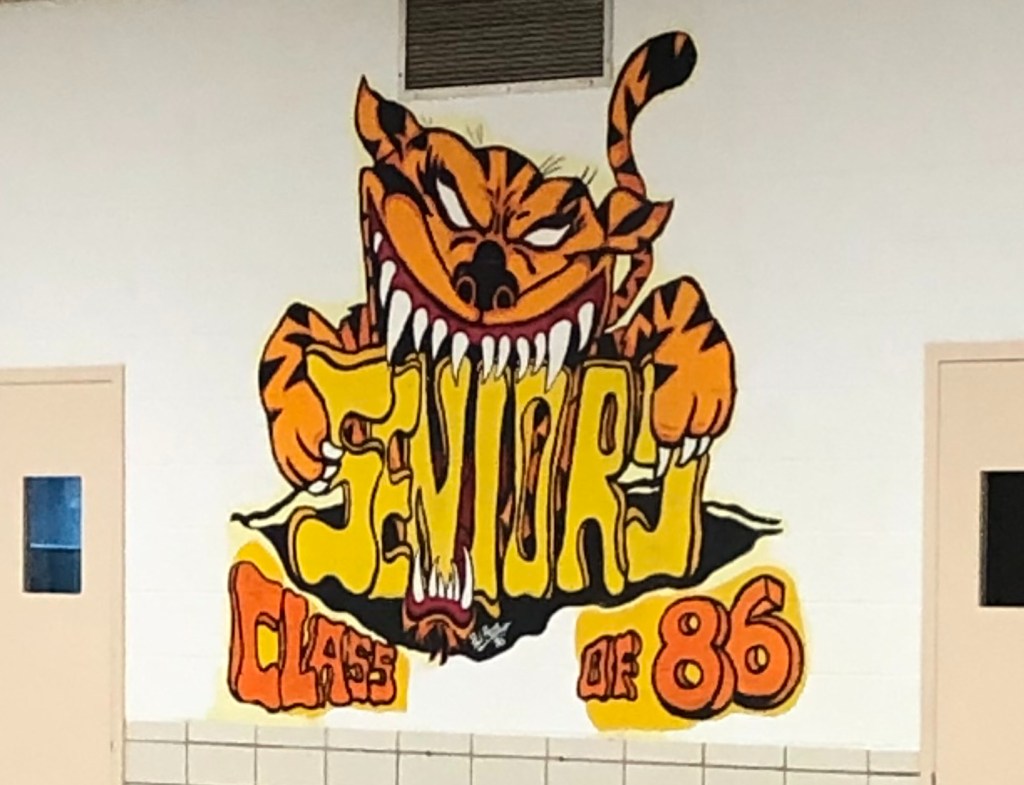
Each graduating class from probably the 1980’s on leaves their mark by creating a piece of art that is displayed in the cafeteria. My sister’s class is below. I tried to find my class but after the horrible experience of Columbine in 1999 they covered my classes art up. The student who won the art contest wore a trench coat (that was his style) and had that as part of the tiger in our 1991 artwork, but that was considered a negative after Columbine. I found it sad when I found out after our tour that was why we couldn’t find it. I feel they could have asked said student to come in and try to fix it up a bit instead of painting over it.

The Future

So many memories at this school and soon it will be no more. The citizens of Cuyahoga Falls voted to build a new high school and middle school complex which means soon the school that I figured would stand forever will be torn down. I doubt my middle school will go, it was the newest of the buildings but would probably be turned into something else.

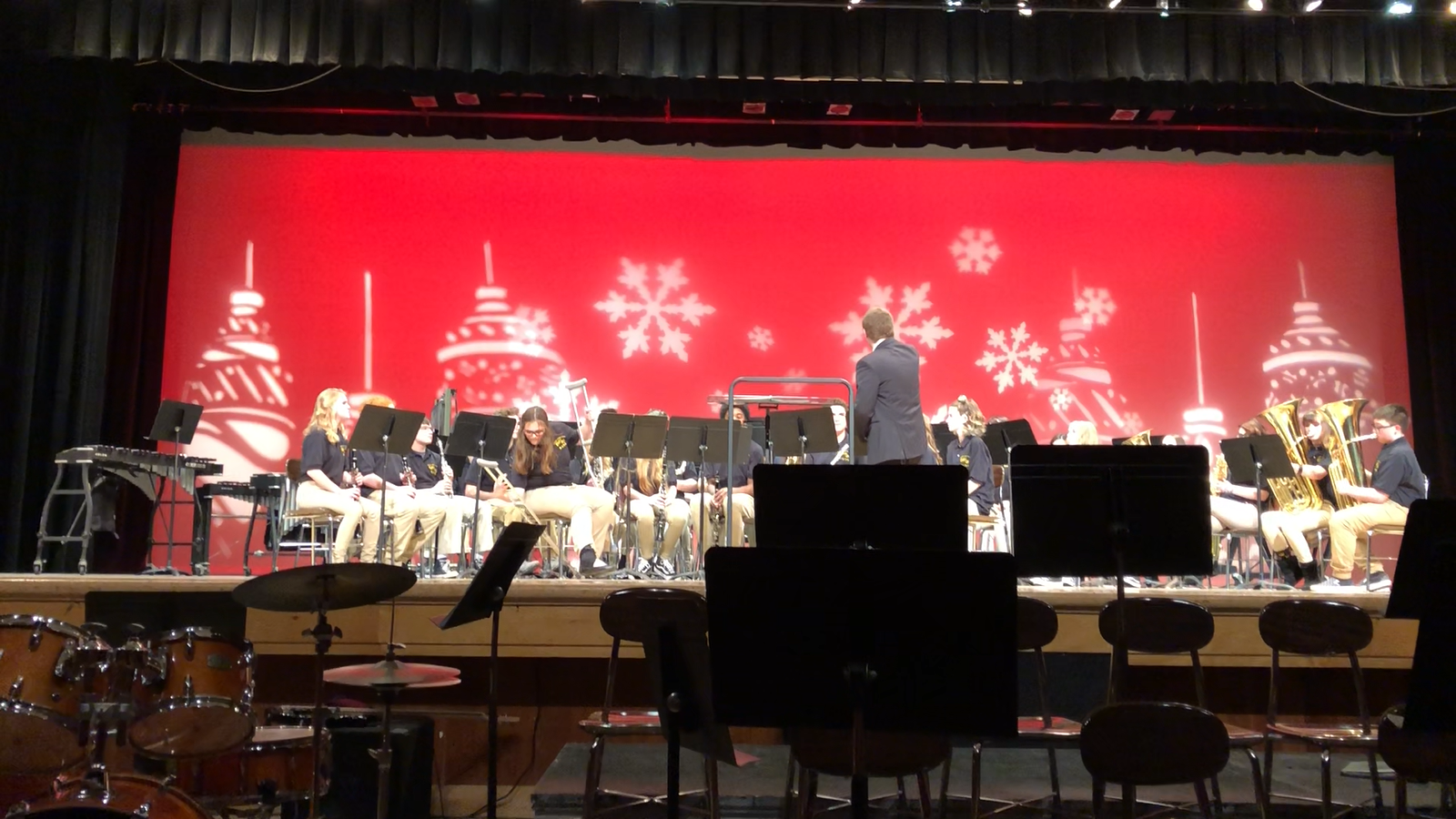
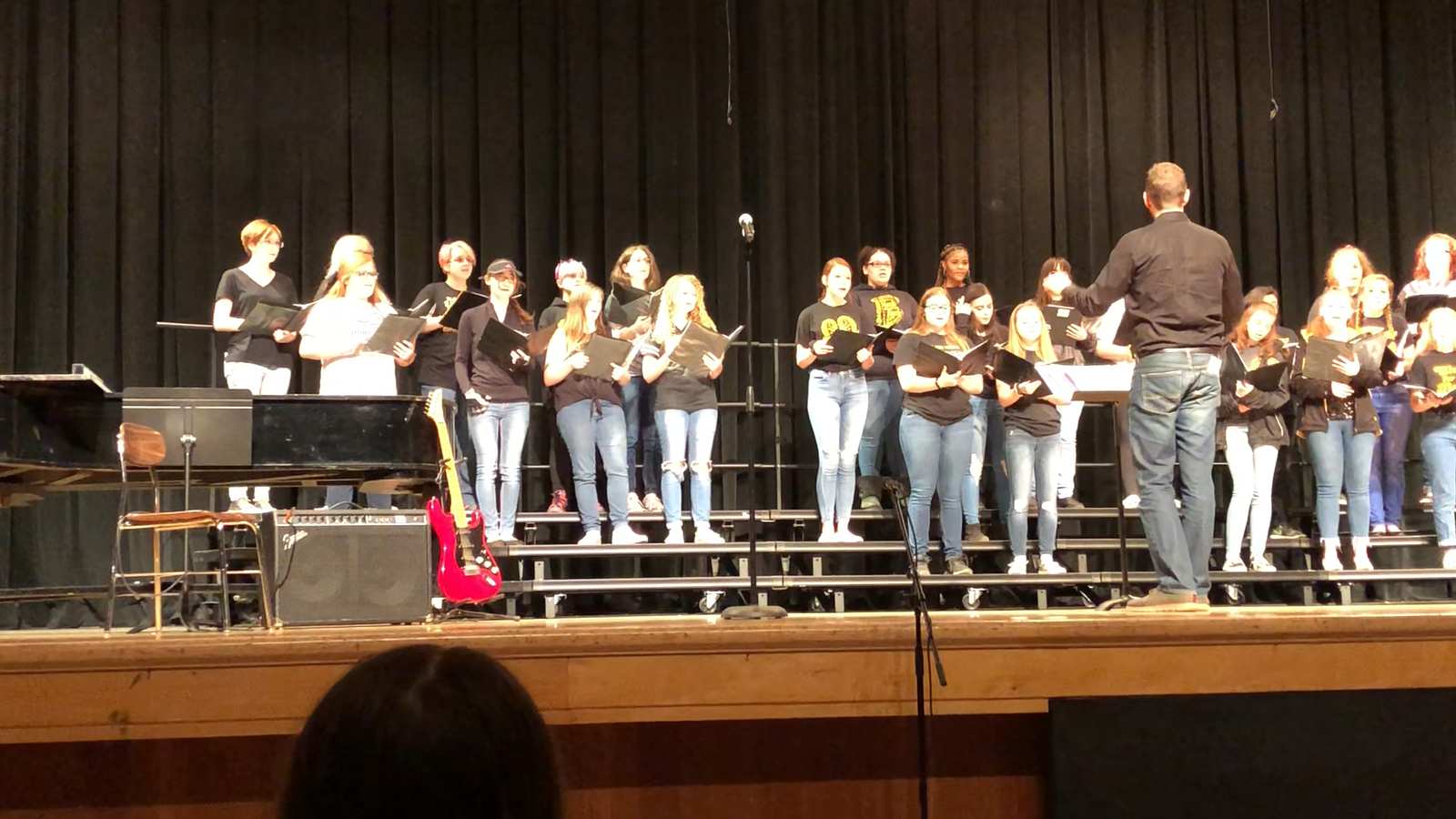
But the auditorium is what brings me so many tears. My choir concerts, my daughter’s choir concerts, my son’s band concerts. I know they need newer, and better to attract families with kids, but there is something to be said for the past.

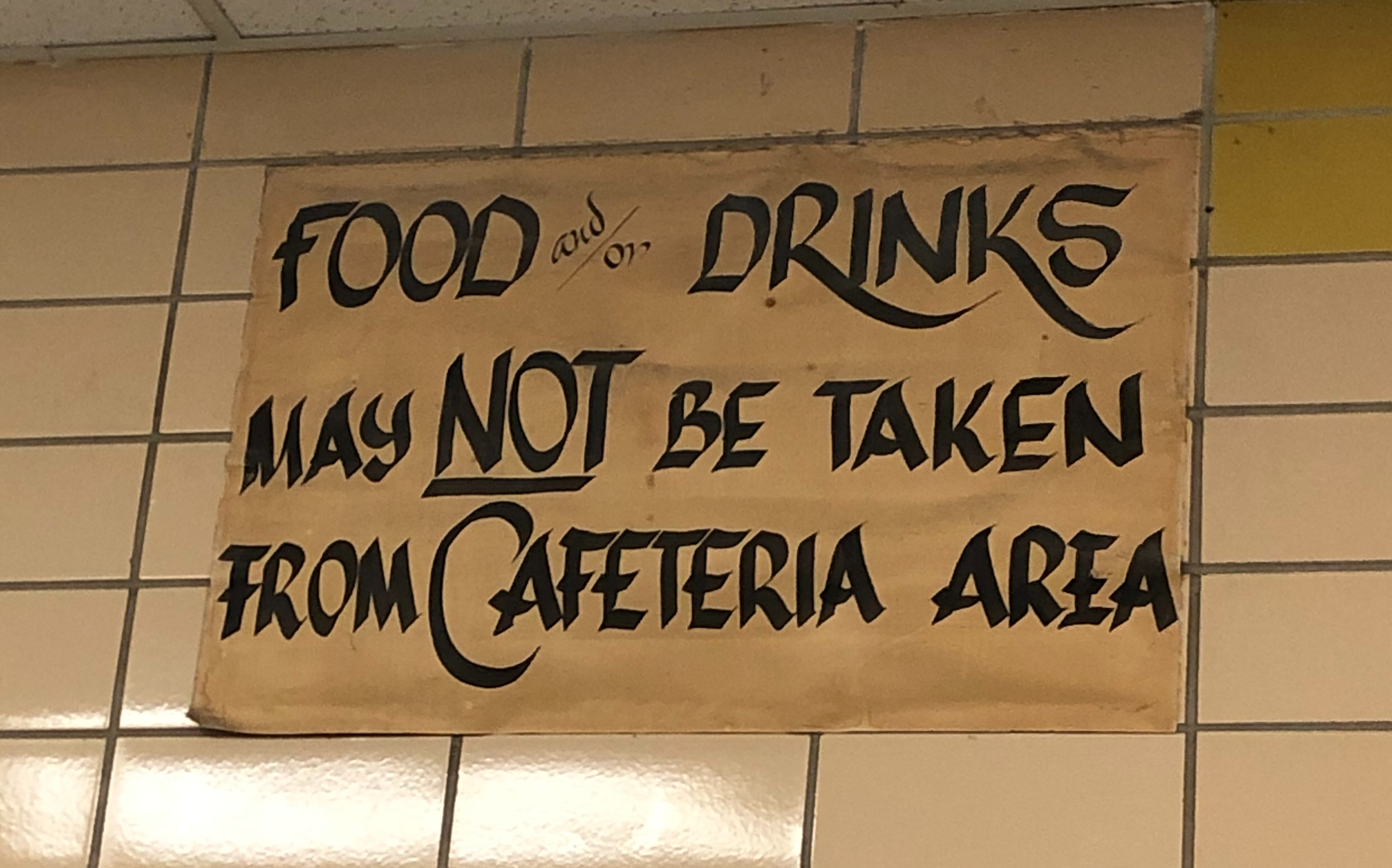
I can say this much – I don’t know what all will be taken from the old building to the new building, but I do hope this cafeteria sign goes. It was hanging in the lunchroom when I went to school and we noticed it still hanging there on my 30th reunion tour. I just feel it should be moved to the next. And not a new copy, this same sign.

The Marching Band

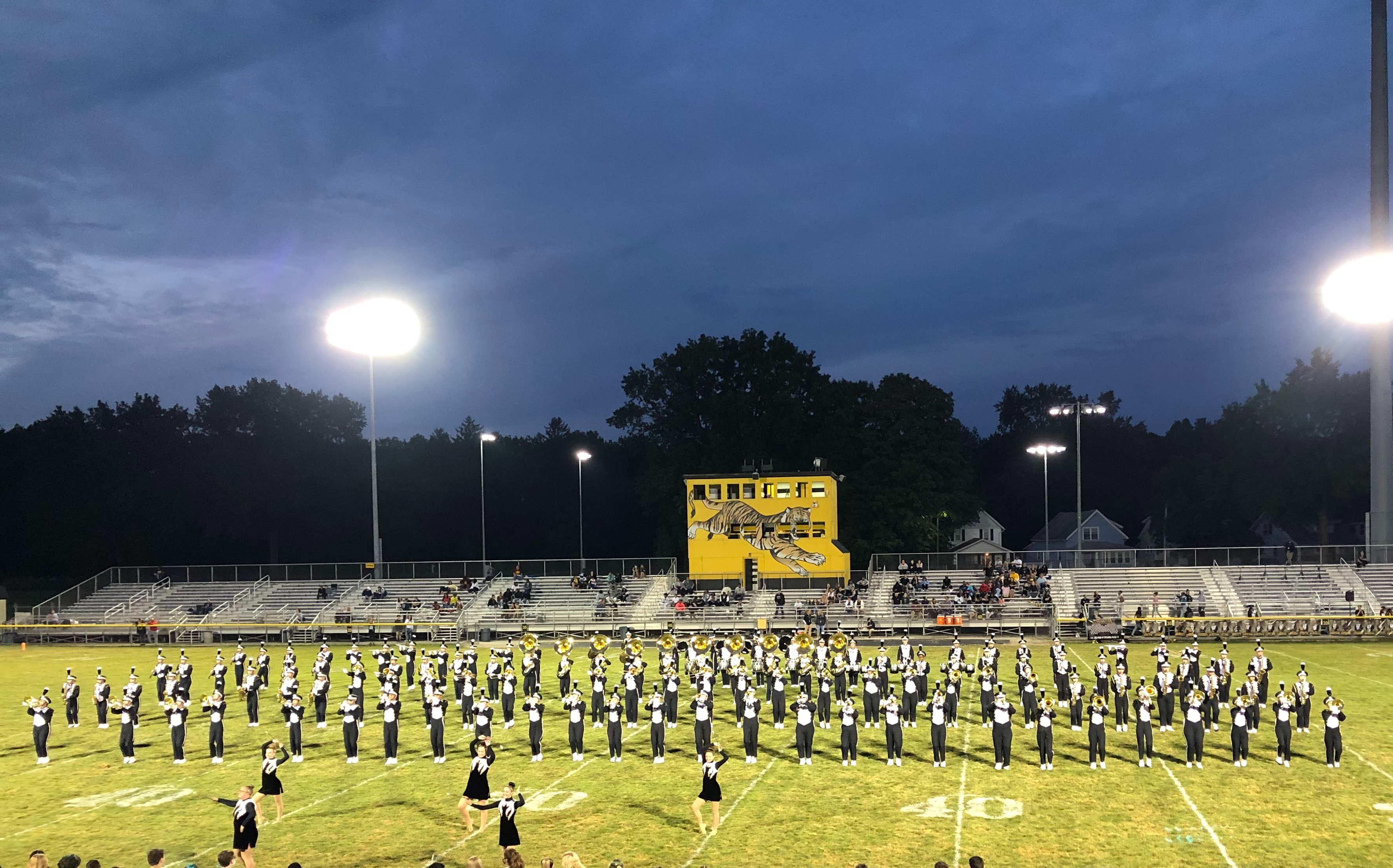
Along with the school being 100 years old, the Marching Band is also celebrating it’s 100th anniversary this year as well. I am beyond proud that my son has become a part of this legacy. I never learned to play an instrument (though I’m teaching myself the piano presently). but he plays the trumpet.

So impressed with their talent and dedication through good times and bad (which would have been last year and coping with Covid challenges).

This photo was taken on 3 September 2021, the band was awesome and the football team won too!