When it comes to the holidays most of our food is all made from scratch, except maybe rolls, but even for a couple of years I made those homemade as well (until I realized I was getting in the way of my husband, who normally makes the turkey at Thanksgiving, or the ham at Christmas).
My job was making the cookies and the pies. So far this year that hasn’t happened as I was diagnosed as a diabetic, so where I would have started cookies a weekend or two ago, I was pushing temptation off until the end. And no cut outs this year as they are my kryptonite. I was making peanut blossoms with the cherry cordial Hershey kisses (as I am not a huge cherry fan) and was going to make Russian tea cakes for my daughter (and I’m not a huge fan of nuts).
As for pies – my daughter asked if I could make cherry pie this year for something different, I said sure because I don’t need to create temptation by making my Dutch Apple Pie anyhow, so I figured this year we could have cherry and pumpkin pie (have I mentioned I don’t like pumpkin either? Yes, I’m one of those weird, picky eaters).
But alas, we were recently diagnosed with Covid – so now none of them are being made because though I’m fortunate to have been vaccinated, I still have what feels like a bad cold (which is what I thought it was because I ALWAYS get a cold in December – countless choir concerts with laryngitis).
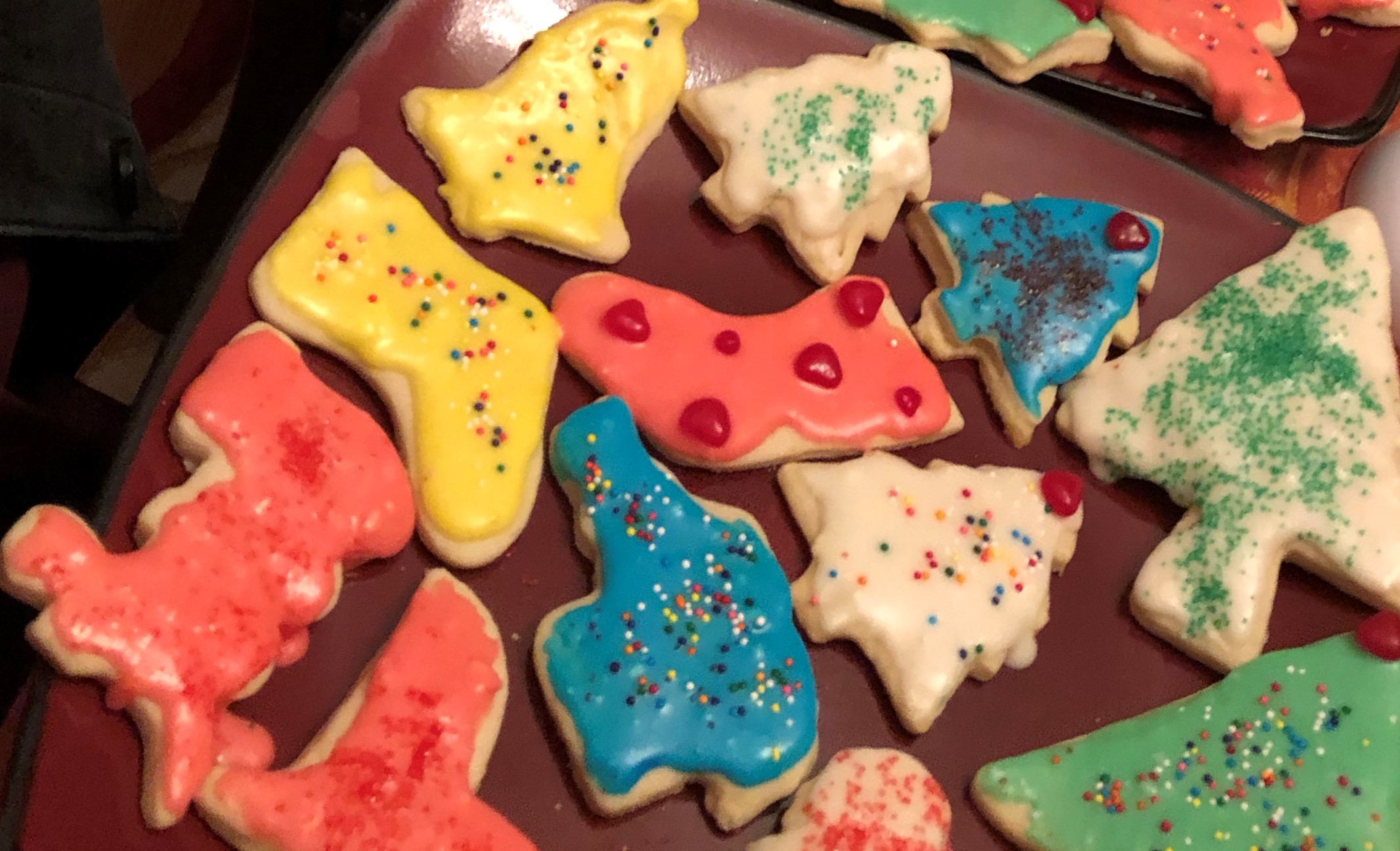
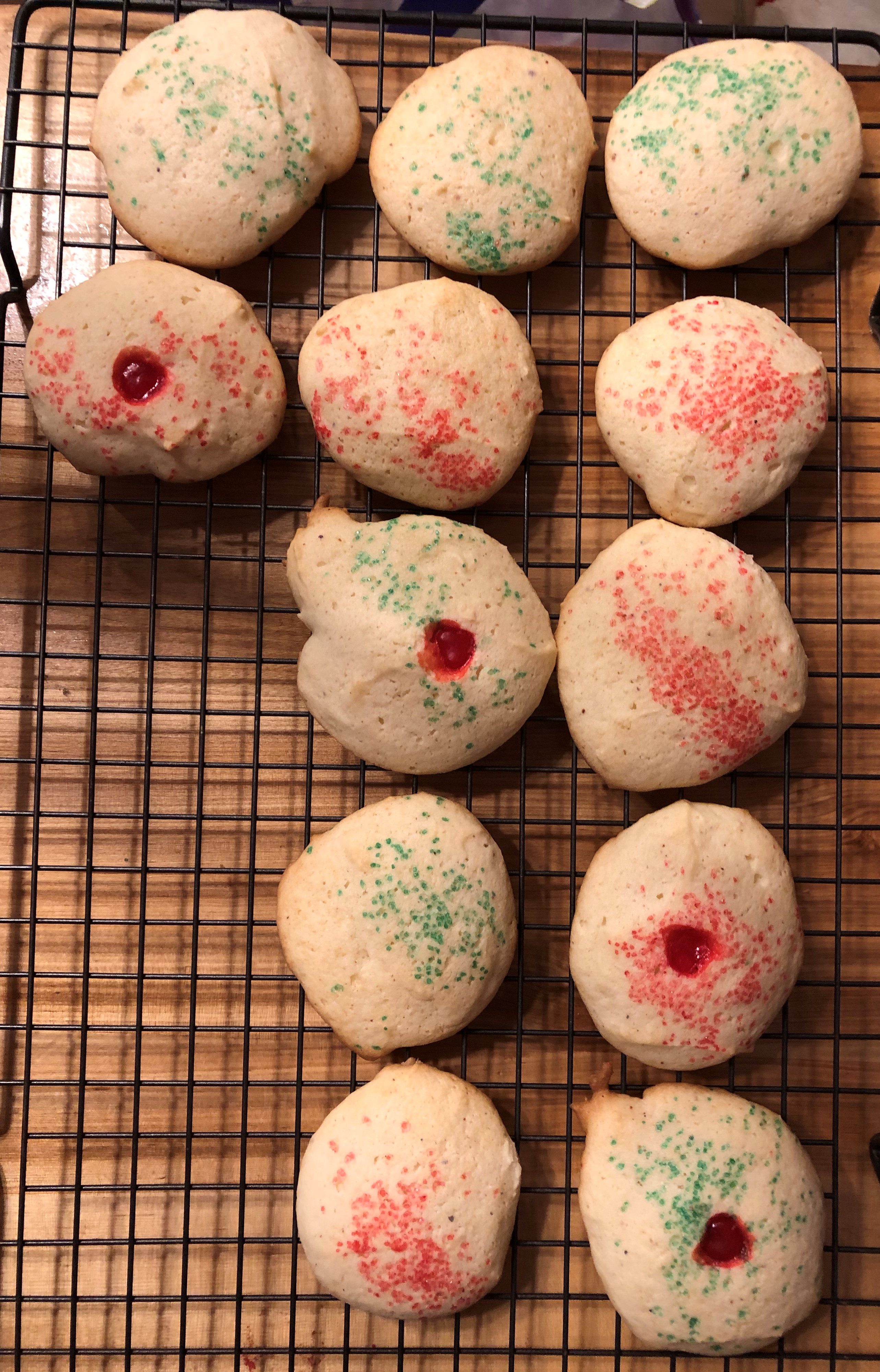
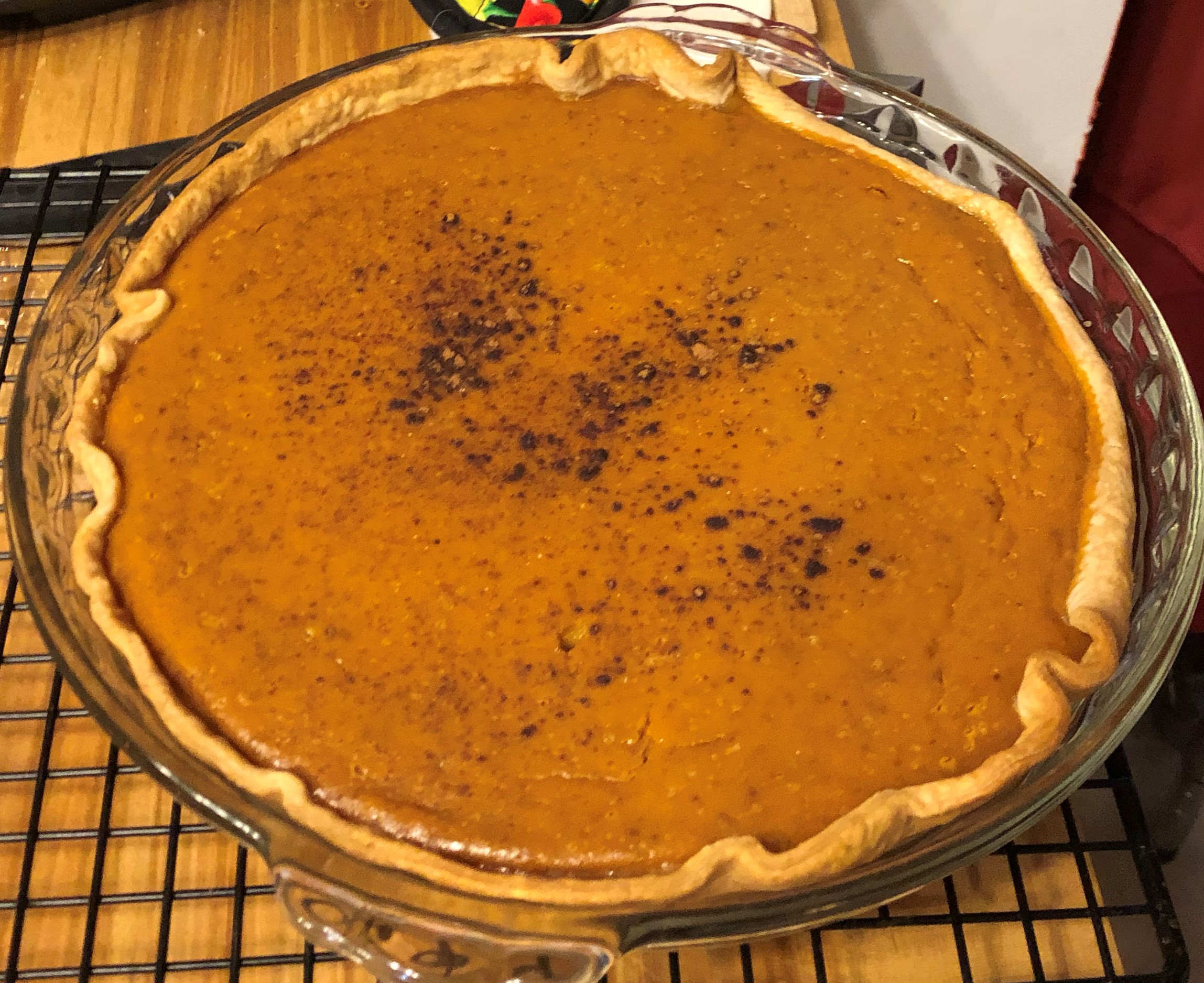
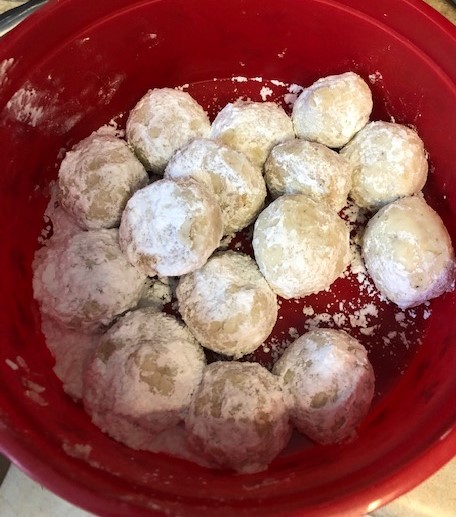
So here are photos of cookies and pies past – all made from scratch (well, Libby’s canned pumpkin does help with it). I know the drop sugar cookies were a recipe of my great-grandmother, Mildred Laura Dunbar. The Dutch Apple pie was one my mom made, not sure if it was passed down but I know it was good (I’m not a pie person, but I love this pie). The cut-out cookies may have been from a family member, I know I switched to a Taste of Home recipe because what my mom made wasn’t coming out right anymore and the Taste of Home was so yummy (and had sour cream like the drop sugar cookies, the icing recipe is included). The peanut blossoms were from the church I went to when I grew up, Northampton United Methodist Women’s cookbook.
I will admit I may cheat in many other ways of cooking, but when it comes to desserts, they must be homemade. Store bought doesn’t cut it and hasn’t for some time. Especially with chocolate chip cookies – those must be homemade (it is my all-time favorite cookie).
Who knows, maybe I’ll get something made before Christmas is officially here, and maybe I can spare a cookie or two.
Strength is such a valuable commodity. You need both physical and emotional strength to get by in today’s world. For the 52 Ancestors in 52 Weeks prompt of “strength” I’m going to discuss my great-great-grandmother, Mary Ann Ritchey.
Her Beginnings
Mary Ann Ritchey was born on 19 June 1851 in Rays Hill, Bedford County, Pennsylvania to Daniel Ritchey and Anna Cypher. She was the sixth of eleven children they had, with George being a well-known farmer in that end of Bedford County.
On 27 June 1872, Mary was united in marriage with George Washington Morgart in East Providence Township, Bedford County, Pennsylvania. Like her father, George was a farmer and had already purchased the farm when his dad, Andrew Jackson Morgart, passed away on 19 August 1870. While George worked the land, Mary Ann kept house, raising their five children: Charles Jackson (born 1873, and my great-grandfather); Edward Daniel (born 1875); Anna Rebekah (born 1878); Stella Mary (born 1886); and Altie Pearl (born 1888).
The Loss of Loved Ones
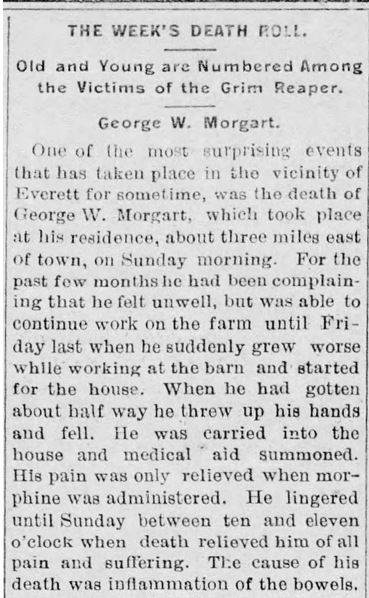
Mary Ann’s strength came on 5 May 1895 when her husband of almost 23 years died. George had not been feeling well for a bit but was able to continue to work the farm despite his issues.
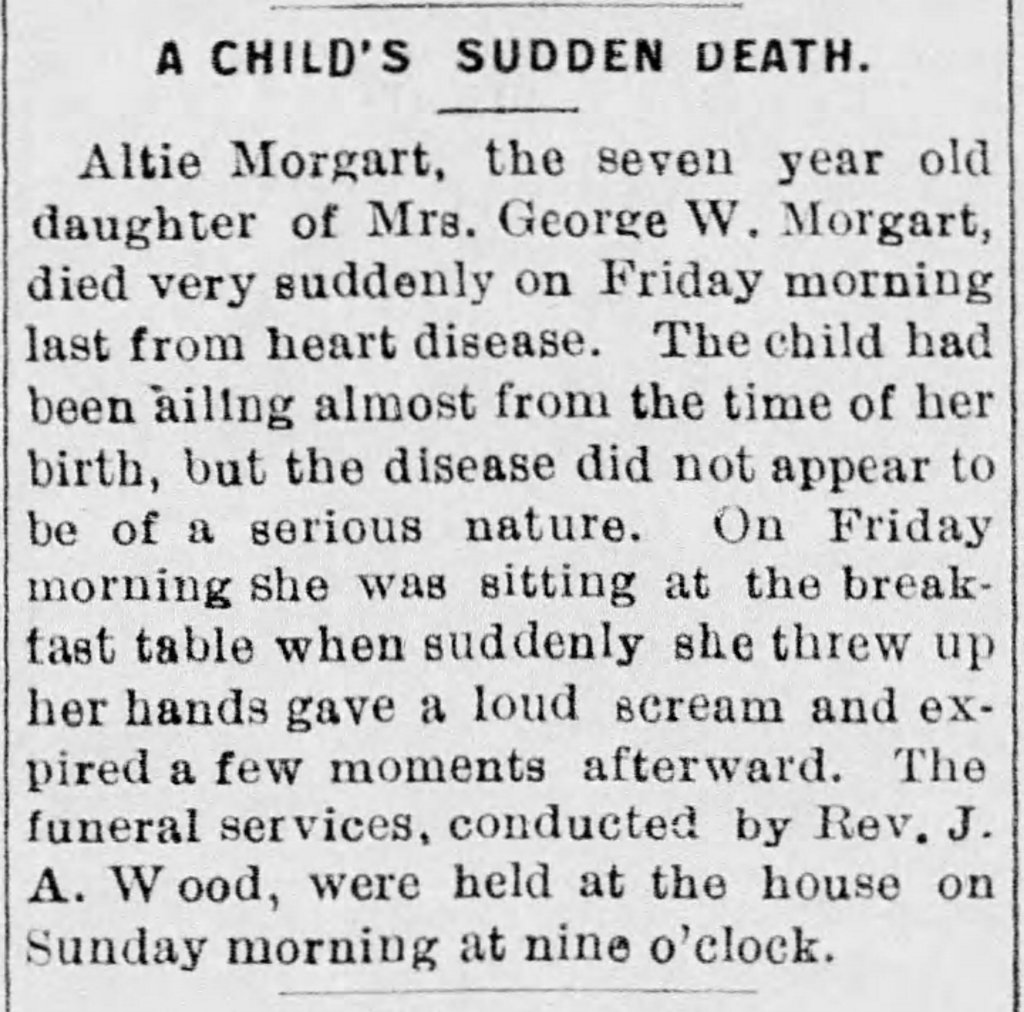
Losing your husband at any age has to be devastating but Mary Ann powered through. She had it a bit easier as three of her children were grown adults. However, this was not the last of her sorrow for the year 1895. Her youngest daughter, Altie Pearl died just a few months after her father.
And within 3 years her father would pass away at the age of 88 on 19 November 1898.
Her Strength
My great-great-grandmother suffered a great deal of loss in a very short period of time when she lost her husband, daughter, and father within three years.
On 16 February 1898 she did what women were supposed to do and married her neighbor, Bartley Hughes, and the properties were merged. (A side note, Bartley’s mother and George Washington Morgart’s grandmother were sisters, so in a way it was keeping the property within the family).
Her Death
Mary Ann Ritchey’s strength ran out on 14 August 1908 when she took her own life. Her death certificate was quoted as “Suicide by shooting in left breast with rifle – death was almost instant”.
Death Certificate of Mary Ann Ritchey as found on Ancestry.com
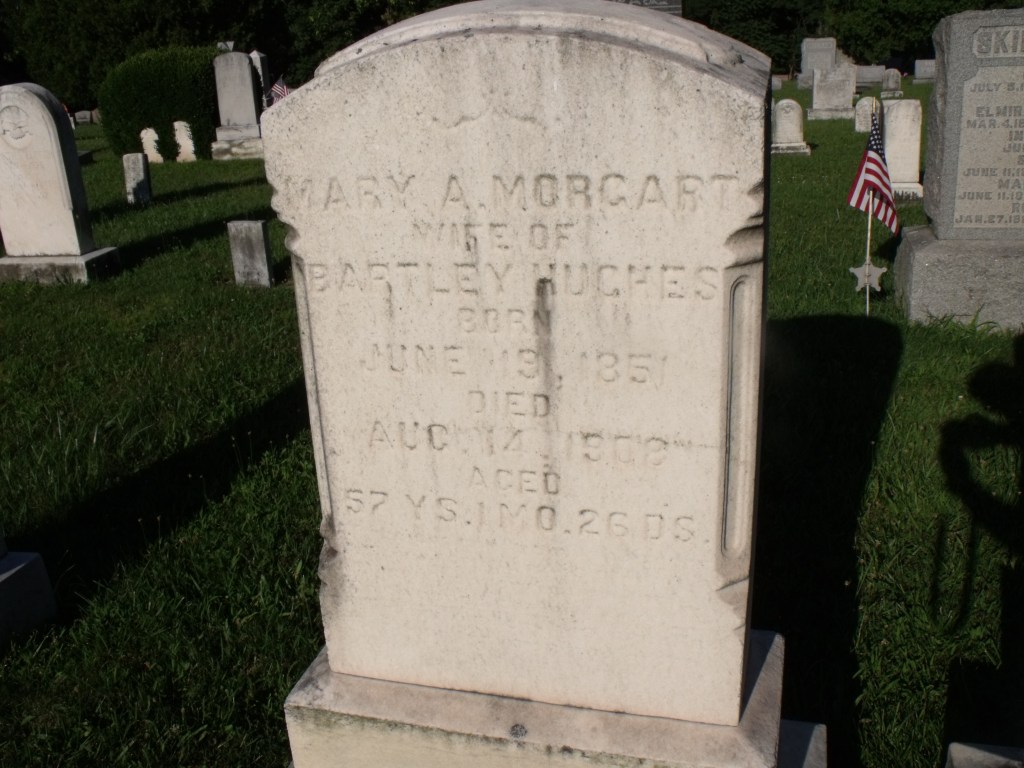
She was laid to rest next to her first husband, George Washington Morgart at Mount Zion Lutheran Church Cemetery. Her parents are buried there as well.
Photo of Mary Ann Ritchey’s headstone at Mount Zion Lutheran Church Cemetery. I took this photo on my research trip to Pennsylvania in July 2019
I have no proof but I always wondered if my great-great-grandmother suffered from depression after losing her husband and youngest child in less than 4 months. She had another daughter, Stella Mary that was born in 1886 and appears to have died just a year later. I have no true proof of how many total children she may have had, she did not answer that question on the 1900 census.
I should have looked ahead to see that my favorite name was also a theme for 52 Ancestors in 52 Weeks! But alas I will talk about the unsung hero of genealogy for all of us who have gotten started in the past 20 years – technology! So many things have changed for family historians since the inception of home computers and the internet (especially the internet). It literally is the single most important item that has revolutionized our fast-growing hobby.
Computers & the Internet
I am so incredibly thankful that I live in a time where I am able to do so much research here in the privacy of my own home. Computers, well, and in turn the internet, have changed how one can do their family tree. I can only imagine the long, drawn-out process writing and re-writing a tree when you found out more information about something. Now with the click of a mouse we can fix our tree if we had a wrong person, add an entire document we either downloaded or scanned from real-world finds and include with our people or insert a story we were told by another family member without losing any sleep.
Genealogy Software
Another advantage of computers is having personal software that will track your family with both pedigree charts, family group charts, and give you statistics within moments of your inquiry. No matter who you choose to use: Family Treemaker, Legacy Family Tree, or Rootsmagic, (or any of the many others, but I believe those are the big 3) it’s nice to have your own copy of your tree and not just one tied to Ancestry or MyHeritage (which have private trees) or FamilySearch (which is just the 1 big tree that millions of people can change at any minute). Each has their perks, with Family Treemaker and Rootsmagic both syncing with Ancestry so that makes it nice if you use Ancestry on a regular basis.
I chose to get my software as someone on FamilySearch placed someone in my tree that didn’t belong and it was a year or more before I realized that I could change it. I asked the lady who plopped Andrew Sloan Blair in my area of the tree to remove him, and she did not. But for a year he looked at me from my home page (it was a huge picture that stared at me every day).
The lasting perk of my software was that it was my last birthday present from my Mom. She ended up passing away unexpectedly 3 months later and so every day I use it I think of her (well, she asked me what I wanted and told me to just get it and so I did after reading the reviews about which one was the best at the moment – I think they all trade places each year).
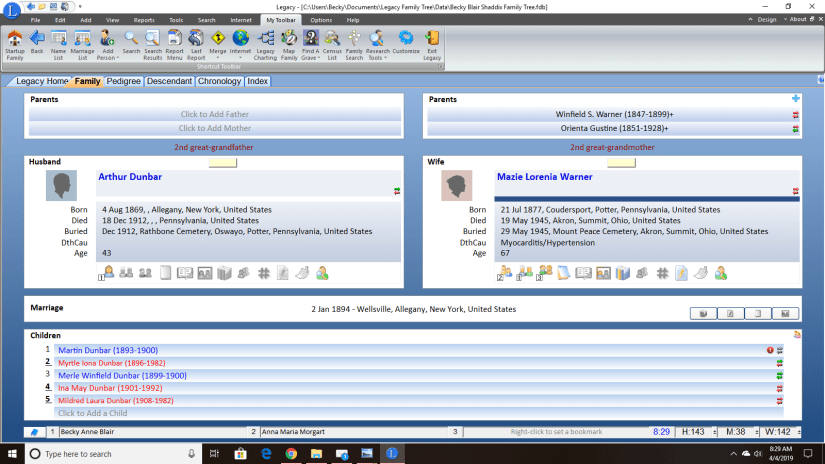
A view of my family tree software, I use Legacy Family Tree
Social Media
In conjunction with the internet is social media, which is a great way to ask for help with your genealogy or share what you have learned. Each venue of social media offers a different way of appealing to your fellow family historians that go from learning tools, to asking questions, to sharing your finds.
YouTube
I am so incredibly grateful for the number of educational videos that are out there on YouTube for the average person to once again view from their computers, or tablets, or heck, televisions that allow us to learn about the who, what, where, why, and how of our ancestors. Between free videos such as Elevenses with Lisa (by Lisa Louise Cooke of Genealogy Gems), the world of New England Research (American Ancestors), this year’s RootsTech Connect that has been letting us watching videos for free all year (you just need a FamilySearch login to view, which is also free!). I know I am missing so many – and the genealogy giants: Ancestry, FamilySearch, Find My Past, and MyHeritage (typed in alphabetical order), all have video tutorials and such as well.
I know a few of my podcasts I listen to also have YouTube alternatives if you would rather view the talk instead of listening on your phone or tablet.
Another nice option of YouTube is you can go to the subscription tab on the menu and follow along with all the latest uploads of videos from your favorite people or groups.
Facebook Genealogy Groups
I am thankful for Facebook Groups where you can ask a question and get responses from warm, caring people. I have done this several times and do my best to help others in return (though I will admit I need to do the helping more often than I do, random acts of kindness can truly help someone break down that brick wall).
If you want to find genealogy groups on Facebook, just search “genealogy” and then narrow down your selections by groups, I am sure you will find one that fits your tastes. You can find general groups, DNA groups (and I’ll state this here, only ask DNA questions in a DNA group because your general groups might delete or close the question and tell you to go to a DNA group).
You can also join groups for a specific area of the country or world that your ancestors are from. My favorite group is one based on Old Bedford County Pennsylvania where I have gotten some great assistance and advice on where to find things on my people (and what’s nice is it lends itself to all surrounding counties that were once a part of “Mother Bedford”).
You do need a Facebook account to participate, but it’s free, and if you just want to create a profile for user groups, you don’t have to friend others and post anything about yourself (well, other than what you might type about yourself or your family history in a genealogy group).
Twitter
Twitter is another great arena for genealogists. I have met so many inspiring bloggers who share their expertise as I attempt to do. Again, just like those in group forums on Facebook, family historians sharing their finds through tweets are again so helpful. There is an entire community that meets up on Tuesdays for #AncestryHour, sadly it’s based in England so I am always working as their 7pm meet time is 2pm my time. One day I’ll be able to participate. (If you are ever interested you can search #ancestryhour and all the posts will show up, not sure if it will be in the correct order though).
Again, you do need a Twitter account to participate and you will have to post in order to get something out of the experience but it’s not as personal as Facebook. Also, tweets (your post on Twitter) can only be about 180 characters, but you can always add message 1 of however many you think you will need. Infographics, meme’s, or photos are not counted as part of your words so that can help get your message across in 1 post as well.
Instagram
If you love pictures then Instagram is for you. Instagram is a visual social media platform that doesn’t restrict you in characters but allows you to share a photo and link to your blog to share your family history.
I have been a subscriber of Family Tree Webinars since 2018. It is a wonderful resource that has top notch genealogists providing programs via a PowerPoint presentation (or something similar) where they give you all kinds of great information on a specific topic. Most webinars are an hour in length and will often have a q & a segment at the end where the presenter answers questions asked by the moderator (which they get the questions from the live viewers in a chat).
Topics can include the introductory programs on how to start doing your family tree, to busting down brick walls, to teaching someone how to find information in Eastern Europe, to how to use Excel spreadsheets in your genealogy research, to what is autosomal DNA (and a 1000 more webinars that will pique your interest).
They do provide a webinar that is free for a week for everyone to view, however being a member gives you access to the syllabus that goes along with each presentation. You can purchase a subscription with a discounted rate, but renewing at such is no longer an option. Though I enjoyed getting the discount every year, I can admit it is still worth the $50 fee to join (which is why I’m guessing that they took the discount away).
Subscription Sites
Last, but not least, are the subscription sites that you can sign up for in order to create a tree and obtain documents of your people. Alphabetically here are a few I have used: American Ancestors, Ancestry, GenealogyBank, FamilySearch, Find My Past, Fold3, Heritage Quest, MyHeritage, Newspapers.com, and Newspaper Archives, just to name a few (I know there are many more out there, but these are even the ones that are touched on my local library, which has a lot of great information about genealogy and local history).
These subscription sites (you must sign up for all of them, but FamilySearch is free) are so incredibly helpful for finding information about your family. Most have library editions so even if you unable to afford all the subscriptions you can use them for free at your library (some are letting you use the library editions for free from your home since Covid-19 has been a part of our lives, you normally need a library card, definitely worth checking into).
Websites
Along with subscription sites, there are great websites you can use to help you with your genealogy.
Cities & Counties
Some county government websites will have links or emails that you can send an inquiry right to the department where you seek your information that can aid in your finding documents about your ancestors. Sometimes you can even access the records yourself by paying a small fee for the time you spend online (just make quick haste in downloading your documents, just look later).
City websites often have a history of the town on the website which may give key background information about the time when your ancestor lived there.
Blogs
There are a ton of blogs out there that can provide help with your genealogy. Everyone has a different take on how they word things, and sometimes you just come across someone that explains a technique just the right way and it clicks (a great example of this for me is Amy Johnson Crow, the founder for the 52 Ancestors in 52 Weeks, she has a WANDER Method for working on genealogical problems and is more or less a simplified version of the Genealogical Proof Standard).
Another great website to help you in Cyndi’s List, which is a wonderful source of links to whatever it is you are looking for in your genealogical search. I know I need to use it more often.
In Summary
It is great that technology can allow you to find so much information while you are dressed in your pajamas into the wee hours of the morning but one must remember that you don’t have access to everything, and that there is so much that you need to go find in person where your people lived.
Every day more and more records are digitized and put online but there is still so much more that is out there, just waiting for you to find it, and knock all those walls down.
The theme for week 46 of 52 Ancestors in 52 Weeks is Birthdays. And I am not sure what day of the year for sure has the most birthdays, but I know off the top of my head that April 2 is high on the list for my ancestors.
I have a total of 9 birthdays that appear on 2 April, the oldest being born in 1725 (my 7th-Great-Grandmother, Martha Shattuck) and the youngest being born in 1949, my Aunt Teri (which would be the 6th-Great-Granddaughter of Martha).
Here is my list of names, how they are related to me, and how old they would have been in 2021.
Martha Shattuck – 7th-Great-Grandmother – 296
Elizabeth Naill – Wife of 4th-Great-Granduncle – 222
Eliza Horton – 3rd-Great-Grandmother – 208
William Harrison Geer – 3rd-Great-Grandfather – 181
Arabelle Morgart – 2nd-Great-Grandaunt – 165
James Stevenson – 1st Cousin Twice Removed – 112
Anna Maria Morgart – Grandmother – 107
Willis Mellott – 3rd Cousin Once Removed – 84
Terry (Teri) Fairhurst – Aunt – 72
My software program that I used to track my genealogy has a calendar maker and in the beginning of this year I contemplated printing one out to honor my relatives. I was astounded when I saw I had so many events on 2 April that my Grandma wasn’t even listed in the primary box. At the time she was the second youngest to my aunt (I’ve since added Willis Mellott).
So funny how some dates have so many whereas I am the only person on my birthday so far (which makes me feel special).
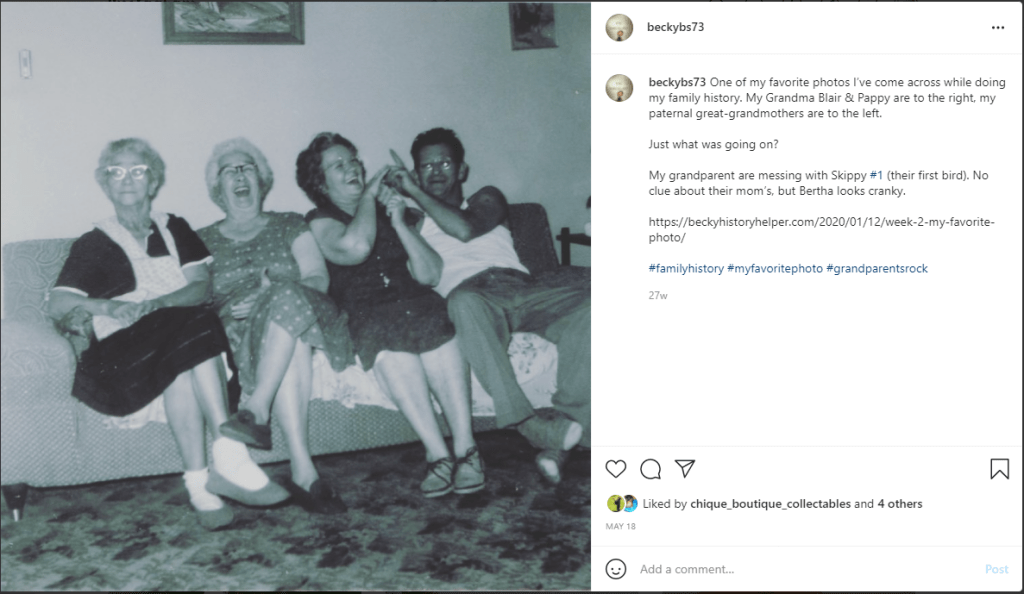
For week 45 of 52 Ancestors in 52 Weeks, the theme is Stormy Weather, and I’m choosing to write about the the struggle my two paternal great-grandmothers, Bertha Childers and Margaret Dora Wise, endured when suddenly becoming widows.
Bertha Childers
When I think about rough time that my great-grandmother, Bertha Childers, must have faced when her husband, Andrew Jackson Blair, passed away on 16 November 1926.
As was written about here, my great-grandfather was killed instantly when a coal mine collapsed. But as horrible as his death was, I can only imagine what life must have been like for my great-grandmother, who was left a single mother of 4. Granted, Genevieve had just gotten married to Earl Vivian the week before Andrew passed, but Vada, Leroy, and Donald were still at home (Vada was 19, Genevieve 16, Leroy 14, and Donald 9).
I know from the 1930 census that Bertha was still a single mom of Donald, and the late 1920’s, early 1930’s was a tough time for a single mom (as it still is 90 years later).
Working for a Coal Company, more than likely Andrew and Bertha lived in a company home, he was paid with company money, where all purchases were from a company store, and when he died she probably lost everything.
I know in the late 1920’s my grandfather, Leroy, began working in the mines as well, but after having an accident in the same mine where his dad died, he found something else to do.
But I can’t imagine what life was like for my great-grandmother. Bertha had to have been devastated to lose the man she loved, her home, basically her life as she knew it. She did eventually re-marry William Chappell who was also a coal miner.
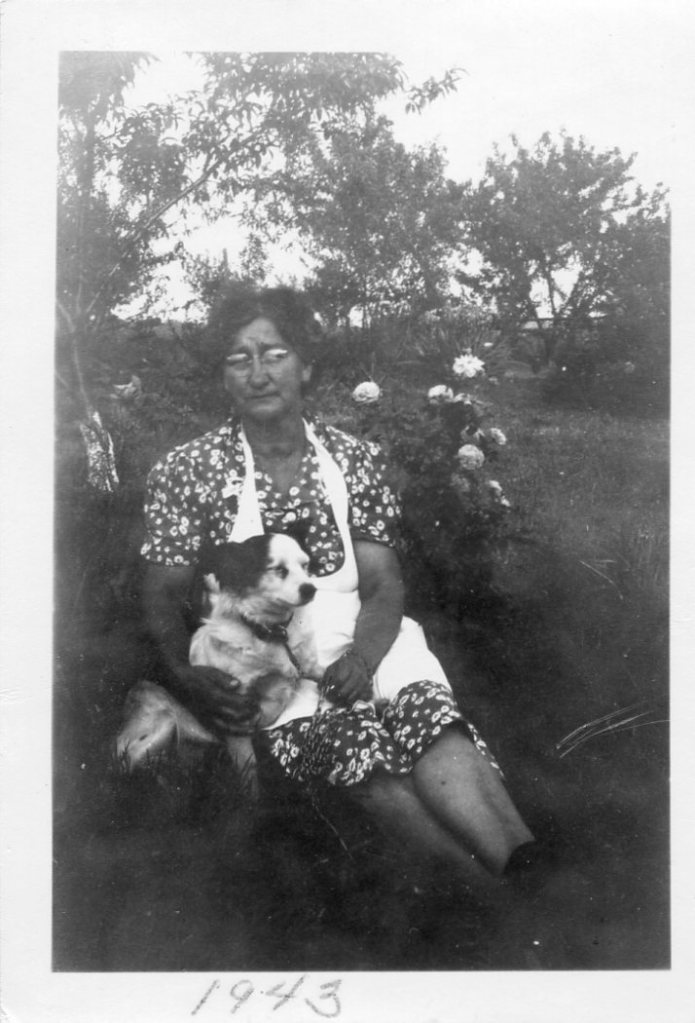
Bertha Childers and her dog Lulu Belle, 1943
Margaret Dora Wise
Life changed for my other great-grandmother on my dad’s side of the family when on 24 July 1917 Charles Jackson Morgart committed suicide leaving Margaret Dora Wise alone to care for 3-children ages 7, 6, and 3.
To my knowledge no one knows why Charles took his life. My mom had thought she had heard he was ill, but my dad heard that infidelity could have been involved (not on Charles’ part). But regardless of why, it had to be a huge shock to lose your husband, even if your situation wasn’t idyllic.
Unlike Bertha, Maggie Wise ended up getting married to Irie Earl Custer by 1920 (according to the 1920 Federal Census). Earl was a coal miner and she stayed married to him until he passed in 1949. They never had any children together.
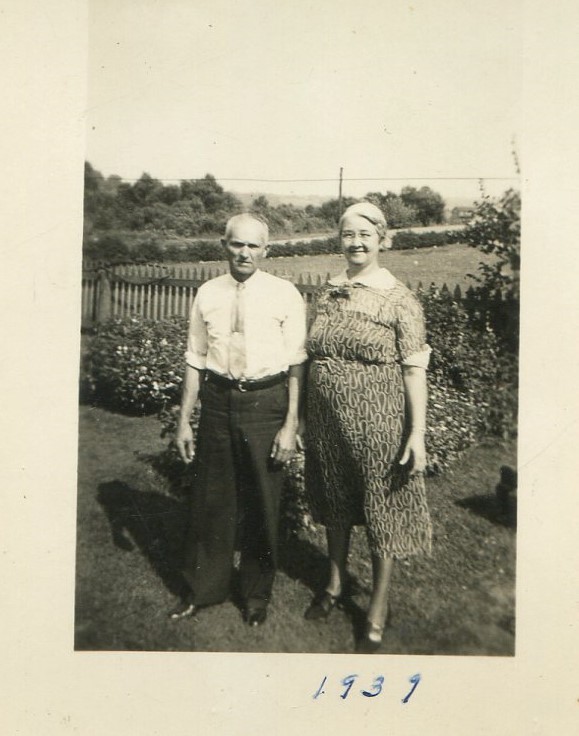
Irie Earl Custer & Margaret Dora Wise 1939
Having younger children Maggie probably had to pick up the pieces more quickly in order to raise her kids. I know she ended up raising her children in the town of Saint Michael a stones throw from South Fork where coal mines were located (Saint Michael was built where the South Fork Hunting and Fishing Club was located before the huge Johnstown Flood of 1889).
I feel Maggie had the better end of things when she married Earl Custer. My Grandma (Anna Maria Morgart) always spoke quite highly of her Step-Daddy as he basically raised her (she was 3 when her dad died), and chose Earl to be my Dad’s middle name.
Both of my great-grandmother’s survived the hardships they faced, but both of their husband’s died so unexpectedly. It’s never easy to loose someone you care about, but having my own mother die out of the blue, I know how hard it can be when you don’t have the closure of saying goodbye, and even I love you one last time.
Being on a break from researching the past few weeks, when I finally looked to see what the theme for week 44 for 52 Ancestors in 52 Weeks was I shouldn’t have been surprised it was voting (as it was election week).
And I’ll confess, I’ve never looked into finding my ancestor’s voting records, so this week’s post gave me the opportunity to do just that.
Rather than make life difficult I did what came naturally, I Googled it and the first link I clicked on was the FamilySearch Wiki and “United States Voting Records“.
I had an idea in mind which was to see if my great-great-grandmother, Mazie Warner, ever voted as she would have been a 40-year-old woman when women were given the right to vote in the state of Ohio in 1917.
However, it didn’t take me long to realize that FamilySearch did not have the voting records of Summit County. Or Pennsylvania. Or Massachusetts (all the main states where I know I have ancestors, as I quickly broadened my search when I wasn’t finding the records for Summit County).
Summit County Board of Elections
My next step was doing a search on Google for Summit County, Ohio voting records. This led me to the Summit County Board of Elections website and I began reading what their policy was on public records and voting as it appeared I could contact them for information (so much for this becoming a blog post I could do on the fly). My first question was how far back their records go, if they did not have the voting records of 100 years ago (I’m still focused on Mazie for this exercise) then they would not be able to help me.
After reading through their 14-page document I discovered it does not include how far back one can go to research the voting records. So I opted to inquire to them about what years they have. Luckily I didn’t have to wait long, I emailed them in the morning and by 5pm I had an answer – their records only go back to 2011.
So, I found myself starting over.
Family Tree Magazine
I tried to find other ways to find voter records in genealogical research. The first article I read was from Family Tree Magazine with “How to Trace Your Ancestors in Voter Records” by Diane Haddad where it explained that voter records were good resources to follow where your ancestor lived, the key was finding county lists of registered voters or discovering who paid poll taxes.
I lucked out as the author specifically highlighted Ohio, which listed years that I wasn’t needing right now, 1803-1911, but detailed that “Ohio counted men age 21 and older in various counties to determine voting districts” and can be located on Family History Library microfilm and in local genealogical society collections.
The Ancestor Hunt
The next website I checked out was new to me entitled The Ancestor Hunt, their article explained why it’s important to find your people in voter records: helps with the gaps between censuses, naturalization, middle names, you can find a spouse, nativity, physical characteristics, political party/affiliation, and migration (I just re-stated their headlines).
They also have a link for each state for free online voter records. So naturally I selected Ohio, not every county had their records online, and once again Summit County was missing.
Sigh.
Ancestry.com
Next came a link that led to an entire section of Ohio history research using Ancestry.com. But again, these records led to city directories, and oddly enough, files related to Florida (yes, that’s me you hear scratching my head).
Family History Daily
Next up was the Family History Daily website who had a blog entry “Voting Created Some Fascinating Genealogy Records! Here’s Where to Find Them“. This article title has me elated. It provided a nice synopsis of voting registers and how they are found alphabetically. It also noted that these records are often available after the mid-1800s, with better luck to be had in the 1900’s and these records are very limited, or not included due to many groups of people being excluded from voting.
But the most important tidbit this article offered was that these records cannot be found online for free. (This explains why I have never stumbled upon these records).
Thank you Family History Daily.
So now where can I search in Summit County to find my ancestors voting records (I am more or less curious to see which of my relatives took their civil duty seriously? I do my best to be a good citizen and get out and vote each year.
Where Are the Summit County Voter Registers?
Since I have not found anything online and have not had any luck at the Summit County Board of Elections, my next place to look is the Summit County Historical Society. Many of their documents are located at the Akron-Summit County Library in the Special Collections Division. So I will see if I can find anything there first.
By looking through the local history section of the Special Collections page, I found an Archival Collection page that has the collections of the Summit County Historical Society.
My first search I I used the keyword “vote” which gave me 46 results, most being articles on specific levies and whether they passed or failed and by how much.
One headline that made me smile was “Akron Public Library Booms During Depression: More Persons Registered for Books Than Are Eligible to Vote Here”.
Other headlines were for businesses and board votes and mergers between companies. But nothing for voter registrations.
An even bigger sigh.
I continued to look through records that were listed in pdf form that stated what files the library had on microfilm to see if voter registrations were there. Despite them having birth, estate, and other records, there were no voting records amongst the files.
I then turned to the Summit County, Ohio website to see if any files were there. If so I was looking in the wrong place. What gave me the idea was that the naturalization records are there with the Clerk of Courts section. I get that the voter registrations aren’t online, but I had hoped that one of these places would have it mentioned if they have these records within their facilities.
I will have to pick this up at another time. I may find the voter registrations by next November when this is the topic once again. I will continue to research this topic as I am very curious if any of my female relatives voted in the 1920 elections when they earned the right to vote with the 19th Amendment.
Veteran’s Day is “a celebration to honor America’s veterans for their patriotism, love of country, and willingness to serve and sacrifice for the common good” (found at U.S. Department of Veteran’s Affairs).
History
Originally called Armistice Day, it was ratified into being on 13 May 1938 to commemorate the ending of World War I (otherwise known as the Great War). The date of 11 November was chosen for this holiday as all fighting ceased on 11 November 1918 at the 11th hour.
In 1954 President Dwight D. Eisenhower officially changed the name from Armistice Day to Veteran’s Day at the urging of several veteran organizations.
To all those who have served, I thank you for my freedom.
Find My Past
In honor of this national holiday, Find My Past is having military records free to research today, 11 November 2021 through 15 November 2021. Seize the opportunity to find these important documents about your military ancestor.
Have you ever found a shocking discovery while working on your family history? I have found a few with it literally being a shock when I discovered a distant cousin was electrocuted by the State of Ohio (see my tale of Ralph Reed here). I found out via DNA that the man listed on my grandmother’s birth certificate was not her dad (see that discovery here).
But I will never forget standing in the Bedford County Historical Society trying to obtain more information on my fifth-great-grandfather, Peter Morgart, who I discovered previously was at the Battle of Yorktown during the Revolutionary War, only to learn he was an antagonist of the Whiskey Rebellion and a reason President George Washington went to Bedford County, Pennsylvania to settle things within our very young country.
The Whiskey Rebellion
The Whiskey Rebellion was an “uprising of farmers and distillers in western Pennsylvania in protest of a whiskey tax that was enacted by the federal government“. In 1790 Alexander Hamilton pushed for the American government to take over all the debt each state sustained during the American Revolution. Though President Washington was against the tax in the beginning, after talking to local Virginians and Pennsylvanians, who seemed “enthusiastic”, he (Washington) took these positive declarations to Congress and the bill was passed in 1791.
Protests began immediately as the new tax was unfair to small producers. Where the larger distilleries paid a yearly tax at 6 cents per gallon, with even more tax breaks the more whiskey was produced, the smaller distillers paid 9 cents per gallon and had to pay with cash.
Initial protests were refusals to pay the tax, but then they began intimidating officials and violence broke out. For example, 11 September 1791 Robert Johnson from the excise office, went to collect the tax, he was surrounded by 11 men dressed as women where they stripped him naked, tar and feathered him, and stole his horse, leaving him alone in the forest. Mr. Johnson recognized 2 of the men and warrants were issued for their arrest. When John Connor went to take the arrest warrants to them, the same thing happened to him. They resigned after that.
In 1792 Washington tried to resolve things peacefully, but by 1794 actions began to get out of hand when a fire was set to the home of the regional tax collector, John Neville. President George Washington organized a militia and headed to western Pennsylvania. By the time he arrived the rebels had “dispursed” with 2 being found guilty of treason (they were both later pardoned by Washington).
Peter Morgart
My fifth-great-grandfather on my paternal grandmother’s side witnessed Cornwallis surrender his sword to George Washington at Yorktown. So that he was one of the many men refusing to pay the tax blew my mind. He paid his fine (to my relief) but it had me rather unsettled that my relative was one of the reasons my hero had to go to Bedford County.
I am not sure if Peter Morgart was a distiller himself but he did build the Morgart Tavern in the late 1700s. I’m sure being the owner of a tavern brought about it’s own sort of related payments to the whiskey tax.
The Tavern went on to be owned by my fourth-great-grandfather, Baltzer Morgart.
To my knowledge, sports is not a huge part of my family’s life. We love to spectate as my cousin loves OSU football, and my mom and I were/are big fans of football and baseball, my mom being a huge fan of the Cleveland Browns and the Cleveland Indians while I prefer the New York Football Giants and the New York Yankees. My mom liked the Ohio State University Buckeyes football as well. My husband is a devout follower of the Alabama Crimson Tide College football team. But if you haven’t guessed, we are watchers, not players.
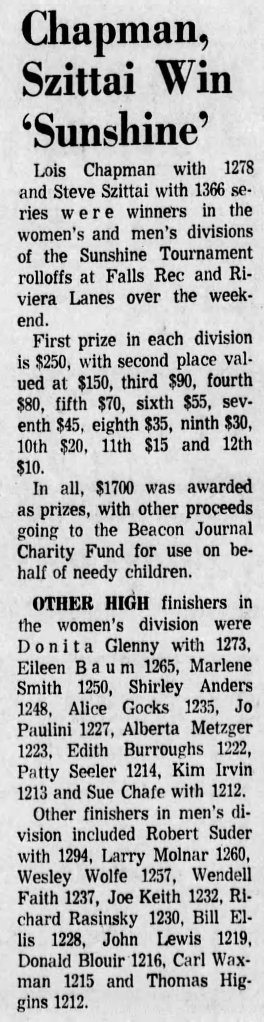
As I mention in a previous post, my parents met in a bowling alley and they were on bowling leagues off and on throughout their married life. My mom’s siblings did as well. My maternal grandmother, Alberta Lou Fleming, was a bowler as well, belonging to bowling leagues for women with high averages.
Found in the Akron Beacon Journal on 9 December 1974 on Newspapers.com. My grandmother is noted under the bolded paragraph Other High Finishers…
The other sport my family was involved in is golf. My maternal grandfather, Harold Fairhurst, made part of his living as a golf pro (he was also a Mason). My uncles both play golf, my mom’s youngest brother just took his nephew (my cousin) to a golf outing that was a fundraiser for Huntington’s Disease. This same uncle’s daughter passed away last year from complications of Huntington’s.
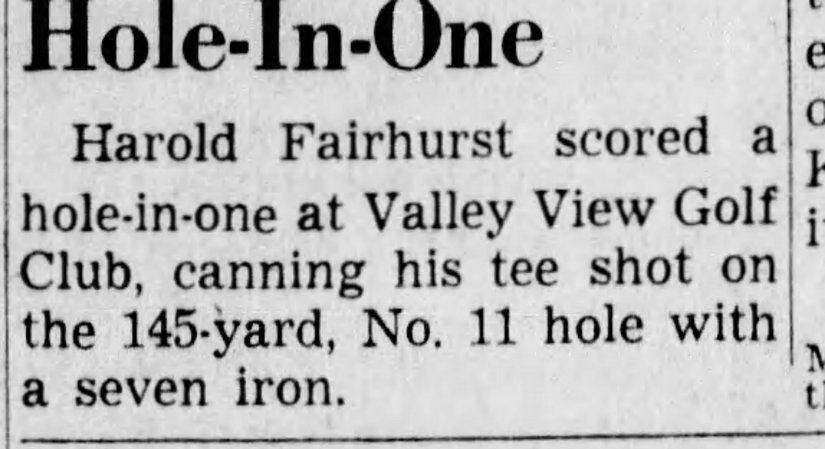
My grandfather did achieve a hole in one at the now defunct Valley View Golf Course. My Aunt remembers that my grandfather won a years supply of free Pepsi for his achievement.
From the 17 September 1964 edition of the Akron Beacon Journal, found on Newspapers.com
On my dad’s side hunting is the sport of choice. I remember going to my Uncle Don’s house where he had a huge deer and turkey on display. I recently learned from my dad that his dad, Leroy Blair, only shot animals for food. When he could afford to purchase food at the grocery store, he no longer hunted. That explained why I have never had eaten deer (granted when my dad went deer hunting with friends we threatened to call him a “Bambi killer” so he probably opted not too).
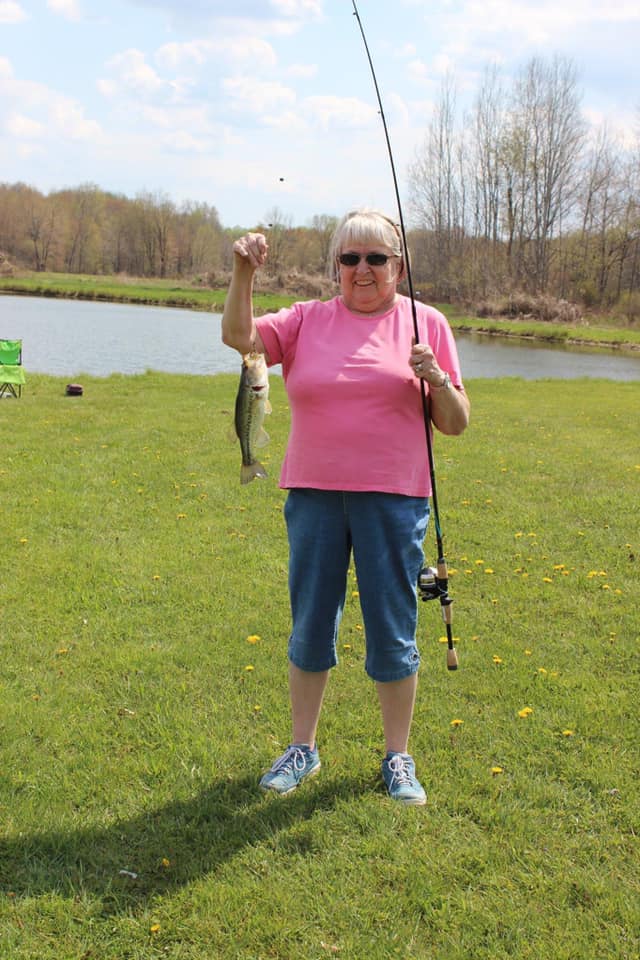
Fishing is another sport we do. My mom took a big interest in it before she passed away but I have fished off and on my entire life, as my Daddy taught me when I was little. It was always a fun activity when we went camping as where I fished all the nearby campers would come out and watch me and applaud me as I ran up the hill to our campsite so my dad could take the fish off my hook. He is who I still go to now when I catch a fish (well, assuming he has gone with us).
Cynthia Anne Fairhurst with the fish she caught. For a lady who wasn’t into fishing most of her life, the last 5 years or so she truly enjoyed it.
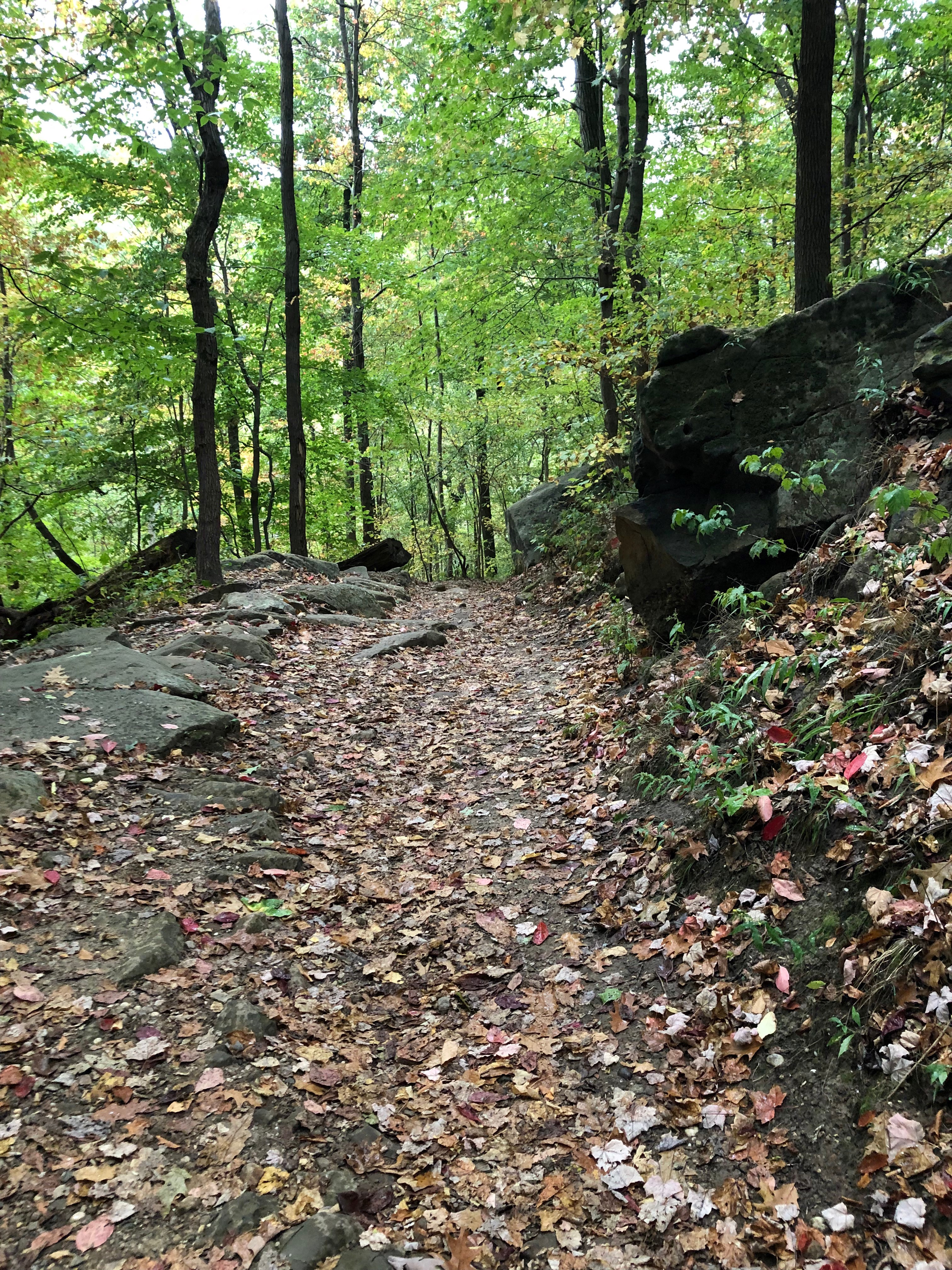
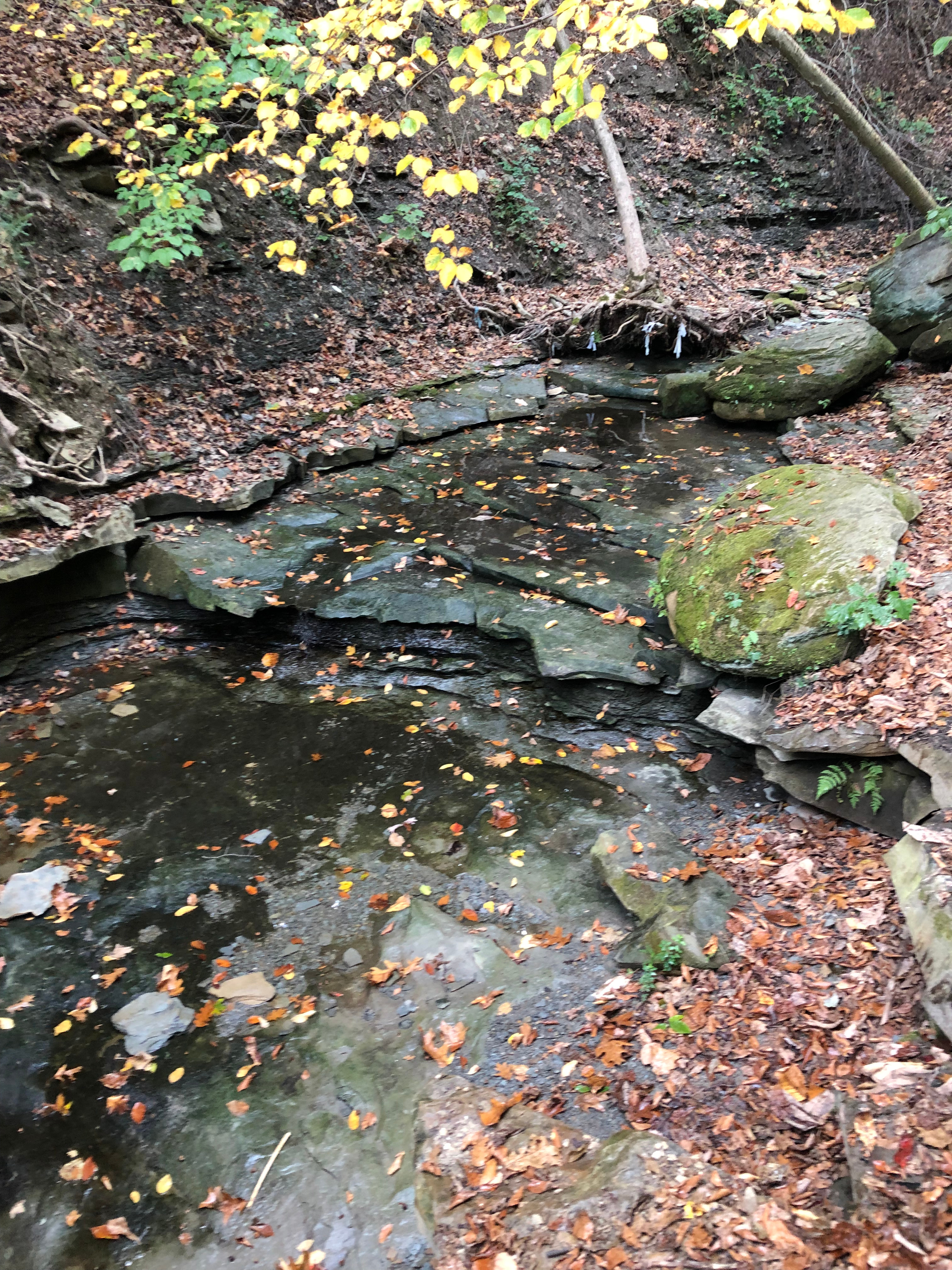
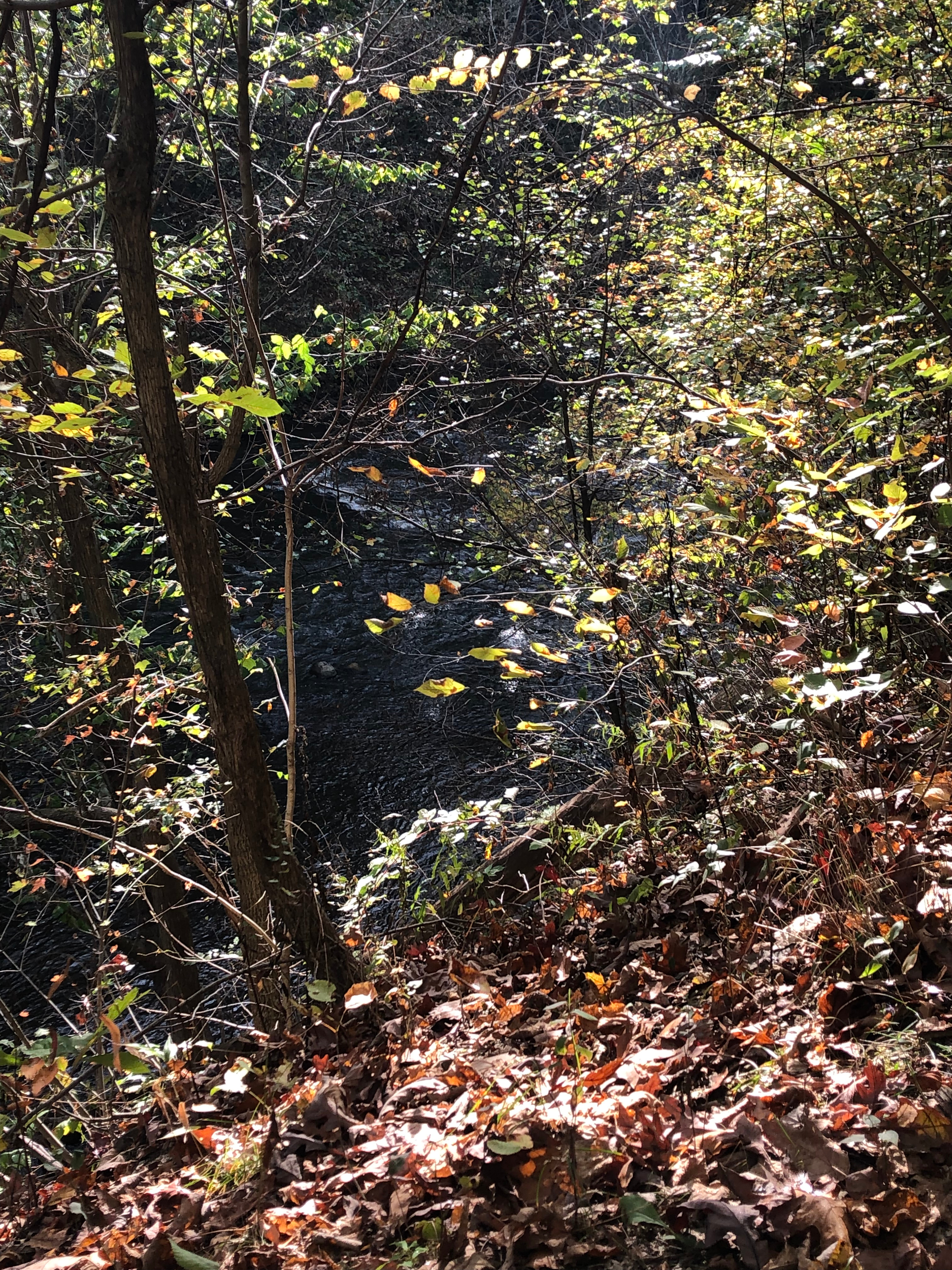
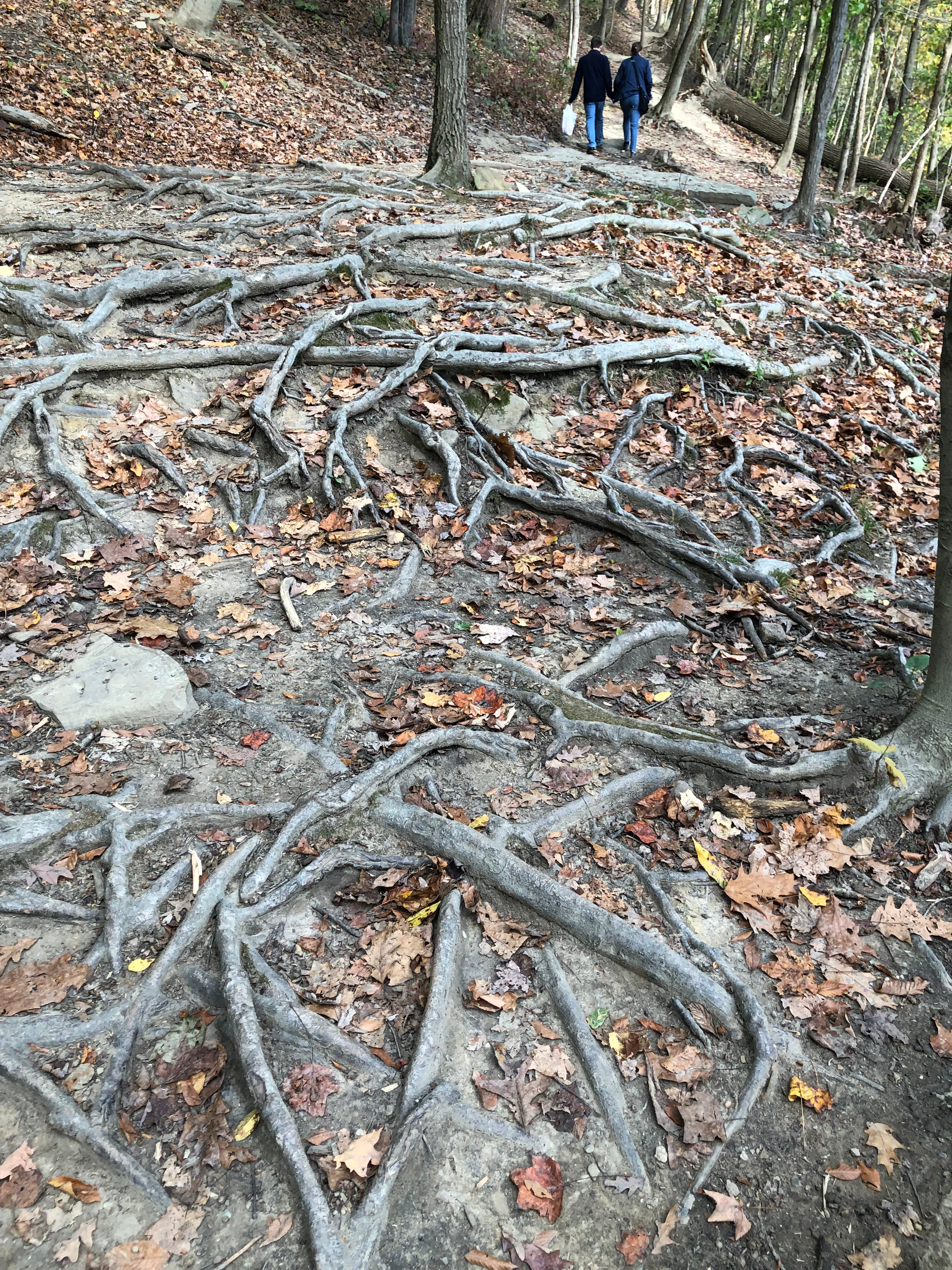
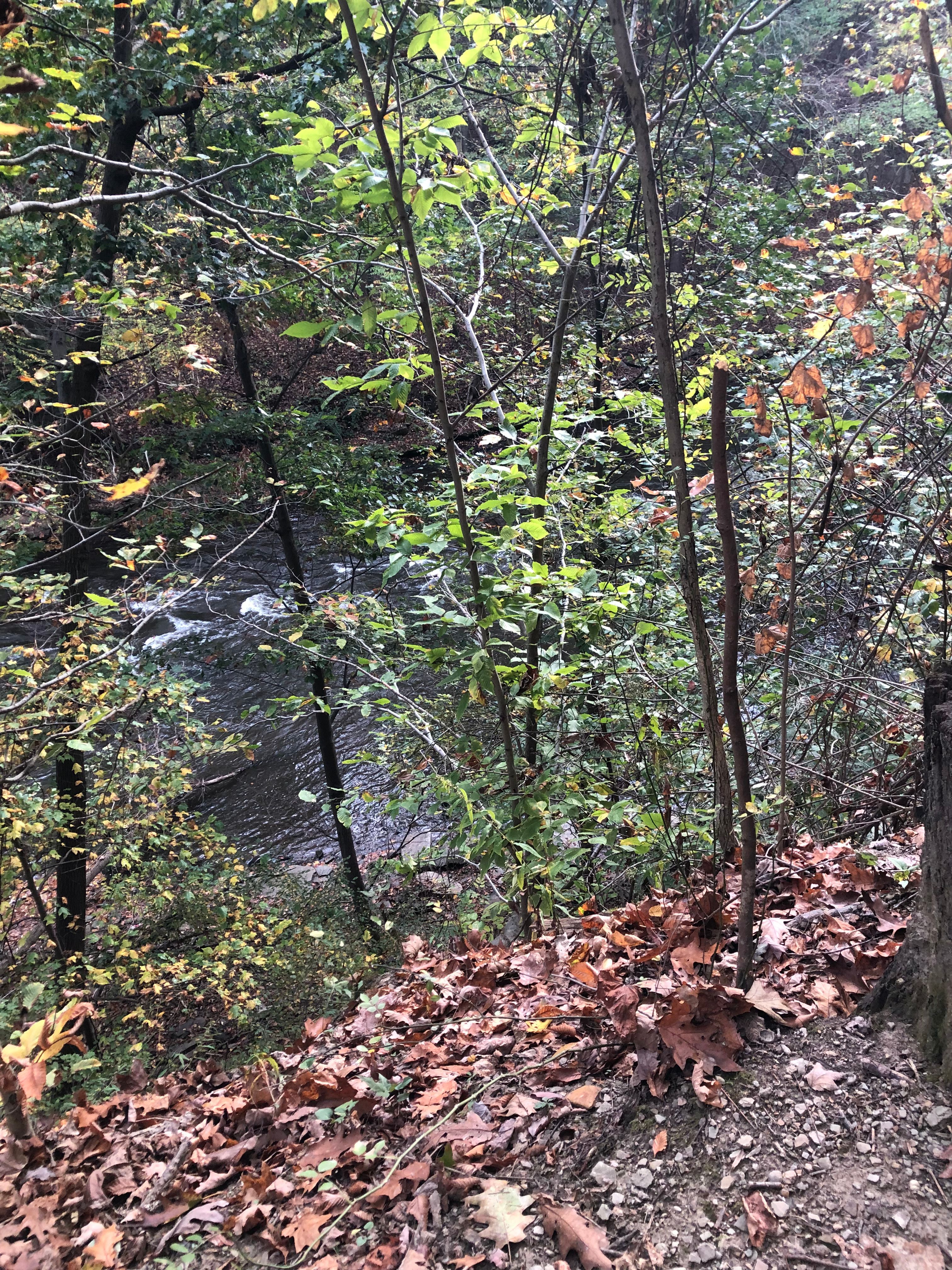
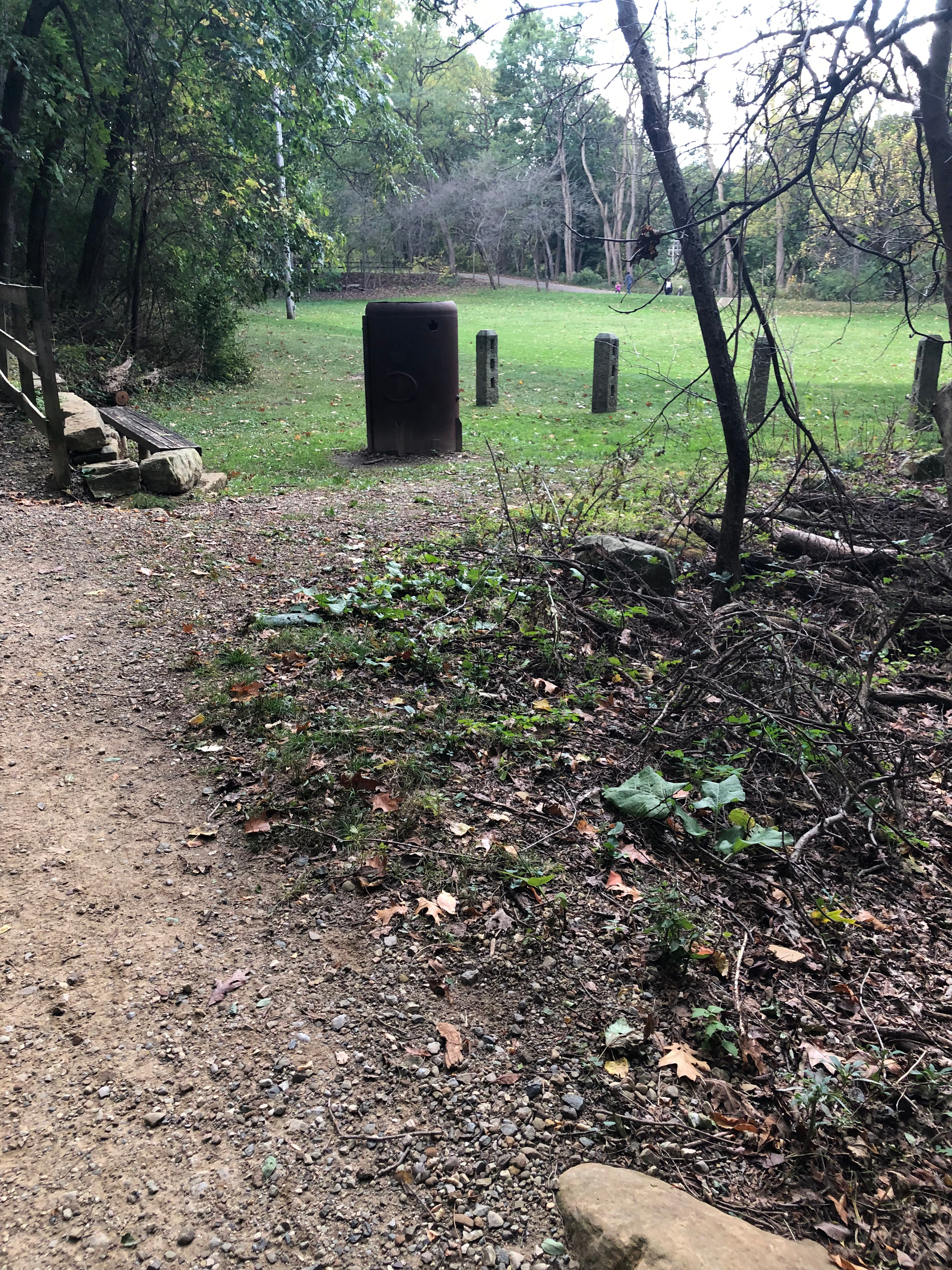
Lastly, I enjoy hiking. I am lucky to live in an area that has a park system in place that provides a wide variety of leisure activities for everyone. Hiking, archery, kayaking, ice skating (oh, my mom did this when she was little at the Gorge Metro Park), camping, mountain biking, sledding, you get the idea. Each year I participate in the Fall Hiking Spree. Between September 1 and November 30 you complete 8 different hikes and you earn a shield (though the first year you earn a shield and a hiking stick). It’s a great activity to get me exercising. Below are photos from the hike I did last week at the beforementioned Gorge Metro Park, I finally got started… 1 down, 7 to go, and this year I’ll be earning my 10th shield. I’m rather proud of myself.
There are all kinds of ways to enjoy sports – both in watching and taking part. It’s all about finding what you like and doing it (or watching if that is the case).
Sports was the prompt for this week’s 52 Ancestors in 52 Weeks by Amy Johnson Crow. If you would like to participate in this writing challenge click here.
Having one-word prompts for 52 Ancestors in 52 Weeks is proving to be quite challenging for me. I know in some ways it gives the writer a little more “scope for the imagination” but sometimes it’s too broad. So much so it takes me to the next week to figure out what to say. And I even went on a 2-mile hike and constantly mulled over what I could write about… and then it hit me, I have changed as a family historian.
When I began this journey 5 years ago, I was a “plop the name in the search box and see what information came up” type. I felt a little advanced from the get-go as I broadened my searches with initials, seldom using cities to find what I was looking for and using states instead, and using both maiden and married names when looking for my female ancestors. But now I know that’s just common sense.
It did not take me long to begin saving copies of the documents I found and setting up an online folder system that works for me and I know where everything is.
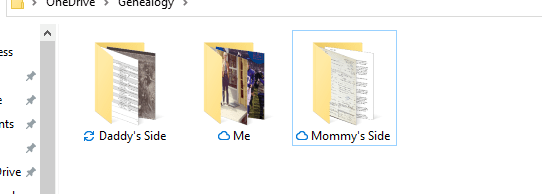
My very simple Genealogy folder on my OneDrive
Here is what the inside of my “daddy’s side” folder looks like, I have individual folders for each surname and then within each folder is my direct descendant and in each folder are their children.
Then I began taking classes, first at my local library over topics such as immigration, how to use Ancestry or Fold3, how to use historical newspapers, and how to identify photographs (just to name a few).
But then I went to my first Family History Day at my local Family History Center that my dad saw advertised in our local newspaper. An entire day of classes on various topics dealing with genealogy? I had no idea such bliss existed. And it was free!!!
My world changed that day. I discovered lecturers that I could listen to all day. They are the hands on type of speakers showing how to do case studies in a step by step manner. Or they give you an abundance of ways to search for records and where to search for records that you end up going home and discovering that you yourself are implementing what you have learned on a daily basis.
I then found myself joining my local, state and national genealogical societies to continue to learn. The Spring of 2019 I went to my first conference (and attended my second this past Spring as 2020 was cancelled due to Covid). With every class I learn a little more, and as Peggy Clemens Lauritzen said in her key note speech to open the 2021 Ohio Genealogical Society Conference, you are never the same family historian because each day you learn something that you carry over to the next day.
Now I’ve gone on a research trip to where a bulk of my paternal ancestors lived, 2 conferences, 3 Family History Days, on my 4th year of being a member of Family Tree Webinars all so I can hope to successfully continue finding my people. I also have become pretty good and looking up other online information that has been digitized using the Card Catalog on Ancestry, using image searches on FamilySearch and no one loves those gossip sections that give all sorts of details about your relatives than me in Newspapers.com.










 Helping History Come Alive